Discover
Share the concern, treatment area and change you would like to explore
Loading
Please wait while the page content is assembled.

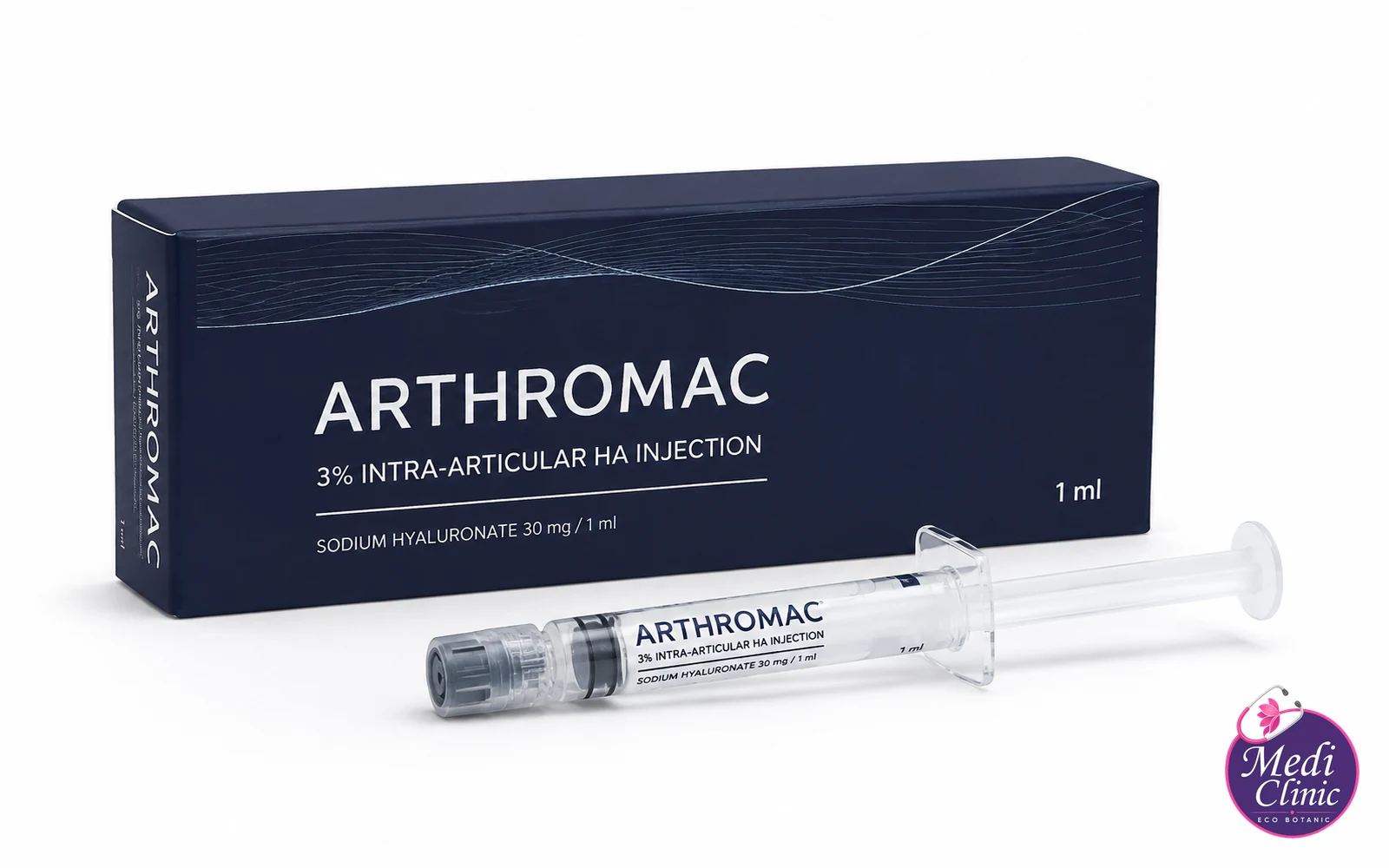
Arthromac is an intra-articular viscosupplement containing sodium hyaluronate. It is injected into the knee joint by a trained medical practitioner and may help selected patients manage symptoms of knee osteoarthritis. It is not a steroid or stem-cell therapy.
Arthromac is an intra-articular viscosupplement containing sodium hyaluronate. It is injected into the knee joint by a trained medical practitioner and may help selected patients manage symptoms of knee osteoarthritis. It is not a steroid or stem-cell therapy.
01 / How it works
Healthy synovial fluid helps reduce friction and absorb mechanical load inside the knee. With osteoarthritis, the joint environment changes and the quality of natural joint fluid may become less effective. Arthromac contains highly purified, high-molecular-weight sodium hyaluronate of non-animal origin. This hyaluronic acid is injected directly into the joint to supplement the viscoelastic properties of the joint fluid.
This process, called viscosupplementation, may help selected patients manage osteoarthritis-related knee pain and stiffness, potentially improving mobility and comfort during daily activities. However, it is crucial to understand that Arthromac is not a steroid, PRP, or a stem-cell injection. It cannot replace missing cartilage, correct severe deformity, or repair a torn ligament. Because clinical guidelines differ on routine HA injections, our doctors carefully evaluate each case to ensure any proposed intervention is medically appropriate and aligns with your functional goals.
Arthromac is an intra-articular viscosupplement containing sodium hyaluronate. It is injected into the knee joint by a trained medical practitioner and may help selected patients manage symptoms of knee osteoarthritis. It is not a steroid or stem-cell therapy.
Share the concern, treatment area and change you would like to explore
Shape the approach around your features, preferences and schedule
Experience a carefully planned session with clear guidance throughout
Follow simple aftercare and review how the treatment is progressing
02 / Visual guide
Arthromac is an intra-articular viscosupplement containing sodium hyaluronate. It is injected into the knee joint by a trained medical practitioner and may help selected patients manage symptoms of knee osteoarthritis. It is not a steroid or stem-cell therapy.
Interactive treatment map
Tap a numbered point to move from your concern to the treatment approach, how it works and a personalised plan.
Start with the change you have noticed and the result you would like to explore.
Concerns & areas
Explore common areas and goals, then discuss which are most relevant to you.
Learn how this area can be approached within a personalised treatment plan.
Who may benefit
Knee pain does not automatically mean you need a hyaluronic acid injection. The cause of the pain must be established first.
Clinical Diagnosis: Symptoms may arise from meniscal injuries, ligament issues, referred spine pain, or inflammatory conditions like gout. We review your available imaging, medical history, medications, and previous injections to confirm if knee osteoarthritis is the actual cause.
What to discuss first
03 / Your treatment journey
A calm, well-explained experience at every stage.
Talk through the concern, your previous experiences and the result you would like to explore.
Review the treatment area, suitable options, expected experience and practical timing.
Arrive prepared and receive clear guidance throughout the treatment visit.
Leave with simple aftercare, helpful contact details and a plan for review.
If an Arthromac knee injection is deemed suitable after shared decision-making, the procedure focuses heavily on strict infection-control practices. The knee is prepared using a strict aseptic technique before the single intra-articular injection is performed by our trained doctor.
Follow-up & Travel: Because evidence for intra-articular HA is mixed, we prioritize careful patient selection. Singapore patients travelling to Johor Bahru via the Causeway or Tuas Second Link should bring previous imaging and medication lists. While patients can usually return home after an uncomplicated outpatient injection, strenuous exercise should not be planned immediately afterwards, and same-day treatment depends entirely on clinical suitability during the consultation.
While some patients experience gradual symptom improvement, others may receive little or no benefit. Short-term effects after an intra-articular injection may include discomfort at the injection site, mild swelling, stiffness, bruising, or a temporary feeling of joint fullness. We will advise you to protect the knee from unnecessary strain and avoid strenuous lower-body exercise, running, jumping, or heavy lifting for approximately 24–48 hours following the procedure.
It is critical to monitor for any acute inflammatory reaction or signs of a serious joint infection (septic arthritis). If you experience rapidly increasing severe pain, marked swelling, spreading redness, fever, or an inability to bear weight, prompt medical assessment is required. Joint injection is only one part of broader osteoarthritis care, which should still involve physiotherapy, exercise, and supportive weight management where relevant.
04 / Practical expectations
Your experience will reflect the selected treatment, treatment area and individual response. These are the useful details to explore during your visit.
05 / Compare your options
Compare the treatment approach, the area it is designed for, the experience and the way results may develop—not only the name or price.
A useful starting point when you already know the treatment and want to understand it more clearly.
Opens a wider conversation about suitable approaches, timing, recovery and natural-looking results.
Treatment gallery
Explore the consultation, treatment setting and preparation through a carefully selected visual story.
Related concerns
Begin with the concern you notice, then discover treatment approaches and questions worth bringing to your consultation.
Patient knowledge guide
Four short questions explain the treatment, suitability and why assessment matters. This quiz educates—it does not diagnose or confirm treatment eligibility.
06 / Before you decide
Use strict aseptic technique after shared decision-making and exact-patient checks.
Read about informed consent07 / Recovery
While some patients experience gradual symptom improvement, others may receive little or no benefit. Short-term effects after an intra-articular injection may include discomfort at the injection site, mild swelling, stiffness, bruising, or a temporary feeling of joint fullness. We will advise you to protect the knee from unnecessary strain and avoid strenuous lower-body exercise, running, jumping, or heavy lifting for approximately 24–48 hours following the procedure.
It is critical to monitor for any acute inflammatory reaction or signs of a serious joint infection (septic arthritis). If you experience rapidly increasing severe pain, marked swelling, spreading redness, fever, or an inability to bear weight, prompt medical assessment is required. Joint injection is only one part of broader osteoarthritis care, which should still involve physiotherapy, exercise, and supportive weight management where relevant.
Contact the clinic08 / FAQ
Helpful answers for planning your consultation and understanding the treatment experience.
If an Arthromac knee injection is deemed suitable after shared decision-making, the procedure focuses heavily on strict infection-control practices. The knee is prepared using a strict aseptic technique before the single intra-articular injection is performed by our trained doctor.
Arthromac is an intra-articular viscosupplement containing sodium hyaluronate. It is injected into the knee joint by a trained medical practitioner and may help selected patients manage symptoms of knee osteoarthritis. It is not a steroid or stem-cell therapy.
Yes, Arthromac is listed in Malaysia’s Medical Device Authority register as a sodium hyaluronate solution for osteoarthritis use. It should be described as a registered medical device rather than an approved medicine.
Arthromac is designed as a single-injection viscosupplementation product. However, the doctor must first confirm the diagnosis and treatment suitability. A single-injection format does not guarantee a better result for every patient.
The injected sodium hyaluronate is intended to supplement the viscoelastic properties of the knee’s synovial fluid. This may improve lubrication and cushioning, reducing pain or stiffness. It does not replace lost cartilage.
Improvement is not always immediate. Some patients may notice gradual changes over the following weeks, while others may experience limited or no meaningful benefit. The onset and degree of improvement vary.
Related treatments
Plan your next step
Share your goals with the Eco Botanic team and begin with a personalised consultation.