Photodynamic Therapy (PDT) & LED Light Treatment in Johor Bahru – Acne & Skin Recovery Support
Many patients from Malaysia and Singapore visitors seeking aesthetic care near the Causeway or Tuas Second Link choose our clinic because we prioritise transparent education. Whether you are visiting from nearby Taman Molek, Iskandar Puteri, Eco Botanic, or Eko Galleria, we explain the vital differences between PDT and LED light therapy. We discuss realistic outcomes, eye safety, photosensitivity risks, and the timeline required for skin rejuvenation support, ensuring you receive responsible care tailored to your unique skin profile.
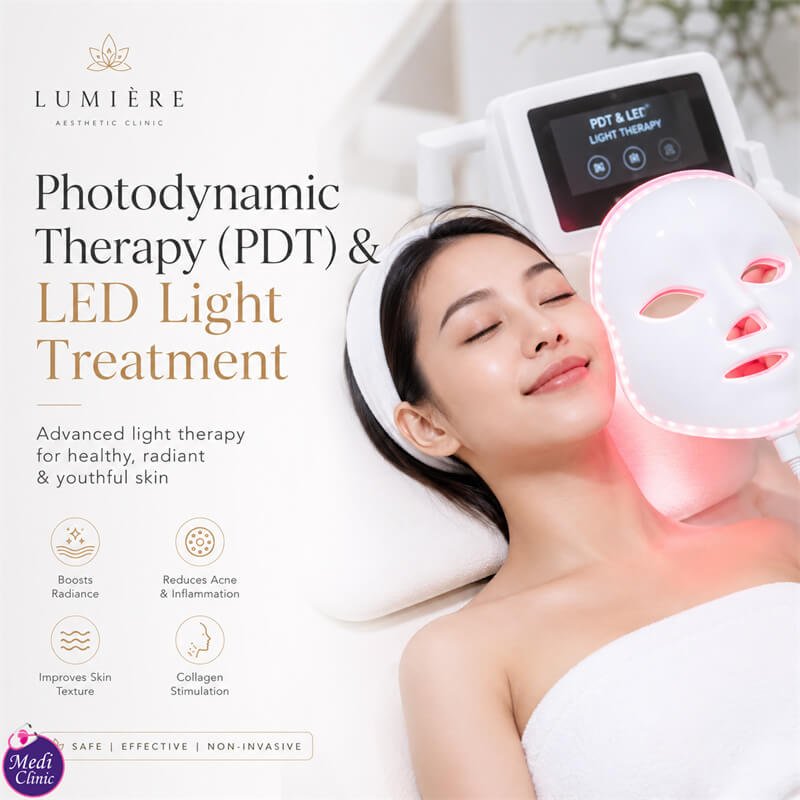
How PDT & LED Light Treatment Work
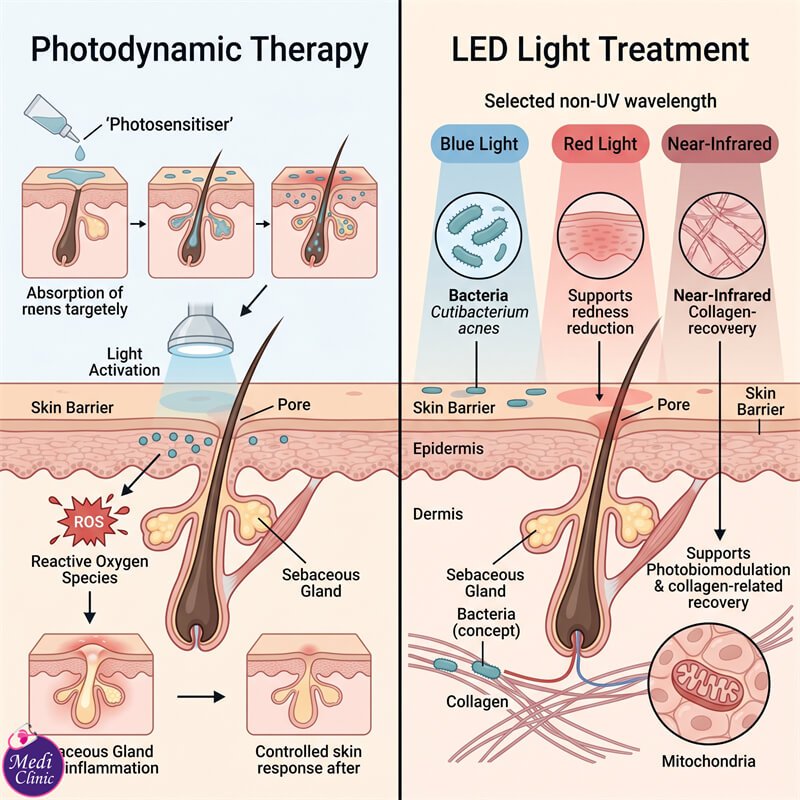
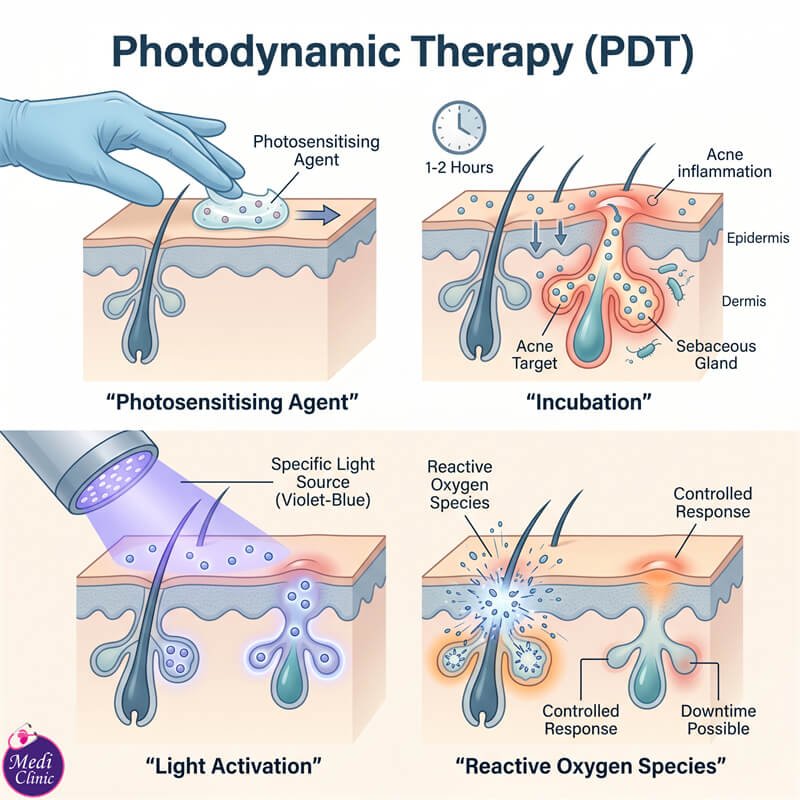
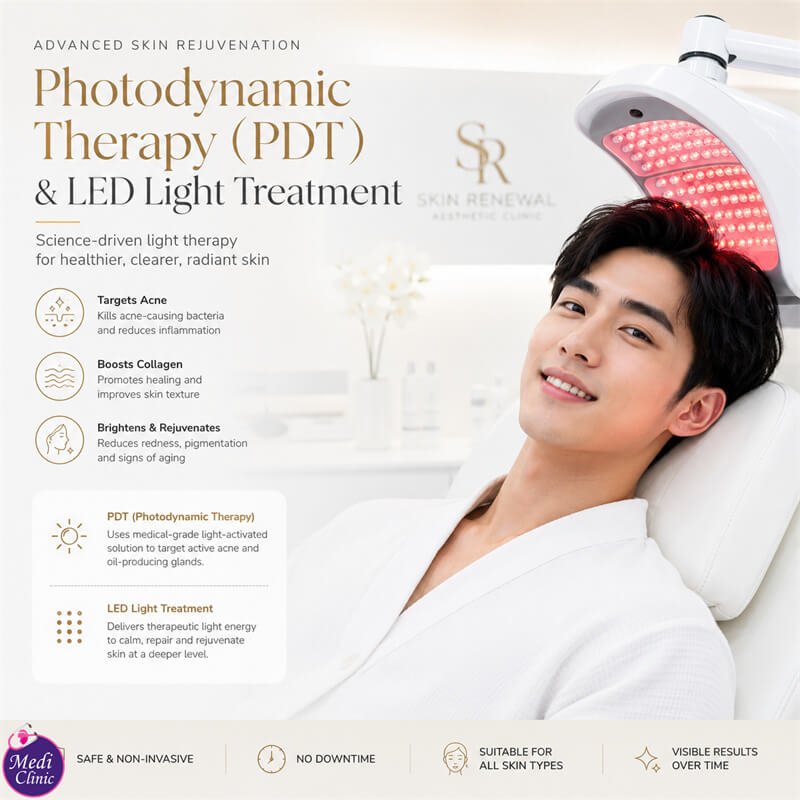
Photodynamic Therapy (PDT) usually combines a photosensitising agent (such as aminolevulinic acid or methyl aminolevulinate) with a specific light source. The agent is absorbed by targeted skin structures, and when the light is applied, it activates the medicine to create reactive oxygen species. This controlled skin response can help selected concerns like oily skin, moderate acne, or sun-damaged skin (actinic keratosis) depending on the local protocol used.
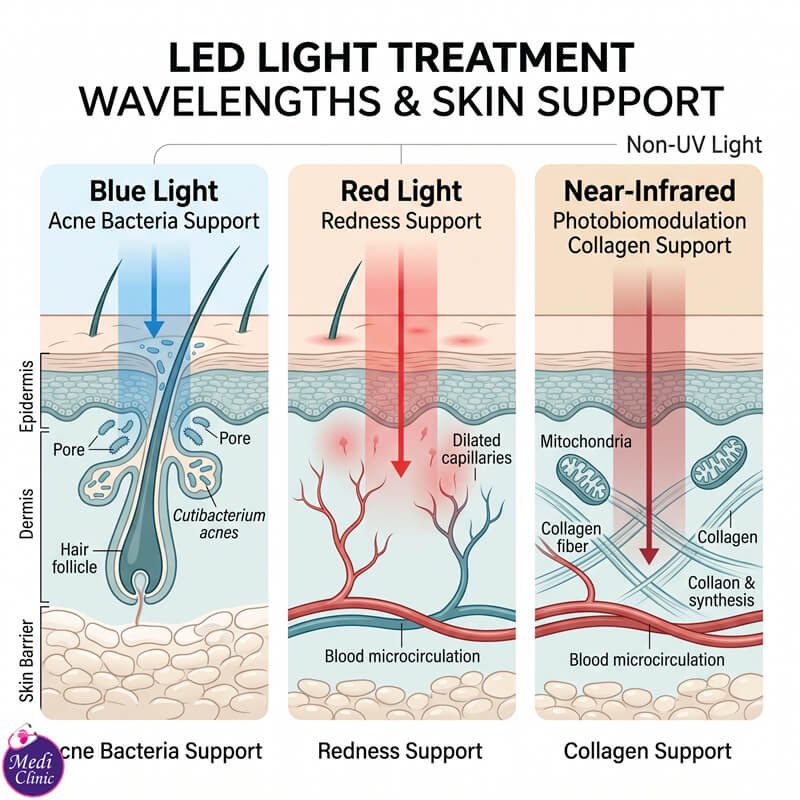
LED Light Treatment, however, uses selected non-UV light wavelengths like blue light, red light, or near-infrared light without a photosensitising medicine. Blue light may help mild-to-moderate inflammatory acne by targeting Cutibacterium acnes bacteria. Red or near-infrared light is often used for photobiomodulation to support redness reduction, skin recovery, and collagen-related processes. We carefully plan these treatments for patients from JB, Taman Pelangi, Mount Austin, and Singapore, keeping pigmentation-prone Asian skin types strictly in mind.
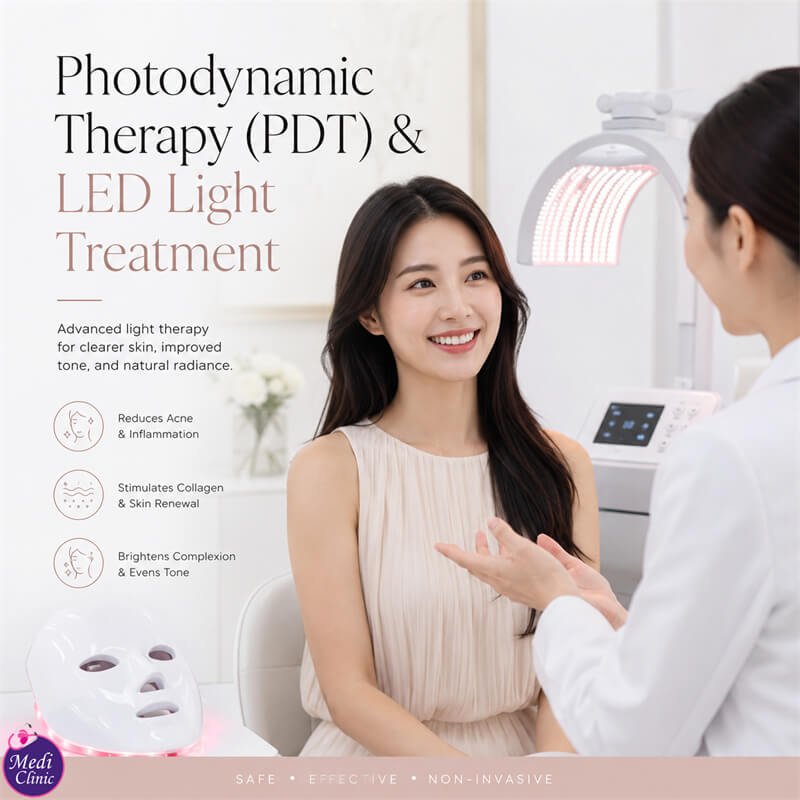
Evaluating Suitability for Light Treatment
Skin Assessment: Our doctor reviews your skin type, current inflammation levels, and medical history. We determine if you might benefit more from supportive LED light, a targeted PDT protocol, or standard medical acne treatment.
Suitability: Candidates may include those with mild-to-moderate inflammatory acne, oily skin, redness, or patients needing post-laser and post-microneedling recovery support. However, these treatments may not be suitable if you have a light-sensitive disorder (like lupus), severe cystic acne needing oral medication, suspicious skin lesions, or active infections. Caution is also required for pregnancy, breastfeeding, or if you take photosensitising medicines. Patients from Singapore and Johor Bahru value our transparency in establishing what light therapy can and cannot achieve.
Understanding Downtime & Aftercare
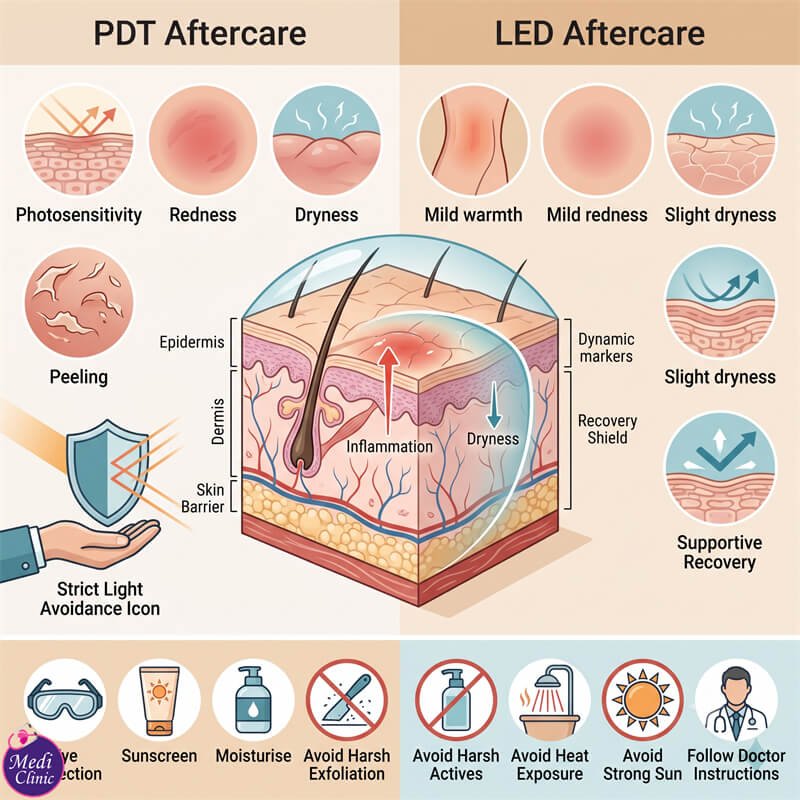
Because PDT uses a photosensitising agent, it generally involves more downtime. Expected PDT reactions can include a burning or stinging sensation during treatment, followed by redness, swelling, peeling, crusting, dryness, and temporary pigmentation changes. Crucially, your skin will be temporarily highly sensitive to light, requiring strict light-avoidance instructions.
LED light treatment is usually gentler and may present with only mild warmth, mild redness, or slight dryness. Regardless of the treatment, proper aftercare is essential. This includes avoiding harsh exfoliation, pausing strong active skincare unless advised, keeping the skin well-moisturised, and strictly using broad-spectrum sunscreen. Always use proper eye protection (goggles) provided by the clinic during the procedure to ensure eye safety.
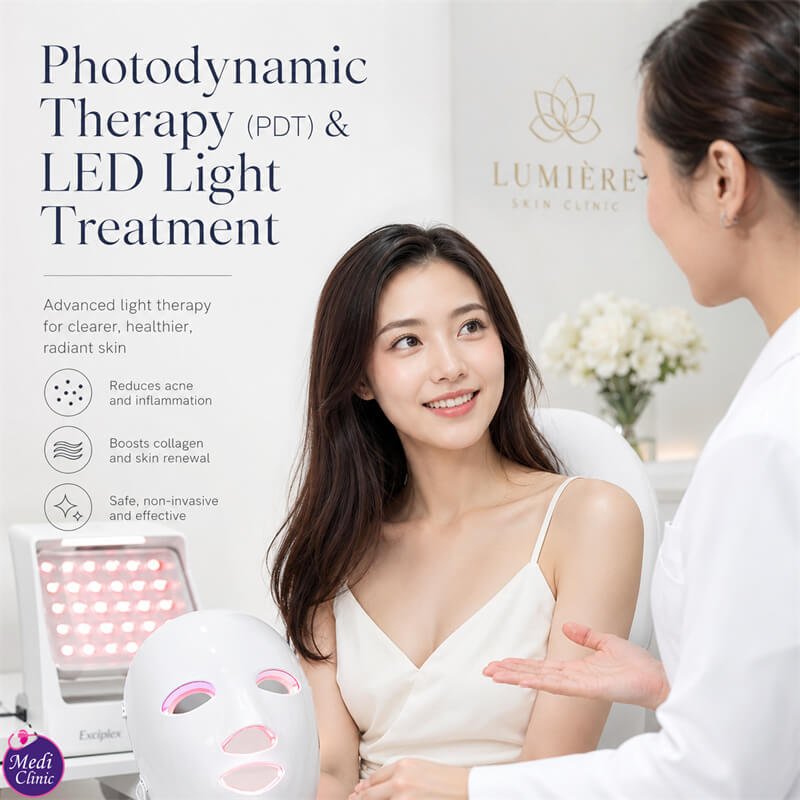
What to Expect From Your Light-Based Plan
The Process: If PDT is chosen, the photosensitising agent is applied and allowed time to incubate before the light session begins. If LED treatment is selected, the specific blue, red, or near-infrared light is administered directly to cleansed skin. Protective goggles are mandatory for both.
Results take time. LED treatment often needs repeated sessions to show gradual improvement in skin recovery or acne support. PDT may create a more noticeable, intense response requiring downtime. While neither treatment can guarantee permanent acne clearance or complete scar removal, they provide evidence-based support for skin rejuvenation and oily skin management. We support patients from Tebrau, Permas Jaya, Medini, and those travelling via Tuas Second Link with responsible maintenance planning.
Frequently Asked Questions About Light Treatment in JB
What is Photodynamic Therapy or PDT?
What is LED light treatment?
What is the difference between PDT and LED light treatment?
Can PDT or LED light treatment help acne?
Is LED light treatment safe for Asian skin?
Does PDT have downtime?
Is PDT the same as laser?
What should I avoid after PDT or LED light treatment?
Can Singapore patients come to JB for PDT and LED treatment?
More Than Just Shining A Light
Not all light therapy is equal. Proper medical assessment ensures precise wavelengths for your acne or recovery, whilst strictly protecting your eyes and skin barrier from unregulated harm.
Light Treatment Gallery
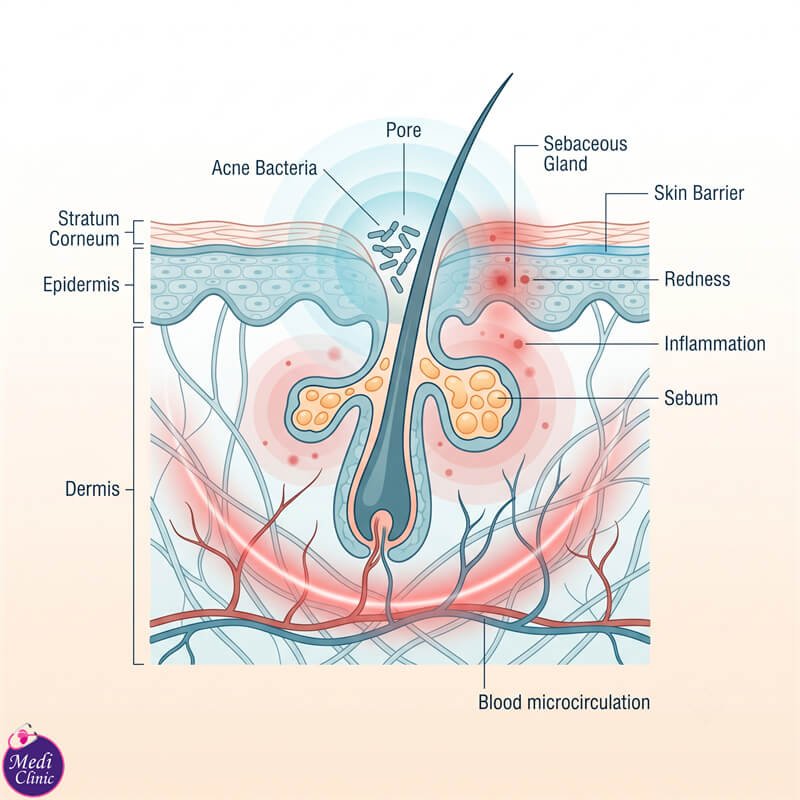
Find Out if PDT or LED Light Treatment is for You
PDT & LED Light Treatment Suitability Quiz
Suitability Quiz
Understanding the Treatment Timeline
| Key Aspect | Unregulated or At-Home Devices | Doctor-Led Light Treatment at Medi Clinic JB MEDICAL |
|---|---|---|
| Practitioner | Unqualified staff or DIY application without medical knowledge. | Experienced doctor performs accurate skin assessment prior to treatment. |
| Equipment & Devices | May use low-grade LED masks with inconsistent energy levels. | Utilises clinical, medical-grade light devices with precise wavelength control. |
| Diagnosis | No medical diagnosis; treats all concerns without understanding root causes. | Careful clinical diagnosis to determine skin suitability and acne type. |
| Protocol Approach | One-size-fits-all generic light exposure. | Tailors whether PDT (with photosensitising agent) or LED is most appropriate. |
| Eye Safety | Minimal or no verified eye protection provided. | Mandatory clinical eye protection (goggles) used to safeguard vision. |
| Downtime | Unexpected side effects due to poor guidance or misuse. | Transparent discussion about downtime, especially if PDT is selected. |
| Expected Outcomes | Promises instant permanent results, masking the true timeline. | Provides a clear, honest timeline on gradual acne clearing and skin recovery. |
| Combination Planning | Little knowledge of how active ingredients and light therapy interact. | Advises on safe combination of light therapy and medical-grade skincare. |
| Aftercare Education | Minimal guidance on sun protection and post-treatment skin recovery. | Provides strict aftercare protocols, emphasizing broad-spectrum sunscreen use. |
| Long-Term Results | Risk of worsening skin irritation or uncontrolled acne. | Focuses on steady, supportive care while protecting the skin barrier. |
| Clinical Standards | Based on social media trends, not dermatological science. | Follows evidence-based medical guidelines for patient safety and efficacy. |
Discuss Your Skin Concerns with Our Doctor
Booking a consultation is the first step toward clearer skin. Our doctor will assess your complexion, identify your acne or skin recovery needs, and explain if PDT or LED light therapy is suitable for you. Patients from areas like Taman Gaya, Setia Tropika, and Kempas, as well as Singapore, trust our thorough diagnostic process. We focus on creating a personalised, safe plan for natural-looking improvement, avoiding unsuitable methods that could cause unexpected side effects. We believe in honest advice and professional care for every patient.
Explore our other aesthetic services.
30+
Years of experience
4K+
Happy customers
15K+
Success Story
70+
Services Provided


