Facelift Surgery in Japan for Malaysian & Singapore Patients

Facelift Surgery in Japan for Malaysian & Singapore Patients

Japan may be one destination considered by Malaysian and Singaporean patients seeking facelift surgery, but the country alone does not determine safety or quality. The decision should be based on the individual surgeon, surgical plan, anaesthesia provider, operating facility, communication support, recovery arrangements and access to complication care.

At Medi Clinic in Johor Bahru, we provide doctor-led educational consultations to help you understand whether facelift surgery is appropriate, compare surgical and non-surgical options, and prepare the right questions before travelling. Do not choose surgery based only on country, price, marketing photographs or the name of a technique. Cross-border surgery is major elective surgery. Your safety relies on verifying the Japanese surgeon’s credentials, planning adequate time in Japan for postoperative reviews, and establishing who is responsible for follow-up care if complications occur after you return home.
Facelift surgery consultation for Malaysian and Singapore patients considering Japan

Understanding Surgical Facial Rejuvenation

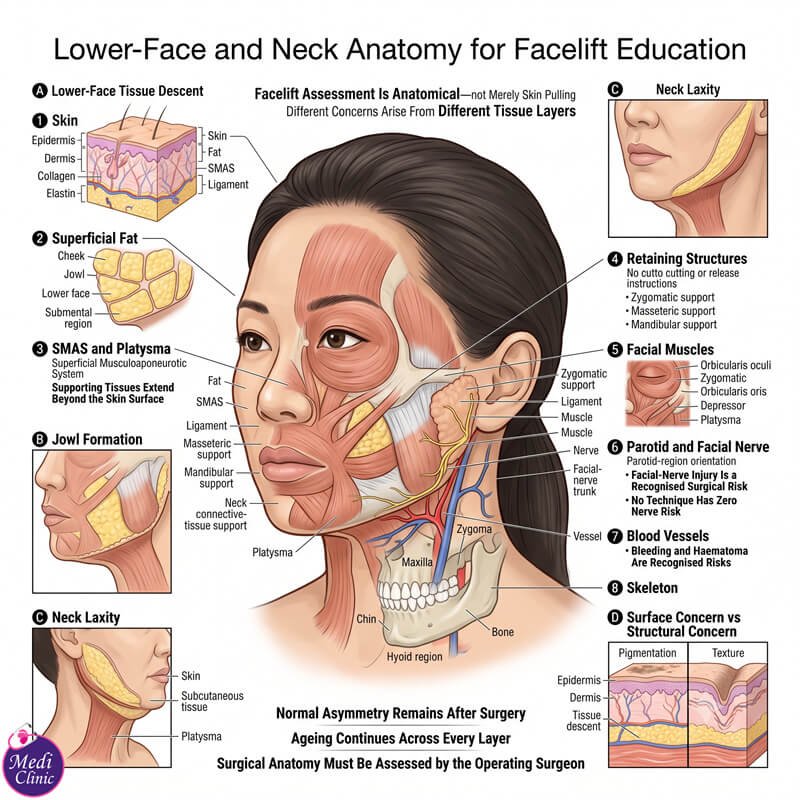
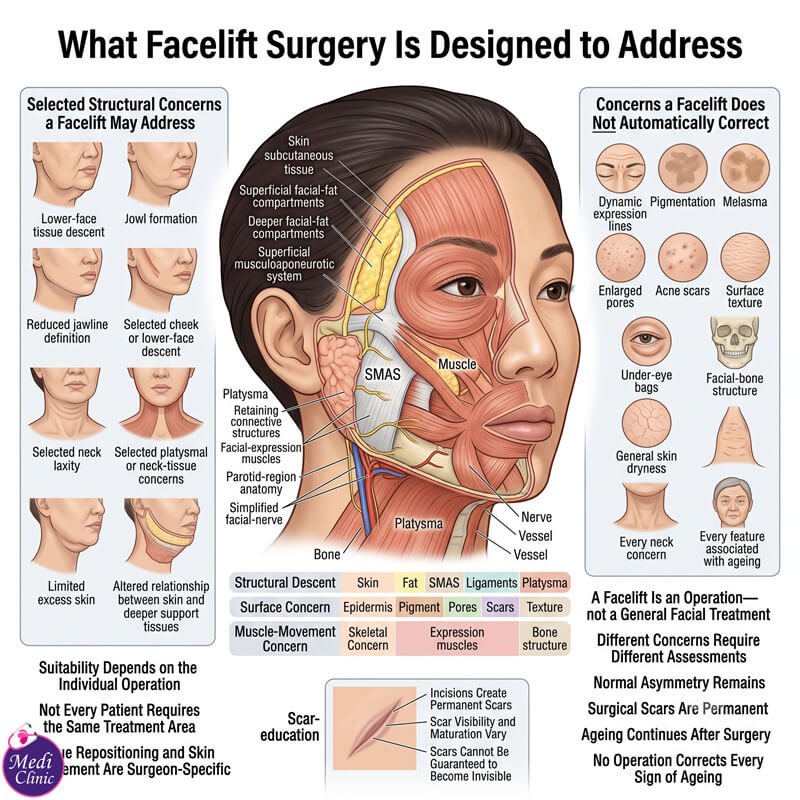
Facelift surgery, also known as rhytidectomy, is an operation that addresses selected concerns involving lower-face tissue descent, jowls, jawline definition, and selected neck laxity. Depending on the operation, the surgeon may reposition selected facial tissues, address the superficial musculoaponeurotic system (SMAS), and remove limited excess skin. It is an operation, not merely a facial treatment.

It is equally important to understand what a facelift will not correct. A facelift mainly addresses selected structural laxity and tissue descent. It does not automatically correct every expression line, pigmentation, melasma, enlarged pores, acne scars, under-eye bags, or facial-bone structure. Furthermore, ageing continues after surgery, normal asymmetry remains, and surgical incisions leave permanent scars. We help patients establish realistic expectations before they commit to an overseas procedure.
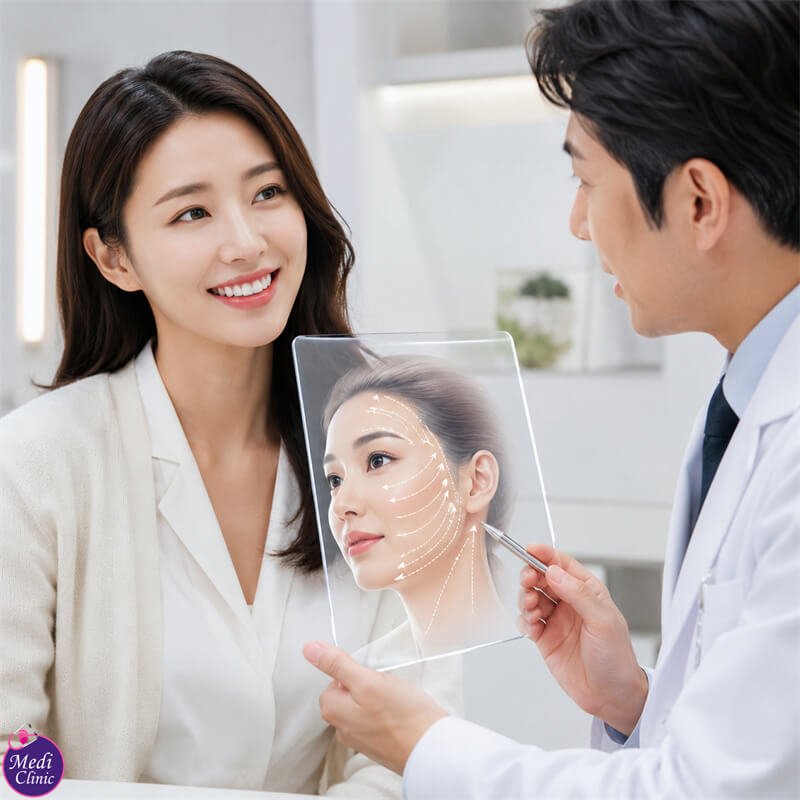
Doctor explaining Japan facelift planning and postoperative care JB SG
SMAS and deep-plane facelift education for international patients JB SG

Comparing Facelift Techniques

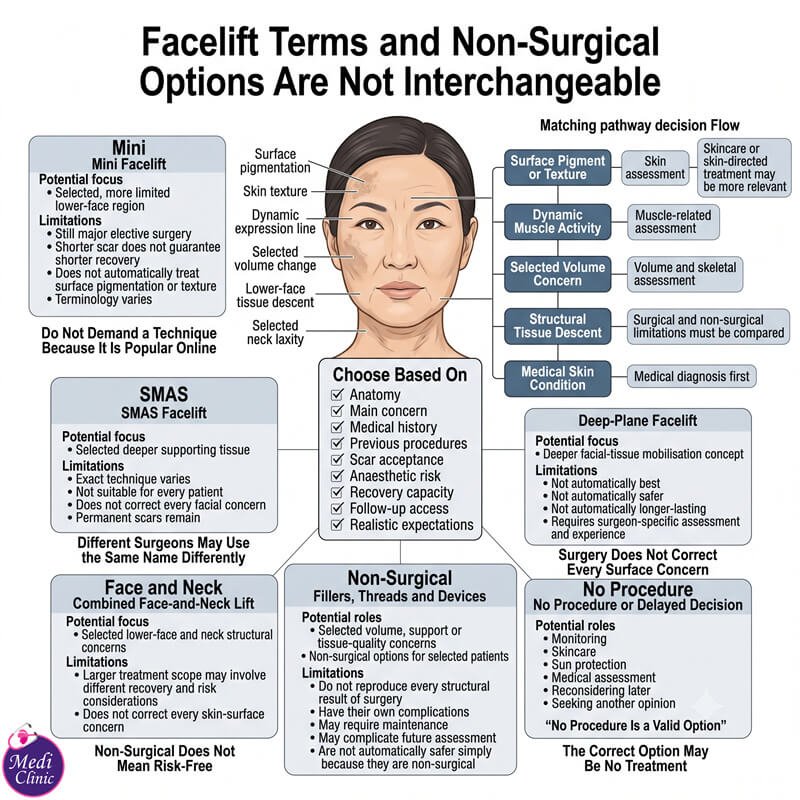
The word “facelift” may refer to different operations, including a mini facelift, SMAS facelift, deep-plane facelift, or a combined face-and-neck lift. It is important to know that these names do not always describe identical operations between clinics.

Mini Facelift: This involves a smaller treatment area, but shorter scars do not guarantee a shorter recovery, and it is still surgery with nerve and bleeding risks.

SMAS & Deep-Plane: Both address deeper facial connective tissue. Deep-plane involves deeper facial-tissue mobilisation, but it is not automatically suitable for every patient, nor is it automatically safer or longer-lasting. Published technique names do not replace surgeon-specific assessment. Ask the surgeon to explain the operation in anatomical terms rather than relying only on a marketing name.

How to Verify a Japanese Surgeon

Japan has trained plastic surgeons, but quality varies between individuals. Patients must verify the exact credentials of their surgeon. Check the full legal name of the surgeon, their Japanese medical licence, and primary specialist training. Note that Japan Society of Plastic and Reconstructive Surgery (JSPRS) membership is not necessarily specialist certification. Ensure they hold current board certification and have specific experience with the proposed technique.

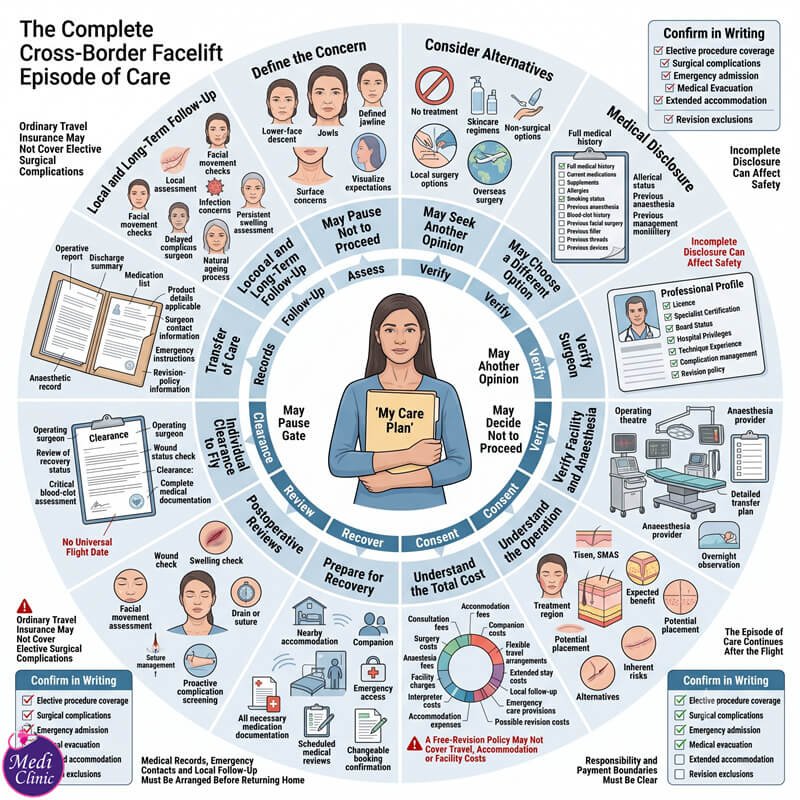
You must also verify the facility. Check who administers anaesthesia, emergency equipment availability, resuscitation protocols, and whether overnight observation is available. While Japan’s JMIP accreditation indicates an assessed international-patient support system, it does not certify facelift skill or guarantee complication-free surgery. Do not sign a surgical consent form that you do not fully understand request a qualified medical interpreter.

Plastic-surgeon credential checklist for surgery in Japan JB SG
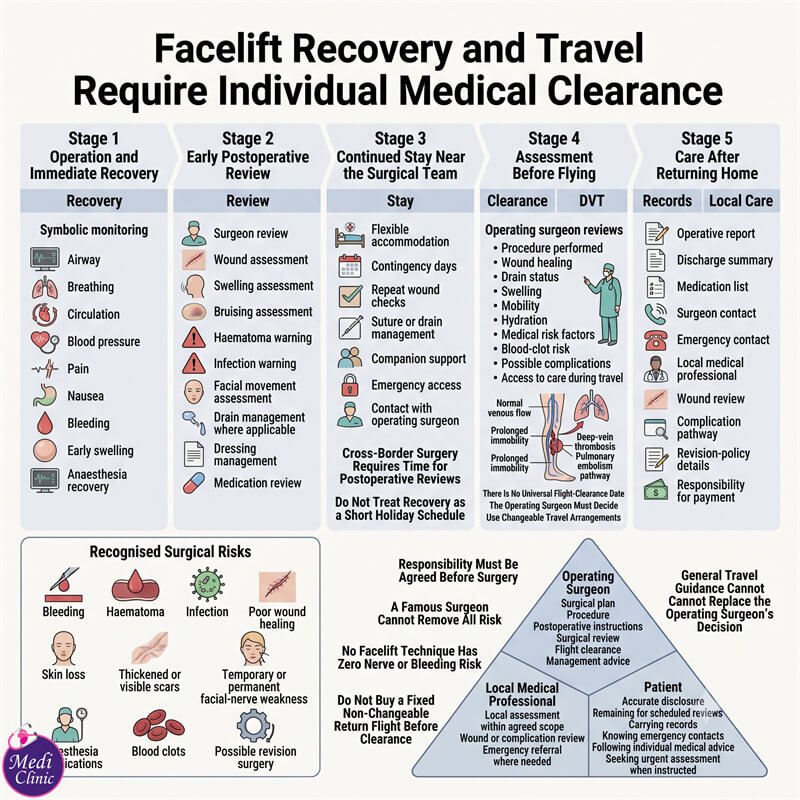
Facelift recovery and return-flight planning JB SG

Understanding Facelift Complications

Serious complications are not eliminated by choosing a famous surgeon or travelling to a highly developed country. Possible risks include bleeding, haematoma, infection, poor wound healing, skin loss, thickened scarring, and anaesthesia complications. Facial-nerve injury is a recognised risk that can cause temporary or permanent weakness, and no technique has zero nerve risk.

For international patients, long-distance travel adds risk. Surgery and prolonged sitting during travel can increase the risk of deep-vein thrombosis (DVT) and pulmonary embolism. You should not purchase a non-changeable return flight before the surgical team confirms your follow-up plan. The operating surgeon must individually clear you to fly based on your recovery, drain removal, and wound healing. General medical-tourism travel guidance must not replace the operating surgeon’s decision.

Frequently Asked Questions About Facelift Surgery in Japan

Here are answers to common questions for Malaysian and Singapore patients planning cross-border surgical care.

Is facelift surgery in Japan automatically safer?

No. Safety depends on the individual surgeon, specialist training, facility, anaesthesia provider, patient health, surgical plan and postoperative care not the country alone.

How can I verify a Japanese facelift surgeon?

Check the surgeon’s Japanese medical licence, plastic-surgery specialist certification, aesthetic-surgery certification where applicable, hospital privileges and experience with the proposed facelift technique.

What is the difference between an SMAS and deep-plane facelift?

Both involve deeper facial-supporting tissues, but the surgical approach and extent differ. The terms are not used identically by every clinic, and neither technique is universally best.

Does a facelift leave scars?

Yes. Incisions may be placed around the hairline and ears and sometimes beneath the chin. Scars usually mature gradually but cannot be guaranteed to become invisible.

What are the serious risks of facelift surgery?

Risks include bleeding, haematoma, infection, facial-nerve injury, poor wound healing, skin loss, visible scars, blood clots, anaesthesia complications and possible revision surgery.

How long should I remain in Japan after surgery?

There is no universal answer. The surgeon should provide a written review schedule covering wound checks, drain or suture management and final assessment before flying.

When can I fly home after a facelift?

The operating surgeon must decide based on the procedure, recovery and blood-clot risk. Patients should not book a fixed non-changeable flight before receiving postoperative clearance.

Who treats complications after I return home?

Responsibility must be agreed before surgery. Patients should know how to contact the Japanese surgeon, who will assess them locally and who pays for emergency or revision care.

Can filler, threads or devices replace a facelift?

They may help selected concerns but do not reproduce every structural result of surgery. They also have different risks, limitations and maintenance needs.
Japan Facelift Surgeon, Facility, Travel & Follow-Up Education

Japan Does Not Make Facelift Surgery Automatically Safe — Verify the Surgeon and the Entire Care Chain

Facelift surgery is major elective surgery. A responsible cross-border plan confirms what the operation will and will not correct, asks the surgeon to describe the actual anatomical procedure rather than relying on a technique label, verifies credentials, anaesthesia and facility safety, and establishes postoperative reviews, flight clearance, local follow-up and responsibility for complications before travelling.

Cross-border planning guide

Select a surgical-planning pathway

Then review the four checkpoints: the true surgical target and limitations, technique-name interpretation, surgeon and facility verification, and complications, time in Japan, return-flight clearance and local responsibility after returning to Malaysia or Singapore.

Japan facelift surgeon, facility, travel and follow-up safety review Interactive comparison between verified cross-border facelift planning and an unverified overseas surgery package. FACELIFT ANATOMY + SURGEON + FACILITY + TRAVEL REVIEW Surgery Local follow-up Hairline / ear incision Skin SMAS / deeper support Tissue repositioning May address: jowls • jawline • selected neck laxity Does not automatically correct pigment, pores or bone shape Ageing continues • scars remain Fly only after surgeon clearance DVT / pulmonary embolism risk Technique name ≠ verified operation or safer outcome Scope + limitations Structural laxity, not every facial concern Technique meaning Mini / SMAS / deep-plane labels vary Surgeon + facility Licence • board • anaesthesia • emergency plan Complications + travel Reviews • flight clearance • local responsibility Continuous cross-border care Japan reviews + safe return + local plan Package-led tourism Price • photos • technique label Run Facelift Travel Review

Malaysia & Singapore Patient Planning
Doctor discussing facelift scars and surgical risks JB SG
Malaysia patient preparing for cosmetic surgery in Japan JB SG
Facelift surgery records and aftercare planning JB SG
Cross-border facelift consultation at Medi Clinic Johor Bahru JB SG

Find Out What to Ask Before Travel

Our doctor at Medi Clinic Johor Bahru can review your medical history, discuss non-surgical alternatives, and assist in preparing the specific questions you need to ask a Japanese surgeon. We help you understand the boundaries of responsibility so you can plan your episode of care safely.
Medi Clinic JB — Facelift Surgery Smart Guide

Are You Prepared to Consider Facelift Surgery in Japan?

Check Your Knowledge in 60 seconds

Overseas Surgery Planning Quiz

Step 1 / 10
This quiz cannot determine whether facelift surgery is suitable. A qualified plastic surgeon must assess your anatomy, medical history, anaesthetic risk, expectations, travel plan and ability to obtain postoperative care.
💬 Book Facelift Planning Consultation

Overseas Recovery Timeline & Expectations

Recovery from facelift surgery is a gradual process. Visible recovery and biological healing are different; looking socially presentable does not mean you are fully healed. Scars take time to mature, and you should not judge the final result too early.
Days to Weeks
Initial Swelling & Suture Removal in Japan
3–6 Months
Tissue Settling & Maturation
Ongoing
Scar Maturation & Ageing
Varies
Individual Recovery & Nerve Healing
Verified Cross-Border Surgery vs. Blind Medical Tourism
Key Aspect Blind Medical Tourism Planned Cross-Border Care MEDICAL
Verifying Surgeon Relies on clinic brand name or social media popularity without checking credentials. Verifies specific Japanese medical licence, specialist training, and experience.
Surgical Facility Assumes the facility has full resuscitation and emergency protocols in place. Verifies operating room standards, anaesthesia providers, and emergency-transfer arrangements.
Technique Selection Demands a specific branded technique (like deep-plane) regardless of anatomy. Allows the surgeon to recommend the most appropriate operation based on individual anatomy.
Anaesthesia Ignores who provides anaesthesia or what emergency equipment is available. Confirms who administers anaesthesia and their specific medical credentials.
Interpretation Relies on a sales coordinator or automated translation for surgical consent. Ensures a qualified medical interpreter translates the informed consent directly with the surgeon.
Time in Japan Treats surgery as a quick holiday, rushing back home immediately. Allocates sufficient contingency days for drain removal, suture removal, and surgeon clearance.
Flying Home Purchases fixed return flights that cannot be changed if recovery is delayed. Understands blood-clot risks and only flies when individually cleared by the operating surgeon.
Complications Assumes the Japanese clinic will manage all local emergencies from abroad. Establishes clear boundaries on who provides local emergency care and who pays for complications.
Local Follow-up Has no medical professional arranged for wound checks back in Malaysia or Singapore. Secures a local follow-up plan and ensures operative records are brought home.
Cost Planning Focuses only on the cheapest advertised surgery quote. Compares the full episode-of-care cost, including extended stays, revision policy limits, and travel.
Verifying Surgeon
Blind Medical Tourism:
Relies on clinic brand name or social media popularity.
Planned Cross-Border Care:
Verifies specific Japanese medical licence, specialist training, and experience.
Technique Selection
Blind Medical Tourism:
Demands a specific branded technique regardless of anatomy.
Planned Cross-Border Care:
Allows the surgeon to recommend the most appropriate operation based on individual anatomy.
Flying Home
Blind Medical Tourism:
Purchases fixed return flights that cannot be changed if recovery is delayed.
Planned Cross-Border Care:
Understands blood-clot risks and only flies when individually cleared by the operating surgeon.
Local Follow-up
Blind Medical Tourism:
Has no medical professional arranged for wound checks back in Malaysia or Singapore.
Planned Cross-Border Care:
Secures a local follow-up plan and ensures operative records are brought home.

Prepare for Facelift Surgery with Our Doctor


Book a doctor-led consultation at Medi Clinic in Johor Bahru to understand whether facelift surgery is appropriate, compare surgical and non-surgical options, and prepare the questions required before considering treatment in Japan. We will review your medical history, discuss your goals, and ensure you understand the boundaries of responsibility when seeking cross-border medical care.

All Services

Explore our other aesthetic services.

International-patient consultation before facelift surgery

30+

Years of experience

4K+

Patient consultations

15K+

Aesthetic Treatments

70+

Services Provided