Discover
Share the concern, treatment area and change you would like to explore
Loading
Please wait while the page content is assembled.

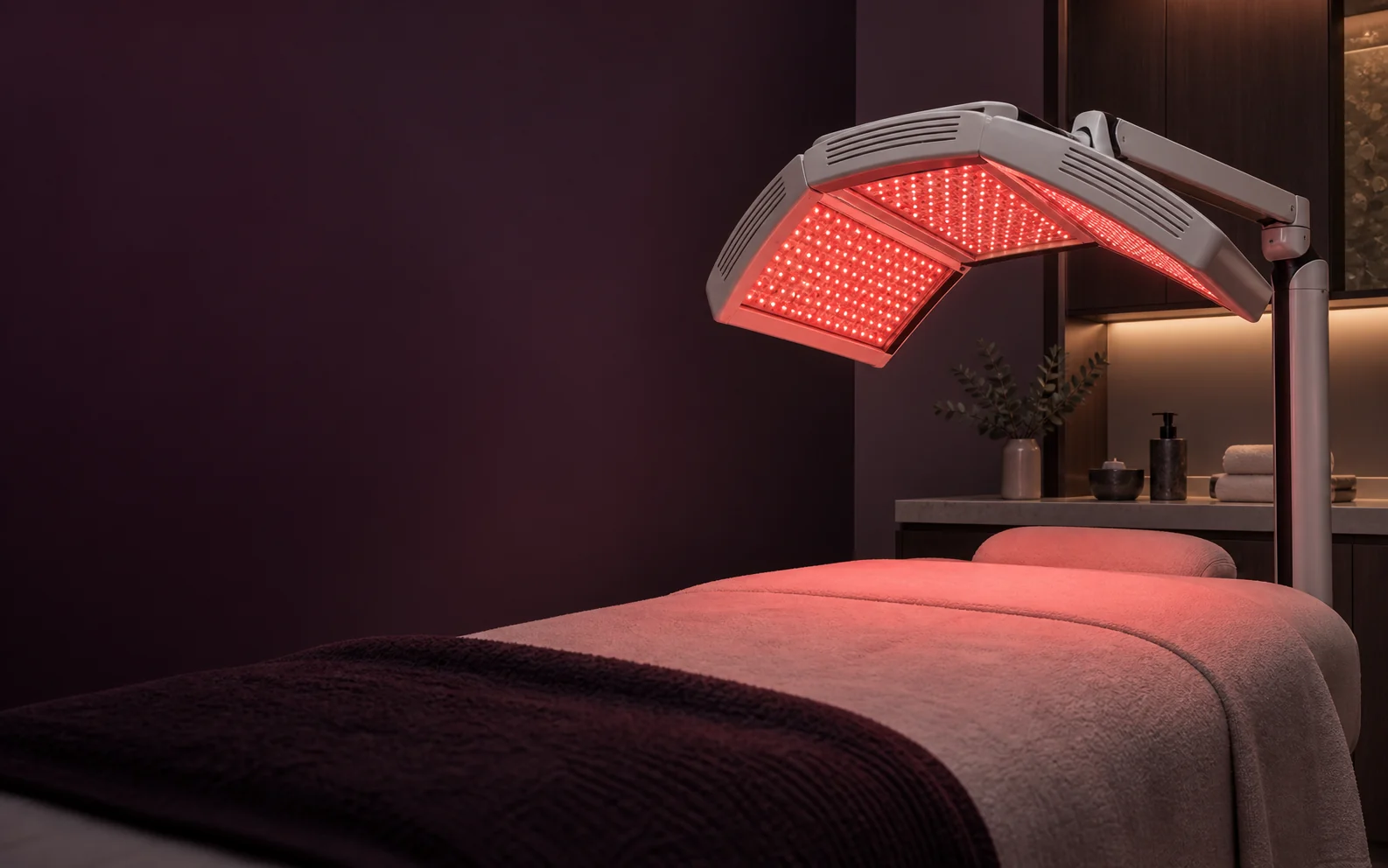
E-Light generally combines intense pulsed light with bipolar radiofrequency to support gradual, long-term reduction of selected unwanted hair.
E-Light generally combines intense pulsed light with bipolar radiofrequency to support gradual, long-term reduction of selected unwanted hair.
01 / How it works
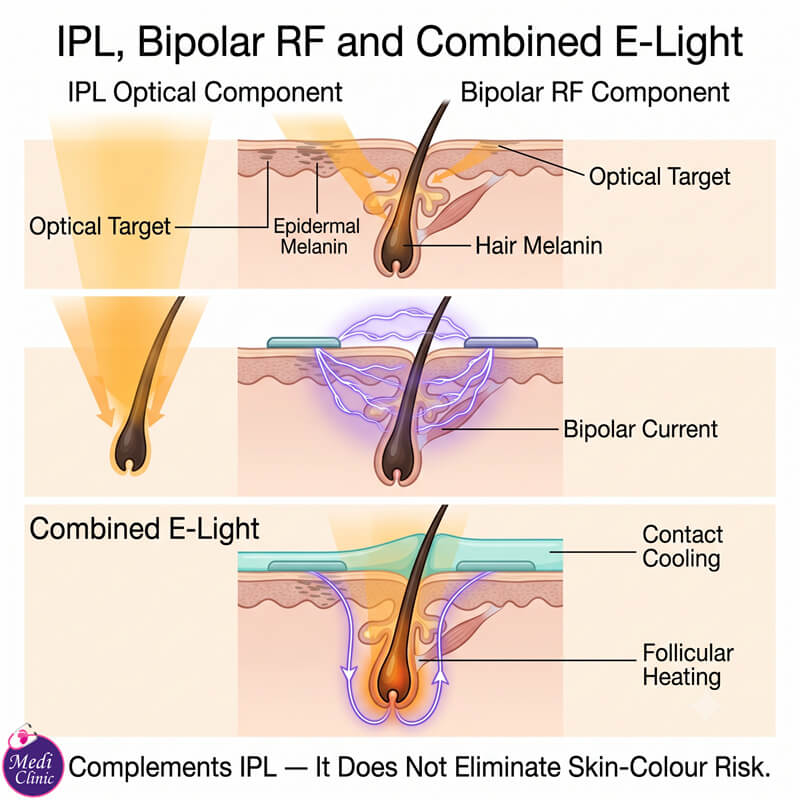
E-Light uses broad-spectrum pulsed light together with radiofrequency rather than one single laser wavelength. The optical component (IPL) relies partly on melanin absorption, converting light into thermal injury within selected hair-follicle structures. This is why hair colour, natural skin pigmentation, recent tanning, and treatment settings heavily influence both the results and the risks.
The bipolar RF component passes electrical energy between electrodes in the treatment applicator. This RF may contribute complementary follicular heating with less dependence on hair pigment, potentially allowing for lower optical energy in selected systems. However, the RF component does not mean that the treatment ignores skin colour completely. Safe treatment still requires correct patient selection, settings, contact cooling, and proper technique. Medi Clinic should verify the exact E-Light model, treatment applicator, available filters, and current Malaysian MDA registration used for hair reduction before proceeding.
E-Light generally combines intense pulsed light with bipolar radiofrequency to support gradual, long-term reduction of selected unwanted hair.
Share the concern, treatment area and change you would like to explore
Shape the approach around your features, preferences and schedule
Experience a carefully planned session with clear guidance throughout
Follow simple aftercare and review how the treatment is progressing
02 / Visual guide
E-Light generally combines intense pulsed light with bipolar radiofrequency to support gradual, long-term reduction of selected unwanted hair.
Interactive treatment map
Tap a numbered point to move from your concern to the treatment approach, how it works and a personalised plan.

Start with the change you have noticed and the result you would like to explore.
Concerns & areas
Explore common areas and goals, then discuss which are most relevant to you.
Learn how this area can be approached within a personalised treatment plan.
Who may benefit
Because IPL relies on suitable skin-to-hair contrast, an accurate clinical assessment is mandatory. Dark brown or black terminal hair usually provides the clearest optical target. Conversely, blonde, white, grey, red, or very fine vellus hair often responds poorly, and electrolysis may be more appropriate.
Hormonal Causes: Unwanted facial or body hair may be cosmetic, but it can also be hormonally influenced. Conditions like polycystic ovary syndrome (PCOS) or hyperandrogenism can cause rapid, coarse hair growth. Light-based treatment can reduce existing hair, but an underlying hormonal condition may continue to stimulate new growth. We screen for these factors and may recommend medical evaluation before proceeding.
What to discuss first
03 / Your treatment journey
A calm, well-explained experience at every stage.
Talk through the concern, your previous experiences and the result you would like to explore.
Review the treatment area, suitable options, expected experience and practical timing.
Arrive prepared and receive clear guidance throughout the treatment visit.
Leave with simple aftercare, helpful contact details and a plan for review.
E-Light aims to reduce hair growth progressively rather than guarantee complete permanent removal of every follicle. Before the procedure, the treatment area is cleansed, assessed, and shaved as instructed. During the doctor-supervised E-Light treatment, continuous comfort and skin monitoring are maintained.
Treatment Sessions: Because hair follicles cycle through anagen, catagen, and telogen stages, multiple sessions are commonly required to target hairs in their active growth phase. We do not enforce a compulsory package of fixed sessions. The number and spacing of sessions should be adjusted according to the treatment area, hair regrowth, skin response, and underlying hormonal factors.
The Results Timeline: Treated hairs may remain visible initially and shed gradually over several weeks. Reduced density develops across repeated sessions, and regrowth may become finer or slower. Some patients need periodic maintenance, and clinical studies indicate that results vary widely. Whether you are seeking underarm hair reduction, leg hair reduction, or bikini-line assessment in Johor Bahru, we focus on safe, steady, and realistic outcomes.
Safety is our priority. While temporary reactions like warmth, stinging, mild pain, redness, and perifollicular swelling are common, more significant complications can occur. Less common but important risks include burns, blistering, crusting, PIH, hypopigmentation, scarring, folliculitis, and herpes reactivation.
Paradoxical Growth & Eye Safety: Facial and neck photoepilation can occasionally stimulate rather than reduce hair (paradoxical hypertrichosis), particularly when fine hair or hormonal growth is present. Furthermore, IPL can severely injure the eyes. Wavelength-appropriate eye protection is strictly required; closing your eyes or wearing ordinary sunglasses is completely inadequate.
04 / Practical expectations
Your experience will reflect the selected treatment, treatment area and individual response. These are the useful details to explore during your visit.
05 / Compare your options
Compare the treatment approach, the area it is designed for, the experience and the way results may develop—not only the name or price.
A useful starting point when you already know the treatment and want to understand it more clearly.
Opens a wider conversation about suitable approaches, timing, recovery and natural-looking results.
Treatment gallery
Explore the consultation, treatment setting and preparation through a carefully selected visual story.
Related concerns
Begin with the concern you notice, then discover treatment approaches and questions worth bringing to your consultation.
Patient knowledge guide
Four short questions explain the treatment, suitability and why assessment matters. This quiz educates—it does not diagnose or confirm treatment eligibility.
06 / Before you decide
Each treatment has its own considerations. Your consultation is the place to discuss expected benefits, possible side effects, alternatives and anything that may affect timing.
Read about informed consent07 / Recovery
Safety is our priority. While temporary reactions like warmth, stinging, mild pain, redness, and perifollicular swelling are common, more significant complications can occur. Less common but important risks include burns, blistering, crusting, PIH, hypopigmentation, scarring, folliculitis, and herpes reactivation.
Paradoxical Growth & Eye Safety: Facial and neck photoepilation can occasionally stimulate rather than reduce hair (paradoxical hypertrichosis), particularly when fine hair or hormonal growth is present. Furthermore, IPL can severely injure the eyes. Wavelength-appropriate eye protection is strictly required; closing your eyes or wearing ordinary sunglasses is completely inadequate.
Aftercare: Between sessions, avoid plucking, waxing, or strong exfoliants, and shave only as advised. Direct sun exposure must be avoided, and broad-spectrum sunscreen is essential. Treatment is never performed directly over tattoos, permanent makeup, active infections, or suspicious dark lesions. If you experience blistering, severe pain, or any unexpected visual disturbance, contact the clinic for prompt medical review.
Contact the clinic08 / FAQ
Helpful answers for planning your consultation and understanding the treatment experience.
E-Light uses broad-spectrum pulsed light together with radiofrequency rather than one single laser wavelength. The optical component (IPL) relies partly on melanin absorption, converting light into thermal injury within selected hair-follicle structures. This is why hair colour, natural skin pigmentation, recent tanning, and treatment settings heavily influence both the results and the risks.
E-Light aims to reduce hair growth progressively rather than guarantee complete permanent removal of every follicle. Before the procedure, the treatment area is cleansed, assessed, and shaved as instructed. During the doctor-supervised E-Light treatment, continuous comfort and skin monitoring are maintained.
E-Light generally combines intense pulsed light with bipolar radiofrequency to support gradual, long-term reduction of selected unwanted hair.
Not usually. E-Light commonly uses broad-spectrum IPL together with RF, while a true hair-removal laser uses a more defined wavelength.
It may produce long-term hair reduction, but complete permanent removal of every hair cannot be guaranteed. Maintenance may be needed.
Dark brown or black terminal hair usually provides the strongest optical target. Blonde, white, grey, red or very fine hair may respond poorly.
Related treatments
Plan your next step
Share your goals with the Eco Botanic team and begin with a personalised consultation.