Discover
Share the concern, treatment area and change you would like to explore
Loading
Please wait while the page content is assembled.

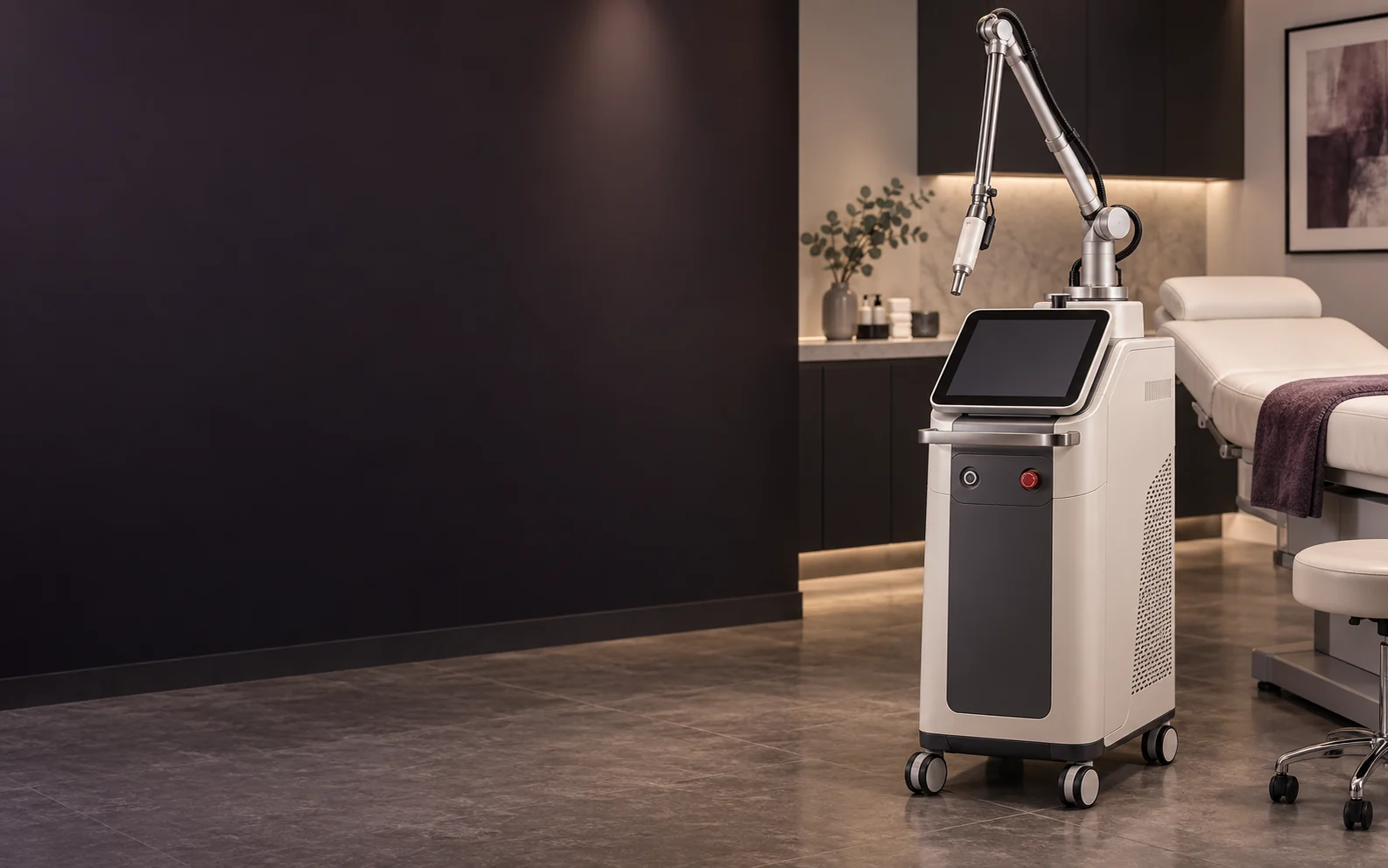
Fotona 4D treatment is a multi-mode laser rejuvenation treatment that commonly uses Fotona Er:YAG and Nd:YAG wavelengths to support skin tightening, texture improvement, collagen remodelling, and natural-looking facial refreshment in suitable patients.
Fotona 4D treatment is a multi-mode laser rejuvenation treatment that commonly uses Fotona Er:YAG and Nd:YAG wavelengths to support skin tightening, texture improvement, collagen remodelling, and natural-looking facial refreshment in suitable patients.
01 / How it works
Fotona 4D Treatment in JB is planned around the treatment area, the technology or product involved and the result you hope to achieve. Your clinician will explain how the approach works and personalise the treatment details for you.
Fotona 4D treatment is a multi-mode laser rejuvenation treatment that commonly uses Fotona Er:YAG and Nd:YAG wavelengths to support skin tightening, texture improvement, collagen remodelling, and natural-looking facial refreshment in suitable patients.
Share the concern, treatment area and change you would like to explore
Shape the approach around your features, preferences and schedule
Experience a carefully planned session with clear guidance throughout
Follow simple aftercare and review how the treatment is progressing
02 / Visual guide
Fotona 4D treatment is a multi-mode laser rejuvenation treatment that commonly uses Fotona Er:YAG and Nd:YAG wavelengths to support skin tightening, texture improvement, collagen remodelling, and natural-looking facial refreshment in suitable patients.
Interactive treatment map
Tap a numbered point to move from your concern to the treatment approach, how it works and a personalised plan.

Start with the change you have noticed and the result you would like to explore.
Concerns & areas
Explore common areas and goals, then discuss which are most relevant to you.
Learn how this area can be approached within a personalised treatment plan.
Learn how this area can be approached within a personalised treatment plan.
Learn how this area can be approached within a personalised treatment plan.
Learn how this area can be approached within a personalised treatment plan.
Who may benefit
Not all skin laxity or texture issues are treated the same way. This is why a doctor’s assessment is mandatory before considering Fotona 4D.
Skin & Facial Assessment: Our doctor examines your face to determine your level of mild skin laxity, ageing pattern, and pigmentation risk. If the intraoral SmoothLiftin mode is considered, we also conduct a brief oral health check, as active dental infections or metal dental concerns require careful review.
What to discuss first
03 / Your treatment journey
A calm, well-explained experience at every stage.
Talk through the concern, your previous experiences and the result you would like to explore.
Review the treatment area, suitable options, expected experience and practical timing.
Arrive prepared and receive clear guidance throughout the treatment visit.
Leave with simple aftercare, helpful contact details and a plan for review.
If Fotona 4D is suitable for you, your session will be meticulously guided by our doctor. Comfort varies depending on the mode used; patients may feel warmth, mild stinging, or a heat sensation.
Follow-up Reviews: True collagen-related improvement requires time, and we schedule maintenance reviews to safely monitor your skin’s response.
The primary benefit of this treatment is the gradual support of skin tightening, texture improvement, and natural-looking facial refreshment. It may help reduce the appearance of fine lines, pores, dullness, and mild nasolabial fold appearance. Results vary for each individual, and a series of sessions or maintenance may be recommended depending on your skin condition and goals. Our patients from Tebrau, Permas Jaya, and Medini appreciate that we do not promise a one-session guaranteed facelift. Whether you are a JB local or a Singapore visitor, we focus on safe, steady collagen remodelling rather than risking your skin health.
Safe Fotona 4D treatment involves manageable downtime, but your aftercare habits are crucial to success. Depending on the selected modes and treatment intensity, you may experience mild redness, warmth, dryness, sensitivity, or peeling. SupErficial or resurfacing-focused settings generally have more visible skin reaction than gentler non-ablative modes. This is a normal part of the healing process. We will provide clear instructions on how to cleanse and moisturise your skin gently while avoiding harsh exfoliation, retinoids, or strong actives unless advised.
The absolute most important rule of laser aftercare is strict sun protection. Exposure to UV rays without broad-spectrum sunscreen can quickly reverse your progress and cause post-inflammatory hyperpigmentation. We advise all our patients to avoid strong sun, saunas, and steam rooms post-treatment. During the procedure itself, proper wavelength-specific eye goggles are always used to prevent eye injury. By setting realistic expectations and providing detailed post-care guidance, we help patients protect their investment in their skin.
04 / Practical expectations
Your experience will reflect the selected treatment, treatment area and individual response. These are the useful details to explore during your visit.
05 / Compare your options
Compare the treatment approach, the area it is designed for, the experience and the way results may develop—not only the name or price.
A useful starting point when you already know the treatment and want to understand it more clearly.
Opens a wider conversation about suitable approaches, timing, recovery and natural-looking results.
Treatment gallery
Explore the consultation, treatment setting and preparation through a carefully selected visual story.
Related concerns
Begin with the concern you notice, then discover treatment approaches and questions worth bringing to your consultation.
Patient knowledge guide
Four short questions explain the treatment, suitability and why assessment matters. This quiz educates—it does not diagnose or confirm treatment eligibility.
06 / Before you decide
Patients with active infection, open wounds, active cold sores, severe dermatitis, recent strong sun exposure, very tanned skin, photosensitivity concerns, recent isotretinoin use, pregnancy or breastfeeding caution, high PIH risk, or unrealistic expectations may need to delay or avoid treatment.
Read about informed consent07 / Recovery
Safe Fotona 4D treatment involves manageable downtime, but your aftercare habits are crucial to success. Depending on the selected modes and treatment intensity, you may experience mild redness, warmth, dryness, sensitivity, or peeling. SupErficial or resurfacing-focused settings generally have more visible skin reaction than gentler non-ablative modes. This is a normal part of the healing process. We will provide clear instructions on how to cleanse and moisturise your skin gently while avoiding harsh exfoliation, retinoids, or strong actives unless advised.
The absolute most important rule of laser aftercare is strict sun protection. Exposure to UV rays without broad-spectrum sunscreen can quickly reverse your progress and cause post-inflammatory hyperpigmentation. We advise all our patients to avoid strong sun, saunas, and steam rooms post-treatment. During the procedure itself, proper wavelength-specific eye goggles are always used to prevent eye injury. By setting realistic expectations and providing detailed post-care guidance, we help patients protect their investment in their skin.
Contact the clinic08 / FAQ
Helpful answers for planning your consultation and understanding the treatment experience.
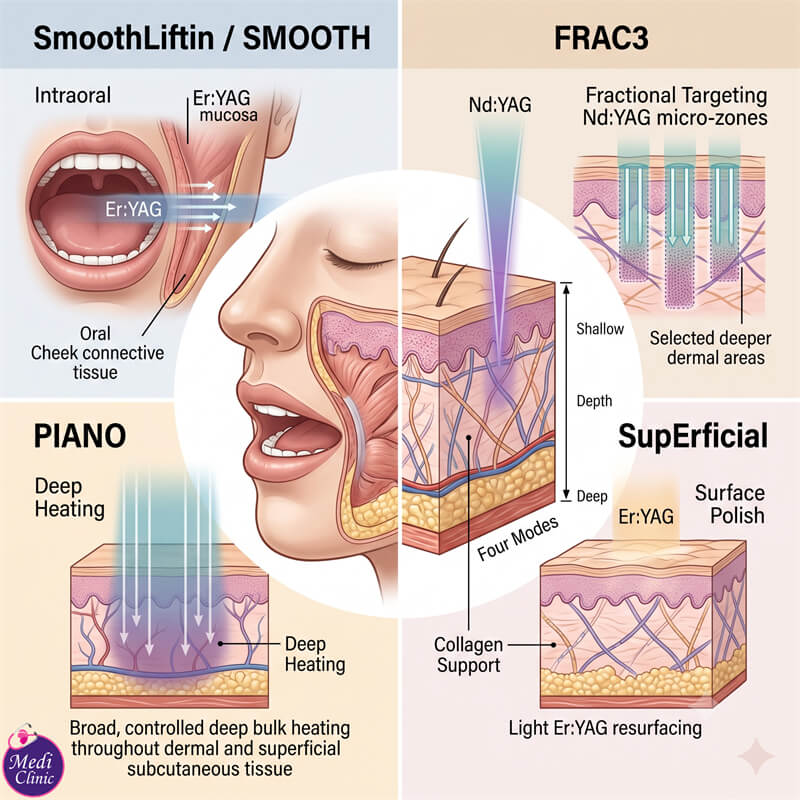
The commonly described modes are SmoothLiftin or SMOOTH, FRAC3, PIANO, and SupErficial. Each mode has a different role in supporting inner cheek, deeper skin, bulk heating, or superficial texture and glow depending on protocol and suitability.
Comfort varies. Some patients feel warmth, mild stinging, or heat sensation depending on the mode and intensity. The clinic should explain expected sensation, comfort measures, and aftercare before treatment begins.
Downtime varies by treatment intensity, mode, and skin type. Some patients may have minimal downtime, while others may have redness, warmth, dryness, peeling, sensitivity, or temporary darkening.
It may be suitable for many Asian-skin patients, but pigmentation-prone skin needs careful planning. Doctor assessment is important to reduce the risk of post-inflammatory hyperpigmentation, burns, irritation, or uneven skin colour.
Patients with active infection, open wounds, active cold sores, severe dermatitis, recent strong sun exposure, very tanned skin, photosensitivity concerns, recent isotretinoin use, pregnancy or breastfeeding caution, high PIH risk, or unrealistic expectations may need to delay or avoid treatment.
Follow clinic aftercare. This may include avoiding strong sun, heat, sauna, harsh exfoliation, retinoids or strong actives unless advised, picking, scratching, and unapproved skincare. Sunscreen and gentle skincare are important.
Related treatments
Plan your next step
Share your goals with the Eco Botanic team and begin with a personalised consultation.