Discover
Share the concern, treatment area and change you would like to explore
Loading
Please wait while the page content is assembled.
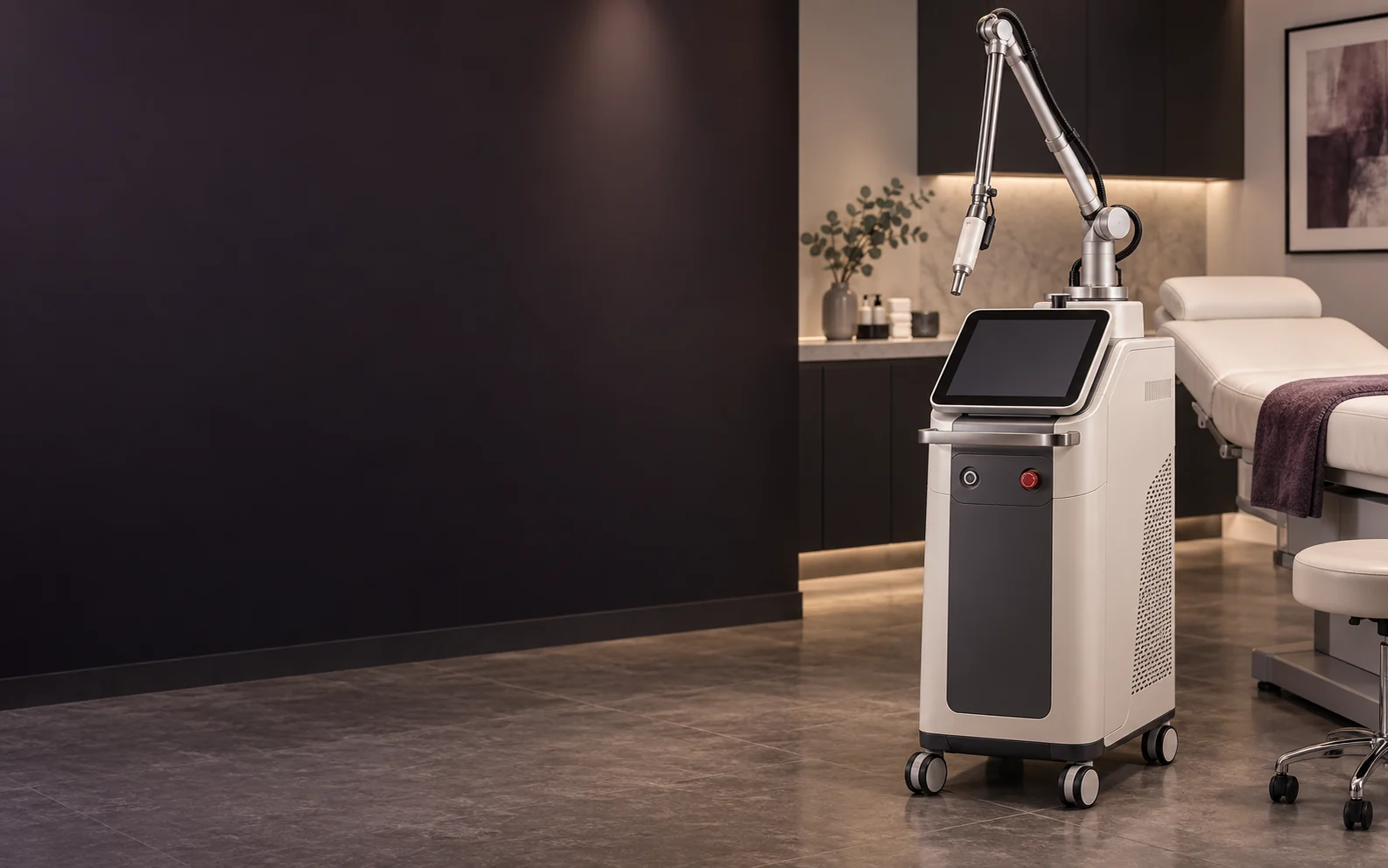
It uses a specific laser to create controlled thermal injury in selected skin layers for an appropriate scar, texture, wrinkle or photoageing concern.
It uses a specific laser to create controlled thermal injury in selected skin layers for an appropriate scar, texture, wrinkle or photoageing concern.
01 / How it works
Most resurfacing lasers interact strongly with water in the skin. By delivering precise wavelengths of light, the laser creates controlled thermal injury within the epidermis and dermis. This process may trigger the removal of selected tissue, coagulation, inflammation, re-epithelialisation, and eventual collagen remodelling. Laser resurfacing is not one standard facial and cannot be selected safely from the word fractional alone.
Both ablative and non-ablative resurfacing create controlled tissue injury, but they differ in treatment depth, recovery, and risk. Ablative laser resurfacing removes or vaporises selected skin tissue, potentially creating an open wound, and generally requires longer downtime with more intensive wound care. Non-ablative laser resurfacing creates thermal injury without intentionally removing the entire epidermal surface. Furthermore, fractional delivery treats separated microscopic zones leaving intervening tissue intact, whereas full-field resurfacing treats a more continuous area. No resurfacing is risk-free, and heat spread must always be carefully managed.
It uses a specific laser to create controlled thermal injury in selected skin layers for an appropriate scar, texture, wrinkle or photoageing concern.
Share the concern, treatment area and change you would like to explore
Shape the approach around your features, preferences and schedule
Experience a carefully planned session with clear guidance throughout
Follow simple aftercare and review how the treatment is progressing
02 / Visual guide
It uses a specific laser to create controlled thermal injury in selected skin layers for an appropriate scar, texture, wrinkle or photoageing concern.
Interactive treatment map
Tap a numbered point to move from your concern to the treatment approach, how it works and a personalised plan.
Start with the change you have noticed and the result you would like to explore.
Concerns & areas
Explore common areas and goals, then discuss which are most relevant to you.
Learn how this area can be approached within a personalised treatment plan.
Who may benefit
This quiz cannot confirm laser-resurfacing suitability. A doctor should assess the diagnosis, scar type, skin tone, tanning, pigment history, medicines, active skin disease, exact device, wavelength, treatment depth, recovery and alternatives.
What to discuss first
03 / Your treatment journey
A calm, well-explained experience at every stage.
Talk through the concern, your previous experiences and the result you would like to explore.
Review the treatment area, suitable options, expected experience and practical timing.
Arrive prepared and receive clear guidance throughout the treatment visit.
Leave with simple aftercare, helpful contact details and a plan for review.
The proposed resurfacing use must match the exact Malaysian device registration and local instructions. Before proceeding, we verify the exact laser model, wavelength, applicator, and its current Medical Device Authority (MDA) status. We also thoroughly review your health history, recent tanning, keloid history, isotretinoin use, and active skincare.
Realistic Outcomes: Depending on the depth and area, you may experience warmth, snapping, pressure, or significant pain with deeper ablative passes. After the procedure, strict written aftercare is provided. Results are gradual; scar tissue remodels slowly over several months. Pores, natural skin texture, and some asymmetry will remain. Importantly, there is no compulsory three-session, six-session or annual resurfacing package for every patient. Follow-up is arranged to monitor healing, and further sessions or alternative therapies are discussed based purely on your individual biological response.
Controlled thermal injury may support gradual remodelling of selected skin concerns, but recovery varies significantly. Ablative treatments may create an open wound requiring moist wound care, gentle cleansing, and careful infection monitoring. Non-ablative treatments often result in less visible wound formation, presenting mostly as redness and swelling, but still carry complication risks. Patients with Asian skin face specific challenges; normal epidermal melanin and inflammatory responses increase the risk of post-inflammatory hyperpigmentation (PIH), burns, or hypopigmentation (white patches).
Prolonged redness, track marks, acne flares, milia, blistering, and herpes simplex reactivation are all possible. Tanned skin or recent sun exposure further elevates burn risks. Eye protection must be strictly appropriate for the exact wavelength used, as laser energy can cause severe eye injury. Our clinic maintains strict laser-room safety protocols, including controlled access, wavelength-specific warning signage, and local smoke evacuation to manage laser plume safely during ablative procedures.
04 / Practical expectations
Your experience will reflect the selected treatment, treatment area and individual response. These are the useful details to explore during your visit.
05 / Compare your options
Compare the treatment approach, the area it is designed for, the experience and the way results may develop—not only the name or price.
A useful starting point when you already know the treatment and want to understand it more clearly.
Opens a wider conversation about suitable approaches, timing, recovery and natural-looking results.
Ablative treatment removes selected skin tissue and may create an open wound, while non-ablative treatment creates thermal injury without intentionally removing the complete surface.
Treatment gallery
Explore the consultation, treatment setting and preparation through a carefully selected visual story.
Related concerns
Begin with the concern you notice, then discover treatment approaches and questions worth bringing to your consultation.
Patient knowledge guide
Four short questions explain the treatment, suitability and why assessment matters. This quiz educates—it does not diagnose or confirm treatment eligibility.
06 / Before you decide
Each treatment has its own considerations. Your consultation is the place to discuss expected benefits, possible side effects, alternatives and anything that may affect timing.
Read about informed consent07 / Recovery
Controlled thermal injury may support gradual remodelling of selected skin concerns, but recovery varies significantly. Ablative treatments may create an open wound requiring moist wound care, gentle cleansing, and careful infection monitoring. Non-ablative treatments often result in less visible wound formation, presenting mostly as redness and swelling, but still carry complication risks. Patients with Asian skin face specific challenges; normal epidermal melanin and inflammatory responses increase the risk of post-inflammatory hyperpigmentation (PIH), burns, or hypopigmentation (white patches).
Prolonged redness, track marks, acne flares, milia, blistering, and herpes simplex reactivation are all possible. Tanned skin or recent sun exposure further elevates burn risks. Eye protection must be strictly appropriate for the exact wavelength used, as laser energy can cause severe eye injury. Our clinic maintains strict laser-room safety protocols, including controlled access, wavelength-specific warning signage, and local smoke evacuation to manage laser plume safely during ablative procedures.
Contact the clinic08 / FAQ
Helpful answers for planning your consultation and understanding the treatment experience.
Most resurfacing lasers interact strongly with water in the skin. By delivering precise wavelengths of light, the laser creates controlled thermal injury within the epidermis and dermis. This process may trigger the removal of selected tissue, coagulation, inflammation, re-epithelialisation, and eventual collagen remodelling. Laser resurfacing is not one standard facial and cannot be selected safely from the word fractional alone.
The proposed resurfacing use must match the exact Malaysian device registration and local instructions. Before proceeding, we verify the exact laser model, wavelength, applicator, and its current Medical Device Authority (MDA) status. We also thoroughly review your health history, recent tanning, keloid history, isotretinoin use, and active skincare.
It uses a specific laser to create controlled thermal injury in selected skin layers for an appropriate scar, texture, wrinkle or photoageing concern.
Ablative treatment removes selected skin tissue and may create an open wound, while non-ablative treatment creates thermal injury without intentionally removing the complete surface.
No. Fractional delivery can be ablative or non-ablative and may use CO₂, erbium, thulium or another verified wavelength.
It may improve selected boxcar or texture-related scars, but ice-pick, rolling, tethered and raised scars often require different or combined treatment.
Related treatments
Plan your next step
Share your goals with the Eco Botanic team and begin with a personalised consultation.