Discover
Share the concern, treatment area and change you would like to explore
Loading
Please wait while the page content is assembled.
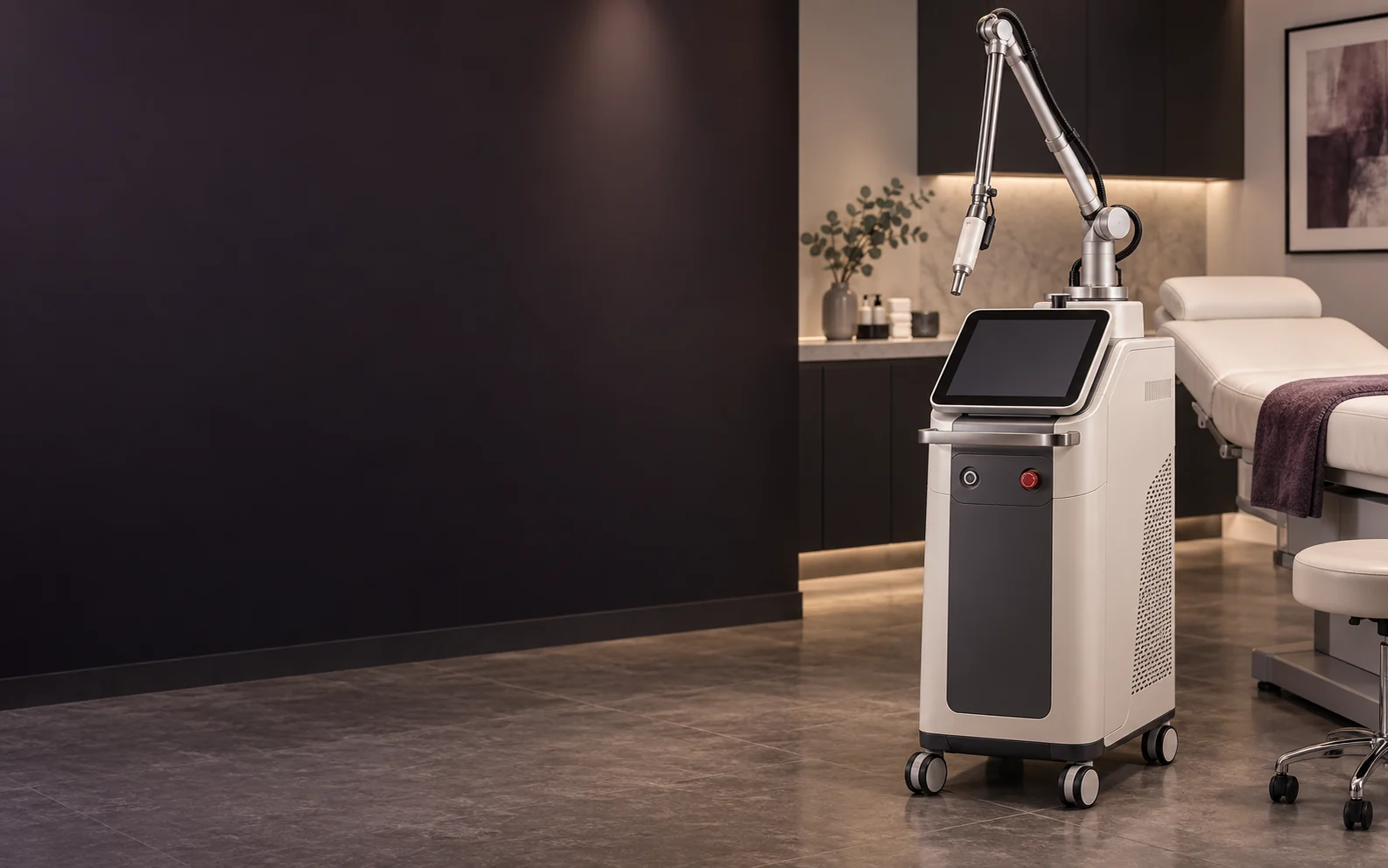
It is a broad category of medical-device procedures using specific laser wavelengths to target selected pigment, vessels, hair, tattoo ink or water-containing tissue.
It is a broad category of medical-device procedures using specific laser wavelengths to target selected pigment, vessels, hair, tattoo ink or water-containing tissue.
01 / How it works
Selected lasers aim to deliver organised light at one principal wavelength that is preferentially absorbed by a target chromophore such as melanin, haemoglobin, or water while limiting injury to surrounding tissue. This principle of selective photothermolysis relies on precise pulse durations, specific wavelengths, and carefully delivered energy. However, selectivity is not absolute. Normal epidermal melanin may also absorb energy, and excessive or unsuitable treatment can cause burns.
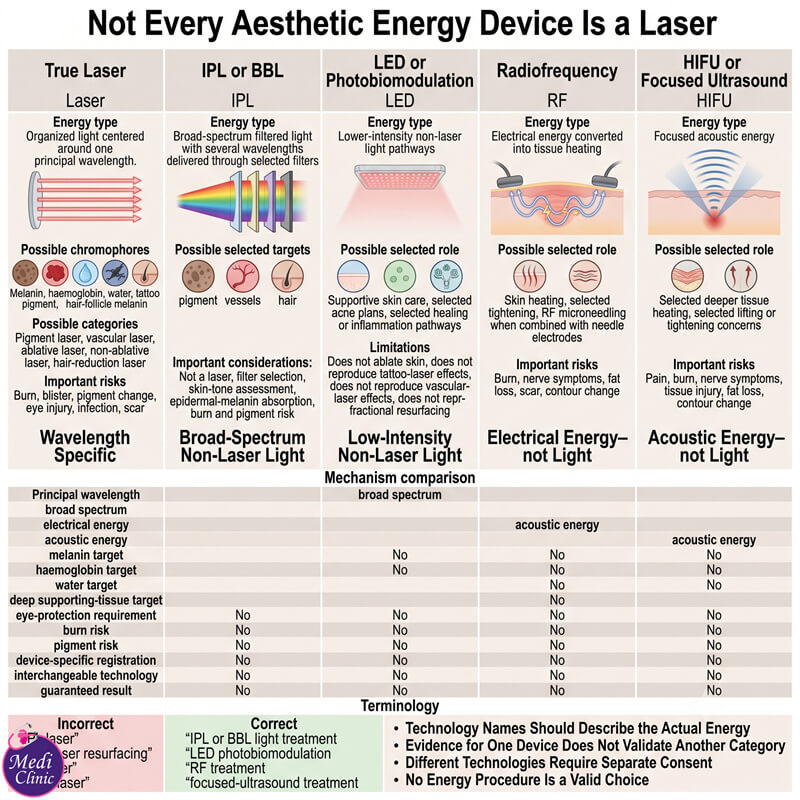
The word “laser” alone is not enough to identify what treatment is being offered. A laser’s effect depends heavily on the target depth, spot size, skin tone, and operator technique. Furthermore, it is critical to distinguish true lasers from other energy-based devices. IPL (Intense Pulsed Light) and BBL use broad-spectrum, non-laser light, while LED treatments use lower-intensity non-laser light pathways. Radiofrequency (RF) and High-Intensity Focused Ultrasound (HIFU) use electrical and acoustic energy, respectively. These are not lasers, and they possess separate indications and complication risks. We ensure that you understand exactly which technology is being recommended.
It is a broad category of medical-device procedures using specific laser wavelengths to target selected pigment, vessels, hair, tattoo ink or water-containing tissue.
Share the concern, treatment area and change you would like to explore
Shape the approach around your features, preferences and schedule
Experience a carefully planned session with clear guidance throughout
Follow simple aftercare and review how the treatment is progressing
02 / Visual guide
It is a broad category of medical-device procedures using specific laser wavelengths to target selected pigment, vessels, hair, tattoo ink or water-containing tissue.
Interactive treatment map
Tap a numbered point to move from your concern to the treatment approach, how it works and a personalised plan.

Start with the change you have noticed and the result you would like to explore.
Concerns & areas
Explore common areas and goals, then discuss which are most relevant to you.
Learn how this area can be approached within a personalised treatment plan.
Learn how this area can be approached within a personalised treatment plan.
Learn how this area can be approached within a personalised treatment plan.
Learn how this area can be approached within a personalised treatment plan.
Who may benefit
This quiz cannot confirm laser suitability. A doctor should assess the diagnosis, skin tone, tanning, pigment history, medicines, previous procedures, exact device, wavelength, Malaysian registration, expected benefit, recovery and alternatives.
What to discuss first
03 / Your treatment journey
A calm, well-explained experience at every stage.
Talk through the concern, your previous experiences and the result you would like to explore.
Review the treatment area, suitable options, expected experience and practical timing.
Arrive prepared and receive clear guidance throughout the treatment visit.
Leave with simple aftercare, helpful contact details and a plan for review.
04 / Practical expectations
Your experience will reflect the selected treatment, treatment area and individual response. These are the useful details to explore during your visit.
05 / Compare your options
Compare the treatment approach, the area it is designed for, the experience and the way results may develop—not only the name or price.
A useful starting point when you already know the treatment and want to understand it more clearly.
Opens a wider conversation about suitable approaches, timing, recovery and natural-looking results.
Ablative lasers remove selected skin tissue, while non-ablative lasers create thermal injury without intentionally removing the full surface. Both may cause complications.
Treatment gallery
Explore the consultation, treatment setting and preparation through a carefully selected visual story.
Related concerns
Begin with the concern you notice, then discover treatment approaches and questions worth bringing to your consultation.
Patient knowledge guide
Four short questions explain the treatment, suitability and why assessment matters. This quiz educates—it does not diagnose or confirm treatment eligibility.
06 / Before you decide
Laser energy can cause pain, redness, swelling, blistering, and temporary darkening. A chemical or thermal burn is a serious complication. For Asian skin tones, excess epidermal melanin increases the risk of post-inflammatory hyperpigmentation, mottled colour loss (hypopigmentation), or permanent scarring if inappropriate wavelengths or settings are used. Furthermore, laser energy can severely injure the eye; protection must be appropriate for the exact wavelength and correctly fitted. Ordinary sunglasses or simply closing the eyes do not automatically provide suitable protection.
Patient safety heavily relies on equipment authenticity. Before making any named medical laser available, we verify the exact model, wavelength, handpiece, and manufacturer through the Medical Device Authority (MDA) in Malaysia. We check current MDAR status and use devices according to their authorised intended purposes. We do not transfer foreign indications to Malaysia, nor do we present foreign clearance as a substitute for local regulatory adherence.
Read about informed consent07 / Recovery
You will receive treatment-specific guidance on what to expect, how to care for the area and when to contact the clinic with a question.
Contact the clinic08 / FAQ
Helpful answers for planning your consultation and understanding the treatment experience.
Selected lasers aim to deliver organised light at one principal wavelength that is preferentially absorbed by a target chromophore such as melanin, haemoglobin, or water while limiting injury to surrounding tissue. This principle of selective photothermolysis relies on precise pulse durations, specific wavelengths, and carefully delivered energy. However, selectivity is not absolute. Normal epidermal melanin may also absorb energy, and excessive or unsuitable treatment can cause burns.
It is a broad category of medical-device procedures using specific laser wavelengths to target selected pigment, vessels, hair, tattoo ink or water-containing tissue.
Ablative lasers remove selected skin tissue, while non-ablative lasers create thermal injury without intentionally removing the full surface. Both may cause complications.
No. Fractional delivery may be ablative or non-ablative and may use CO₂, erbium, thulium or another device-specific wavelength.
No. Melasma is chronic and may relapse. Laser treatment can sometimes worsen pigmentation or cause mottled colour loss.
Possible effects include pain, redness, swelling, burns, blisters, infection, herpes reactivation, dark or light pigment changes and scarring.
Related treatments
Plan your next step
Share your goals with the Eco Botanic team and begin with a personalised consultation.