Discover
Share the concern, treatment area and change you would like to explore
Loading
Please wait while the page content is assembled.
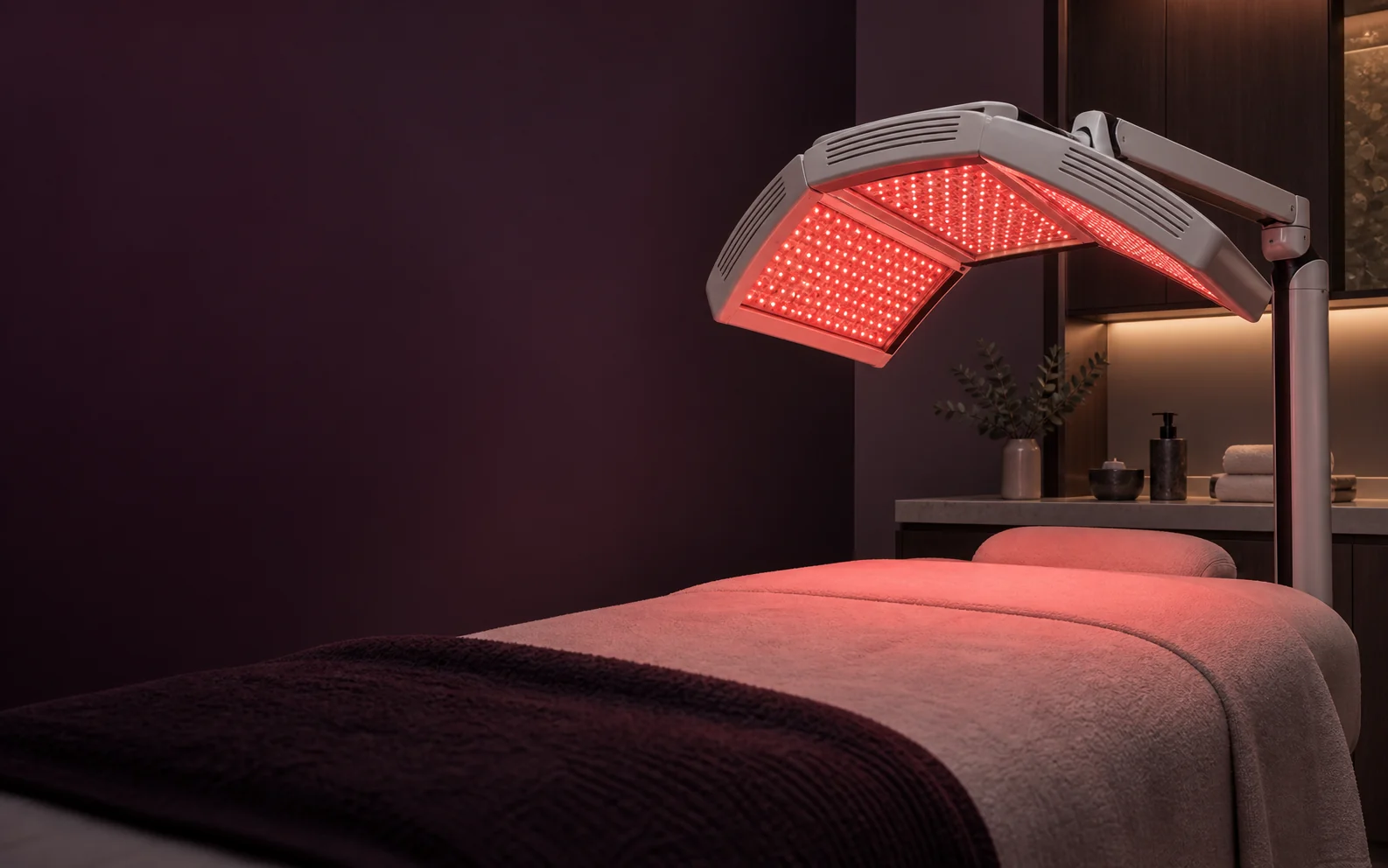
PDT is a light-based treatment that usually combines a photosensitising agent with a specific light source to create a controlled skin response. It may be discussed for selected acne or dermatology concerns depending on diagnosis, product, and local protocol.
PDT is a light-based treatment that usually combines a photosensitising agent with a specific light source to create a controlled skin response. It may be discussed for selected acne or dermatology concerns depending on diagnosis, product, and local protocol.
01 / How it works
While both are light-based skin treatments, they function very differently.
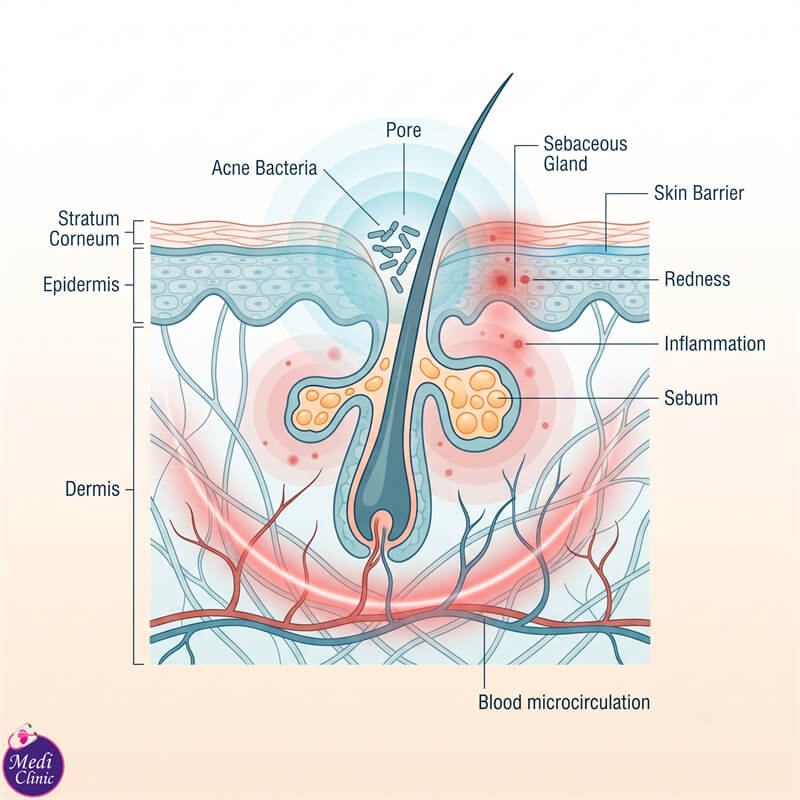
Photodynamic Therapy (PDT) usually combines a photosensitising agent (such as aminolevulinic acid or methyl aminolevulinate) with a specific light source. The agent is absorbed by targeted skin structures, and when the light is applied, it activates the medicine to create reactive oxygen species. This controlled skin response can help selected concerns like oily skin, moderate acne, or sun-damaged skin (actinic keratosis) depending on the local protocol used.
LED Light Treatment , however, uses selected non-UV light wavelengths like blue light, red light, or near-infrared light without a photosensitising medicine. Blue light may help mild-to-moderate inflammatory acne by targeting Cutibacterium acnes bacteria. Red or near-infrared light is often used for photobiomodulation to support redness reduction, skin recovery, and collagen-related processes. We carefully plan these treatments for patients from JB, Taman Pelangi, Mount Austin, and Singapore, keeping pigmentation-prone Asian skin types strictly in mind.
PDT is a light-based treatment that usually combines a photosensitising agent with a specific light source to create a controlled skin response. It may be discussed for selected acne or dermatology concerns depending on diagnosis, product, and local protocol.
Share the concern, treatment area and change you would like to explore
Shape the approach around your features, preferences and schedule
Experience a carefully planned session with clear guidance throughout
Follow simple aftercare and review how the treatment is progressing
02 / Visual guide
PDT is a light-based treatment that usually combines a photosensitising agent with a specific light source to create a controlled skin response. It may be discussed for selected acne or dermatology concerns depending on diagnosis, product, and local protocol.
Interactive treatment map
Tap a numbered point to move from your concern to the treatment approach, how it works and a personalised plan.

Start with the change you have noticed and the result you would like to explore.
Concerns & areas
Explore common areas and goals, then discuss which are most relevant to you.
Learn how this area can be approached within a personalised treatment plan.
Learn how this area can be approached within a personalised treatment plan.
Learn how this area can be approached within a personalised treatment plan.
Learn how this area can be approached within a personalised treatment plan.
Who may benefit
Not all acne or skin concerns react well to light therapy. This is why a thorough doctor’s assessment is mandatory.
Skin Assessment: Our doctor reviews your skin type, current inflammation levels, and medical history. We determine if you might benefit more from supportive LED light, a targeted PDT protocol, or standard medical acne treatment.
What to discuss first
03 / Your treatment journey
A calm, well-explained experience at every stage.
Talk through the concern, your previous experiences and the result you would like to explore.
Review the treatment area, suitable options, expected experience and practical timing.
Arrive prepared and receive clear guidance throughout the treatment visit.
Leave with simple aftercare, helpful contact details and a plan for review.
Before any light activates, our doctor conducts a thorough consultation covering your acne history, medication review, photosensitivity risk, and treatment expectations.
The Process: If PDT is chosen, the photosensitising agent is applied and allowed time to incubate before the light session begins. If LED treatment is selected, the specific blue, red, or near-infrared light is administered directly to cleansed skin. Protective goggles are mandatory for both.
Results take time. LED treatment often needs repeated sessions to show gradual improvement in skin recovery or acne support. PDT may create a more noticeable, intense response requiring downtime. While neither treatment can guarantee permanent acne clearance or complete scar removal, they provide evidence-based support for skin rejuvenation and oily skin management. We support patients from Tebrau, Permas Jaya, Medini, and those travelling via Tuas Second Link with responsible maintenance planning.
Light-based skin treatment is not just about shining a light on your face. At Medi Clinic, a doctor-led medical aesthetic clinic in Johor Bahru, Malaysia, we provide Photodynamic Therapy (PDT) and LED Light Treatment as targeted options for acne-prone skin, oily skin, redness, and post-procedure skin recovery. Because these two light-based treatments operate differently, professional assessment is essential to match the correct wavelength, intensity, and protocol to your specific skin concern.
04 / Practical expectations
Your experience will reflect the selected treatment, treatment area and individual response. These are the useful details to explore during your visit.
05 / Compare your options
Compare the treatment approach, the area it is designed for, the experience and the way results may develop—not only the name or price.
A useful starting point when you already know the treatment and want to understand it more clearly.
Opens a wider conversation about suitable approaches, timing, recovery and natural-looking results.
PDT usually uses a photosensitising agent and may create a stronger skin reaction and downtime. LED light treatment usually does not require a photosensitising medicine and is often gentler or supportive, but it may need repeated sessions.
Treatment gallery
Explore the consultation, treatment setting and preparation through a carefully selected visual story.
Related concerns
Begin with the concern you notice, then discover treatment approaches and questions worth bringing to your consultation.
Patient knowledge guide
Four short questions explain the treatment, suitability and why assessment matters. This quiz educates—it does not diagnose or confirm treatment eligibility.
06 / Before you decide
Follow the clinic’s aftercare. This may include avoiding strong sun, bright light after PDT when instructed, harsh exfoliation, strong active skincare, picking, sauna, and heavy heat exposure. Use sunscreen and moisturiser as advised.
Read about informed consent07 / Recovery
Light-based skin treatment is not just about shining a light on your face. At Medi Clinic, a doctor-led medical aesthetic clinic in Johor Bahru, Malaysia, we provide Photodynamic Therapy (PDT) and LED Light Treatment as targeted options for acne-prone skin, oily skin, redness, and post-procedure skin recovery. Because these two light-based treatments operate differently, professional assessment is essential to match the correct wavelength, intensity, and protocol to your specific skin concern.
Contact the clinic08 / FAQ
Helpful answers for planning your consultation and understanding the treatment experience.
While both are light-based skin treatments, they function very differently.
PDT is a light-based treatment that usually combines a photosensitising agent with a specific light source to create a controlled skin response. It may be discussed for selected acne or dermatology concerns depending on diagnosis, product, and local protocol.
LED light treatment uses selected non-UV light wavelengths, such as blue, red, or near-infrared light. It may support acne-prone skin, redness, skin recovery, or skin-quality improvement in suitable patients.
PDT usually uses a photosensitising agent and may create a stronger skin reaction and downtime. LED light treatment usually does not require a photosensitising medicine and is often gentler or supportive, but it may need repeated sessions.
Light-based treatment may help selected mild-to-moderate acne or acne-prone skin. Severe cystic acne, scarring acne, or acne with infection may need medical acne treatment. Results vary and combination planning may be needed.
LED treatment may be suitable for many patients, but Asian skin can be pigmentation-prone, and visible light or heat may affect some pigmentation concerns. A consultation helps assess skin type, melasma risk, medication history, and eye safety.
Related treatments
Plan your next step
Share your goals with the Eco Botanic team and begin with a personalised consultation.