MEDI CLINIC AESTHETIC JOHOR

Doctor Supervised Laser Skin Resurfacing Treatment in JB

Doctor-Supervised Laser Skin Resurfacing Treatment in Johor Bahru

Laser skin resurfacing is a controlled thermal procedure intended to remodel or remove selected skin tissue. The treatment depth, recovery and risks depend on the exact laser, wavelength, delivery pattern and patient. It involves a diagnosis-first assessment for selected acne scars, texture, fine lines, or photoageing using an exact Malaysian-registered ablative or non-ablative resurfacing system. We must identify the scar, wavelength, and resurfacing depth before applying any energy to the skin.

Many patients from Singapore and across Malaysia choose our Johor Bahru clinic because they value medically responsible, honest care. Whether you are travelling via the Causeway or Tuas Second Link, or visiting locally from Taman Molek, Iskandar Puteri, or Eco Botanic, we focus on safe, anatomy-aware planning. We understand that for Asian and pigmentation-prone skin, limiting unnecessary inflammation is a vital part of treatment planning. We strictly distinguish true laser resurfacing from IPL, LED, and microneedling, and we verify every device to ensure we are using genuine technology designed for your exact clinical concern.
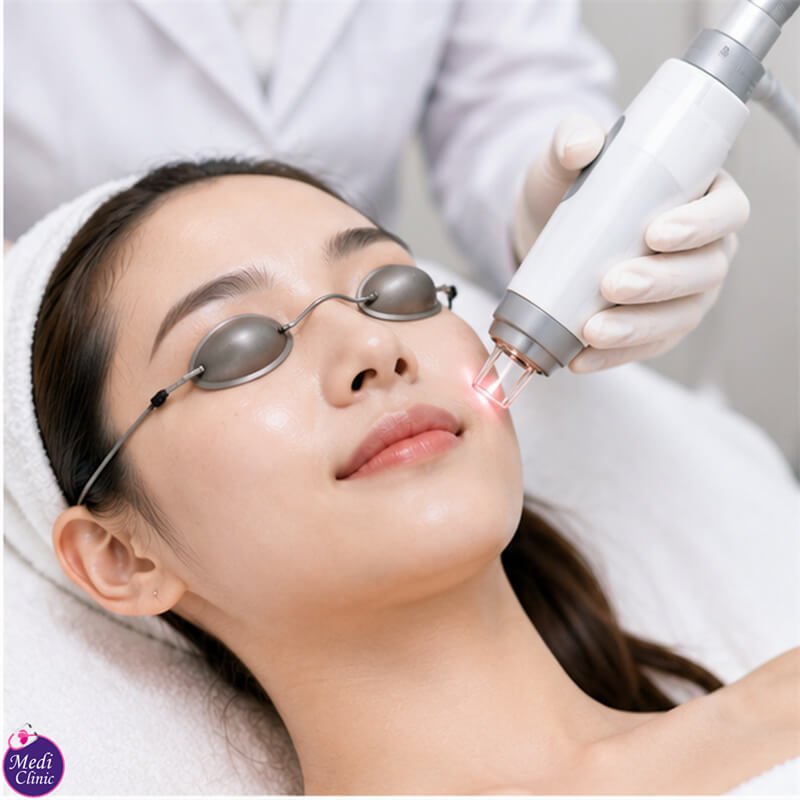
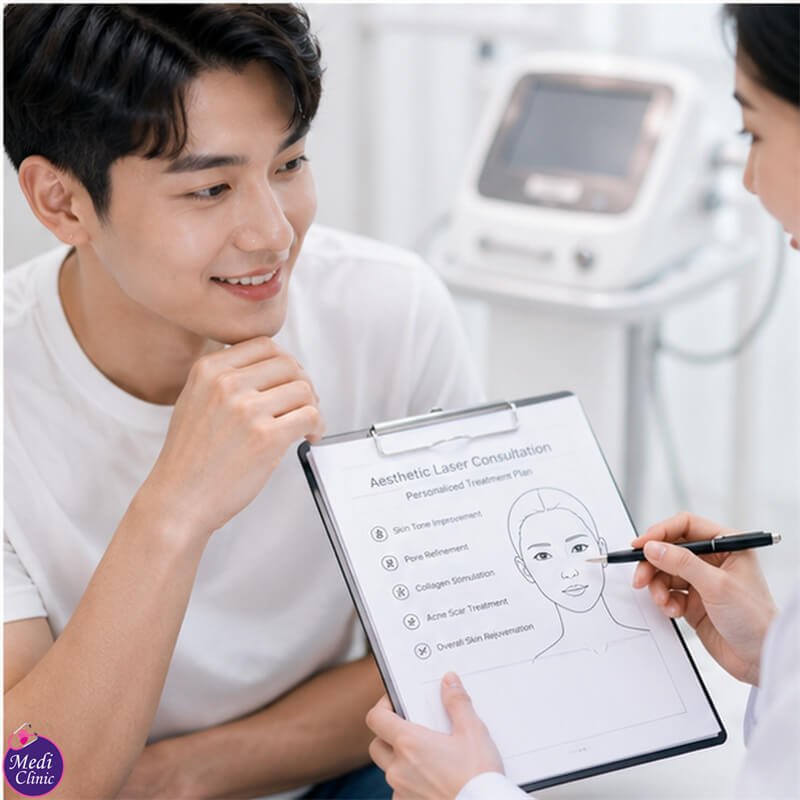
Laser skin resurfacing consultation at Medi Clinic JB SG

How Laser Skin Resurfacing Works

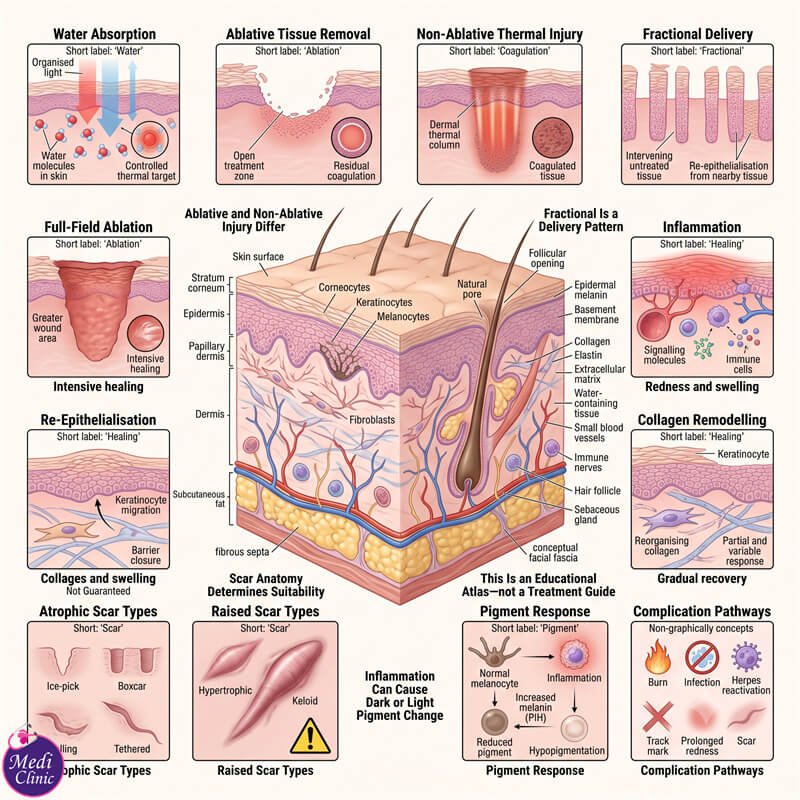
Most resurfacing lasers interact strongly with water in the skin. By delivering precise wavelengths of light, the laser creates controlled thermal injury within the epidermis and dermis. This process may trigger the removal of selected tissue, coagulation, inflammation, re-epithelialisation, and eventual collagen remodelling. Laser resurfacing is not one standard facial and cannot be selected safely from the word fractional alone.

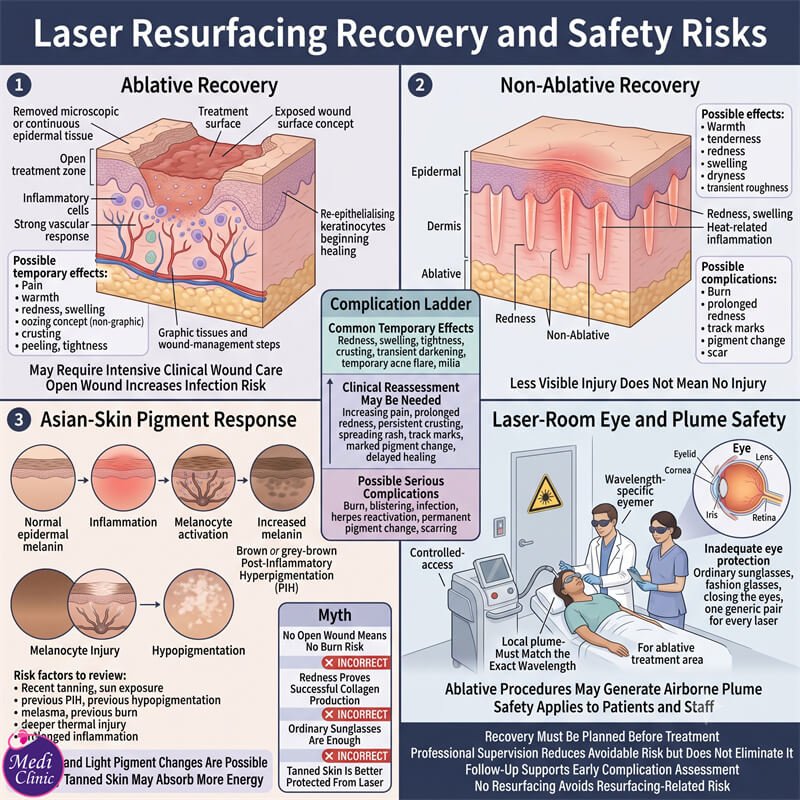
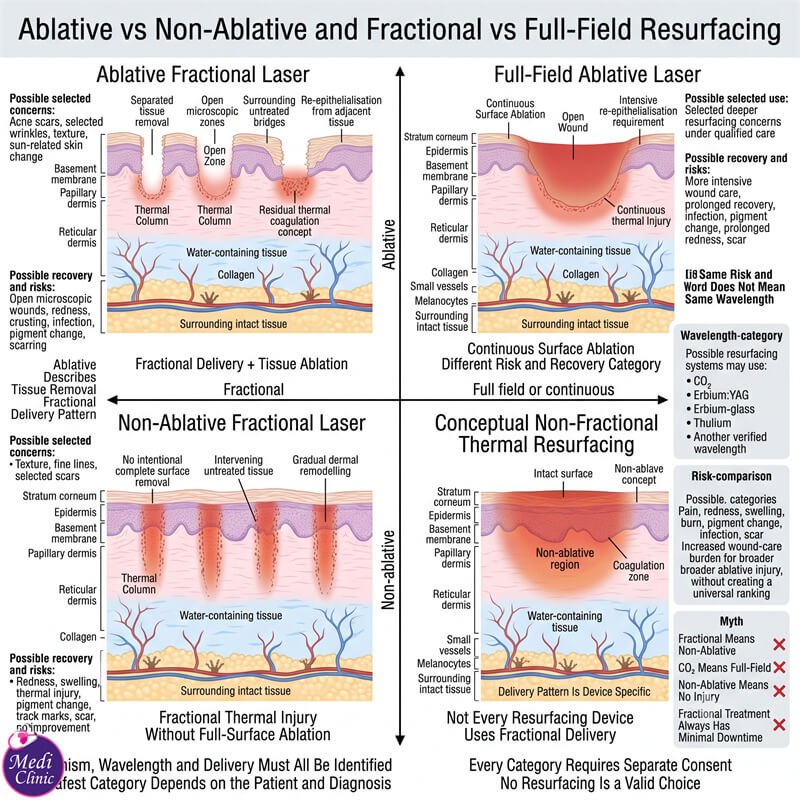
Both ablative and non-ablative resurfacing create controlled tissue injury, but they differ in treatment depth, recovery, and risk. Ablative laser resurfacing removes or vaporises selected skin tissue, potentially creating an open wound, and generally requires longer downtime with more intensive wound care. Non-ablative laser resurfacing creates thermal injury without intentionally removing the entire epidermal surface. Furthermore, fractional delivery treats separated microscopic zones leaving intervening tissue intact, whereas full-field resurfacing treats a more continuous area. No resurfacing is risk-free, and heat spread must always be carefully managed.
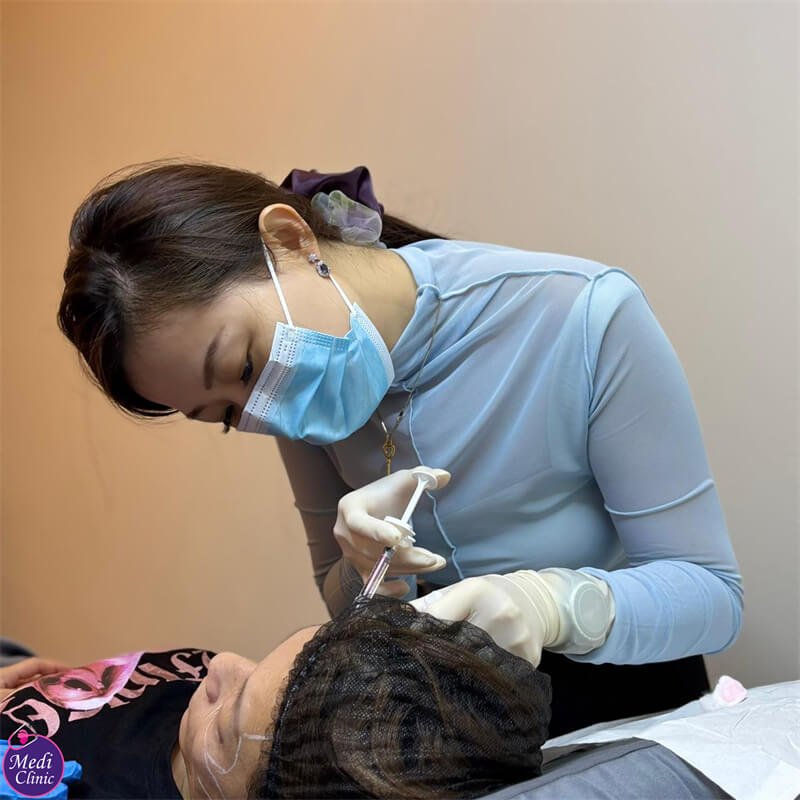
Doctor assessing acne scars before laser resurfacing in Johor Bahru JB SG
Acne-scar laser assessment in Taman Molek JB SG

Condition-Specific Resurfacing Selection

The concern should be diagnosed before a resurfacing wavelength and treatment depth are selected. Do not select resurfacing merely because of reports of rough skin or ageing. Acne scars, for instance, are not one condition. Ice-pick scars are narrow and deep, boxcar scars have distinct edges, and rolling scars involve tethering beneath the skin. Laser resurfacing may improve selected boxcar or superficial scars, but deep tethered scars often require subcision or alternative therapies.

Active acne should be controlled before elective scar-focused laser resurfacing where clinically appropriate. Treating through inflamed cysts or active bacterial infection increases risks of delayed healing, worsening pigmentation, and new scar formation. Furthermore, melasma requires a long-term pigment-control plan, and resurfacing is not suitable for every patient, as excessive heat can trigger severe rebound pigmentation. We distinguish device wavelengths precisely, assessing whether a carbon-dioxide (CO₂), erbium:YAG, erbium-glass, or thulium wavelength is actually matched to your specific anatomical concern.

Understanding Downtime & Complications

Controlled thermal injury may support gradual remodelling of selected skin concerns, but recovery varies significantly. Ablative treatments may create an open wound requiring moist wound care, gentle cleansing, and careful infection monitoring. Non-ablative treatments often result in less visible wound formation, presenting mostly as redness and swelling, but still carry complication risks. Patients with Asian skin face specific challenges; normal epidermal melanin and inflammatory responses increase the risk of post-inflammatory hyperpigmentation (PIH), burns, or hypopigmentation (white patches).

Prolonged redness, track marks, acne flares, milia, blistering, and herpes simplex reactivation are all possible. Tanned skin or recent sun exposure further elevates burn risks. Eye protection must be strictly appropriate for the exact wavelength used, as laser energy can cause severe eye injury. Our clinic maintains strict laser-room safety protocols, including controlled access, wavelength-specific warning signage, and local smoke evacuation to manage laser plume safely during ablative procedures.
Doctor explaining laser burns and pigment risks JB SG
Laser-resurfacing consultation for Singapore patients JB SG

What to Expect From Your Resurfacing Treatment

The proposed resurfacing use must match the exact Malaysian device registration and local instructions. Before proceeding, we verify the exact laser model, wavelength, applicator, and its current Medical Device Authority (MDA) status. We also thoroughly review your health history, recent tanning, keloid history, isotretinoin use, and active skincare.

Realistic Outcomes: Depending on the depth and area, you may experience warmth, snapping, pressure, or significant pain with deeper ablative passes. After the procedure, strict written aftercare is provided. Results are gradual; scar tissue remodels slowly over several months. Pores, natural skin texture, and some asymmetry will remain. Importantly, there is no compulsory three-session, six-session or annual resurfacing package for every patient. Follow-up is arranged to monitor healing, and further sessions or alternative therapies are discussed based purely on your individual biological response.

Frequently Asked Questions About Laser Resurfacing

Here are answers to common questions about treating skin texture, fine lines, and acne scars with medical lasers. This information helps you have an informed discussion with our doctor.

What is laser skin resurfacing?

It uses a specific laser to create controlled thermal injury in selected skin layers for an appropriate scar, texture, wrinkle or photoageing concern.

What is the difference between ablative and non-ablative resurfacing?

Ablative treatment removes selected skin tissue and may create an open wound, while non-ablative treatment creates thermal injury without intentionally removing the complete surface.

Is every fractional laser a CO₂ laser?

No. Fractional delivery can be ablative or non-ablative and may use CO₂, erbium, thulium or another verified wavelength.

Can laser resurfacing improve acne scars?

It may improve selected boxcar or texture-related scars, but ice-pick, rolling, tethered and raised scars often require different or combined treatment.

Can resurfacing be performed over active acne?

Elective scar resurfacing is generally postponed over inflamed, infected, nodular or cystic acne until the active disease is appropriately controlled.

Can laser resurfacing permanently close pores?

No. It may improve texture-related pore visibility, but pores are normal anatomical structures and remain present.

What are the possible side effects?

Possible effects include pain, redness, swelling, crusting, burns, infection, herpes reactivation, prolonged redness, dark or light pigment changes and scarring.

Is laser resurfacing safe for Asian skin?

Selected treatment may be appropriate, but Asian and pigmentation-prone skin requires conservative planning because inflammation may cause hyperpigmentation or hypopigmentation.

How long does recovery take?

Recovery depends on whether treatment is ablative or non-ablative, fractional or full-field, the area treated and the patient’s healing response.

How many resurfacing sessions are needed?

There is no universal course. The number depends on the diagnosis, scar type, device, treatment depth, response and side effects.
Scar Type • Resurfacing Pattern • Wound Care • MDA Verification

Laser Resurfacing Is Not One “Fractional” Setting

Ablative and non-ablative systems create different tissue injuries. Fractional and full-field delivery produce different wound patterns. CO₂, erbium:YAG, erbium-glass and thulium are not interchangeable. Treatment should match the scar depth, Asian-skin pigment risk, recovery capacity and exact Malaysian-registered device.

Laser-resurfacing review

Select a pathway or tap a checkpoint

The mobile version keeps the diagram simple. Detailed medical explanations appear here after the user selects a checkpoint.

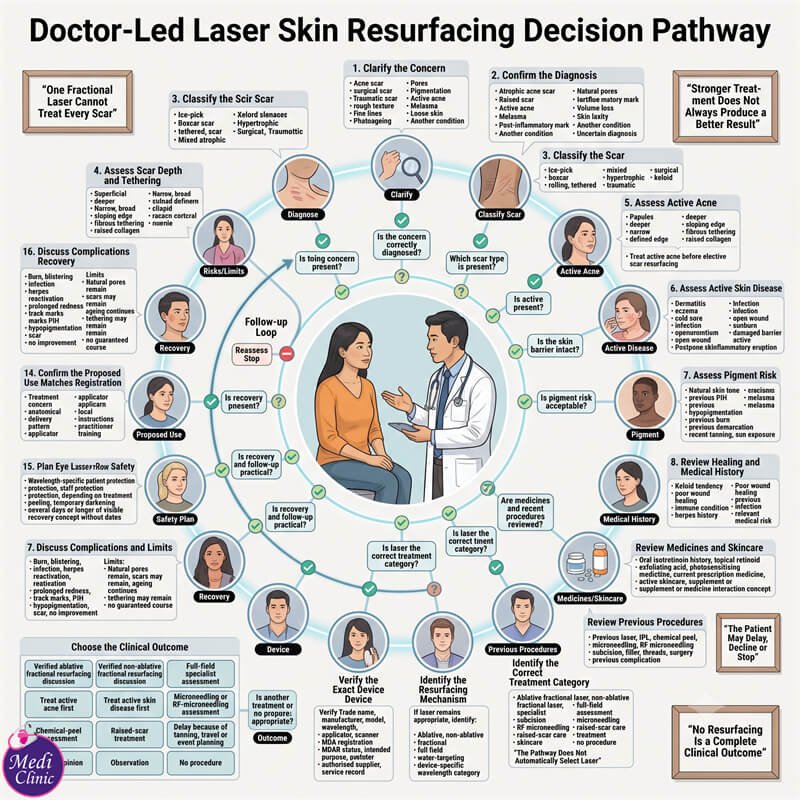
Mobile-first laser resurfacing safety review Four large interactive checkpoints around a simplified skin resurfacing diagram. Resurfacing Type Ablative / Non-ablative Fractional / Full-field Scar Morphology Boxcar / Ice-pick Rolling / Tethered Water-Targeted Thermal Resurfacing Epidermis Dermis / collagen matrix Ablative columns Non-ablative heat Ice-pick Boxcar Rolling Tethered Wound & Pigment PIH / Hypopigmentation Eye / Plume Safety Exact Device Model / Wavelength / MDA Recovery / Follow-up Generic shortcut One deep setting for every scar Run Resurfacing Review

Laser Resurfacing Treatment Gallery

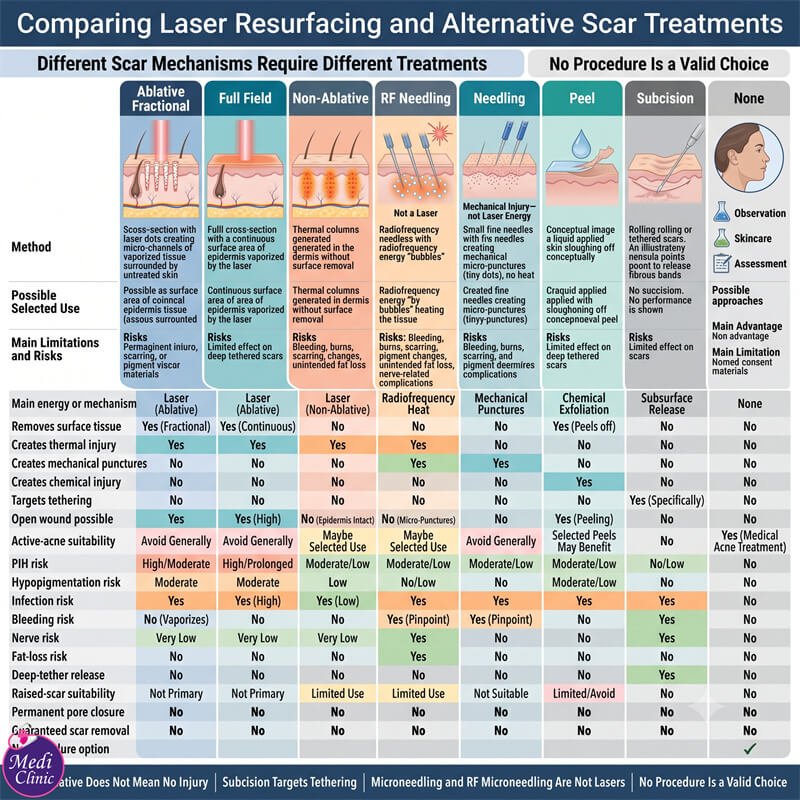
Ablative and non-ablative laser resurfacing comparison JB SG
Fractional and full-field resurfacing comparison JB SG
Fractional laser consultation near Iskandar Puteri JB SG
Malaysian resurfacing-laser registration verification JB SG

Find Out if Laser Resurfacing is for You

Our doctor at Medi Clinic Johor Bahru can accurately assess your skin condition and suitability for laser resurfacing. We will diagnose your exact scar type and explain if a specific ablative or non-ablative laser, subcision, or no procedure is the safest option. We provide a thorough consultation, discuss realistic remodelling timelines, and ensure wound care and safety remain the top priority.
Medi Clinic JB — Laser Skin Resurfacing Smart Guide

How Well Do You Understand Laser Skin Resurfacing?

Understand Resurfacing Safety in 60 seconds

Laser Resurfacing Suitability Quiz

Step 1 / 8
This quiz cannot confirm laser-resurfacing suitability. A doctor should assess the diagnosis, scar type, skin tone, tanning, pigment history, medicines, active skin disease, exact device, wavelength, treatment depth, recovery and alternatives.
💬 Book Laser Resurfacing Consultation

Understanding the Treatment Timeline

At Medi Clinic, we believe in clear communication. A true laser's recovery timeline depends heavily on whether the device is ablative or non-ablative, and what target chromophore was treated. We help patients from Johor Bahru and Singapore understand these differences to avoid unexpected downtime. Early swelling may temporarily smooth the skin, but this is not the final result.
Days
Initial Redness & Swelling
Weeks
Surface Healing & Fading
Months
Gradual Tissue Remodelling
Ongoing
Sun Protection & Maintenance
Laser Resurfacing & Alternative Treatments Comparison
Treatment Option Method & Possible Use Main Limitation MEDICAL
ABLATIVE FRACTIONAL LASER Creates microscopic columns of tissue ablation with surrounding untreated zones. Selected acne scars, wrinkles, texture or sun-related skin change. Open wounds, redness, infection, pigment changes and scarring may occur.
FULL-FIELD ABLATIVE LASER Removes or vaporises a more continuous skin surface. Selected deeper resurfacing concerns under appropriately qualified care. More intensive wound care, prolonged recovery and greater complication risks.
NON-ABLATIVE FRACTIONAL LASER Creates microscopic thermal zones without intentionally removing the full skin surface. Selected scars, texture and fine-line concerns. Several sessions may be needed; burns, pigment changes and scars remain possible.
RF MICRONEEDLING Needle electrodes deliver radiofrequency heat beneath the skin. Selected scars, wrinkles and tightening concerns. Bleeding, burns, scarring, fat loss and nerve-related complications may occur.
MICRONEEDLING Mechanical needles create controlled skin punctures without laser heat. Selected atrophic scars and texture concerns. Bleeding, infection, pigment changes and scarring may occur.
CHEMICAL PEEL A controlled chemical formulation treats selected skin layers. Selected acne, surface texture and pigmentation concerns. Burns, peeling, pigment changes and scars may occur.
SUBCISION A needle or cannula releases selected tethered scars beneath the skin. Rolling or tethered acne scars. Bruising, bleeding, infection, contour change and vascular risks may occur.
NO PROCEDURE Skincare, medical treatment, observation or acceptance without resurfacing. Stabilising active skin disease or avoiding procedure risks. The visible concern may remain.
ABLATIVE FRACTIONAL LASER
Method & Possible Use:
Creates microscopic columns of tissue ablation with surrounding untreated zones. Selected acne scars, wrinkles, texture or sun-related skin change.
Main Limitation:
Open wounds, redness, infection, pigment changes and scarring may occur.
FULL-FIELD ABLATIVE LASER
Method & Possible Use:
Removes or vaporises a more continuous skin surface. Selected deeper resurfacing concerns under appropriately qualified care.
Main Limitation:
More intensive wound care, prolonged recovery and greater complication risks.
NON-ABLATIVE FRACTIONAL LASER
Method & Possible Use:
Creates microscopic thermal zones without intentionally removing the full skin surface. Selected scars, texture and fine-line concerns.
Main Limitation:
Several sessions may be needed; burns, pigment changes and scars remain possible.
RF MICRONEEDLING
Method & Possible Use:
Needle electrodes deliver radiofrequency heat beneath the skin. Selected scars, wrinkles and tightening concerns.
Main Limitation:
Bleeding, burns, scarring, fat loss and nerve-related complications may occur.
MICRONEEDLING
Method & Possible Use:
Mechanical needles create controlled skin punctures without laser heat. Selected atrophic scars and texture concerns.
Main Limitation:
Bleeding, infection, pigment changes and scarring may occur.
CHEMICAL PEEL
Method & Possible Use:
A controlled chemical formulation treats selected skin layers. Selected acne, surface texture and pigmentation concerns.
Main Limitation:
Burns, peeling, pigment changes and scars may occur.
SUBCISION
Method & Possible Use:
A needle or cannula releases selected tethered scars beneath the skin. Rolling or tethered acne scars.
Main Limitation:
Bruising, bleeding, infection, contour change and vascular risks may occur.
NO PROCEDURE
Method & Possible Use:
Skincare, medical treatment, observation or acceptance without resurfacing. Stabilising active skin disease or avoiding procedure risks.
Main Limitation:
The visible concern may remain.

Discuss Your Resurfacing Options with Our Doctor


Patients travelling from Singapore should allow time for an in-person assessment before scheduling a laser procedure. Please bring your current skincare products and disclose any use of oral isotretinoin, photosensitising medicines, or recent sun exposure. We must also review any history of cold sores, previous pigment reactions, or fillers. We recommend verifying the exact machine names and understanding the expected downtime before proceeding. Do not book based purely on package price without first understanding medical suitability.

Book a doctor-supervised laser-resurfacing consultation at Medi Clinic in Johor Bahru to identify the scar or skin concern, compare ablative and non-ablative options and verify the exact laser, wavelength, applicator and Malaysian registration. Whether you are visiting via the Causeway or Tuas Second Link, or live locally in Taman Molek, Iskandar Puteri, or Eco Botanic, our goal is to provide safe, doctor-led care without selling you aggressive procedures that carry unnecessary risks.

All Services

Explore our other aesthetic services.

Doctor-supervised laser resurfacing Johor Bahru

30+

Years of experience

4K+

Happy customers

15K+

Success Story

70+

Services Provided