Knee PRP Injection Treatment in JB

Knee PRP Injection Treatment in Johor Bahru

Knee PRP injection uses a preparation made from the patient’s own blood and may help reduce pain or improve function in selected people with symptomatic knee osteoarthritis. Evidence and professional recommendations remain mixed, and PRP cannot be guaranteed to regrow cartilage, prevent surgery or help every cause of knee pain. Treatment begins with assessing your unique joint concern and identifying whether an autologous platelet-rich plasma injection, rehabilitation, or a different approach is medically appropriate.

PRP should be considered as one possible part of a knee-management plan not as a universal knee-repair injection. Whether you are dealing with osteoarthritis, meniscal concerns, or tendon issues, our doctor will map out a targeted approach. Patients from Johor Bahru, Iskandar Puteri, Taman Molek, and Singapore choose Medi Clinic because we prioritise diagnosis over generic injections. We verify exact preparation systems, respect the no-injection option, and ensure you understand that realistic functional improvement requires appropriate rehabilitation.

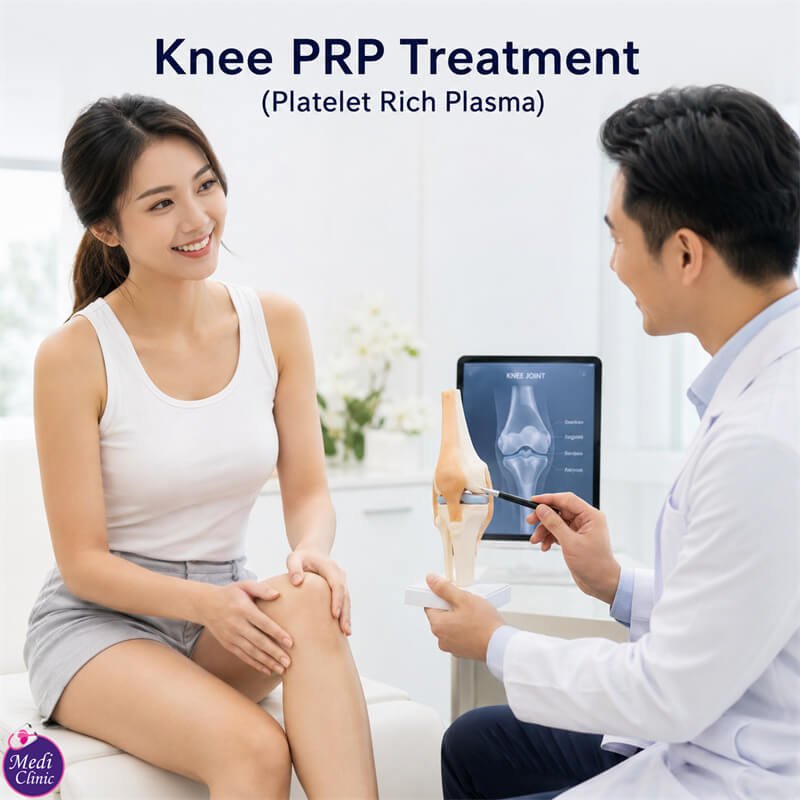
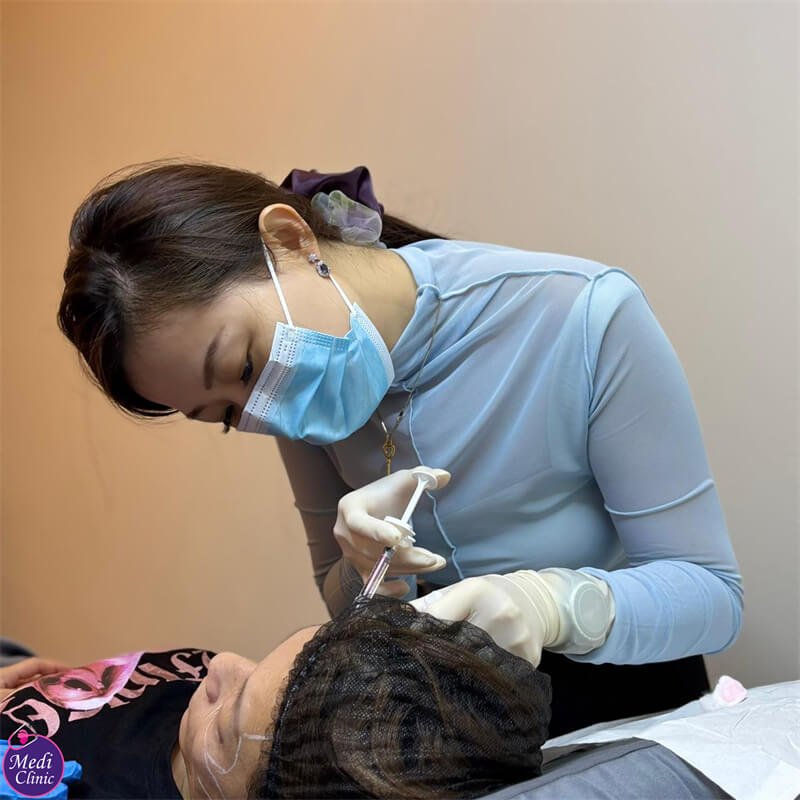
Doctor assessing knee pain before PRP injection in Johor Bahru JB SG

What Is a Knee PRP Injection?

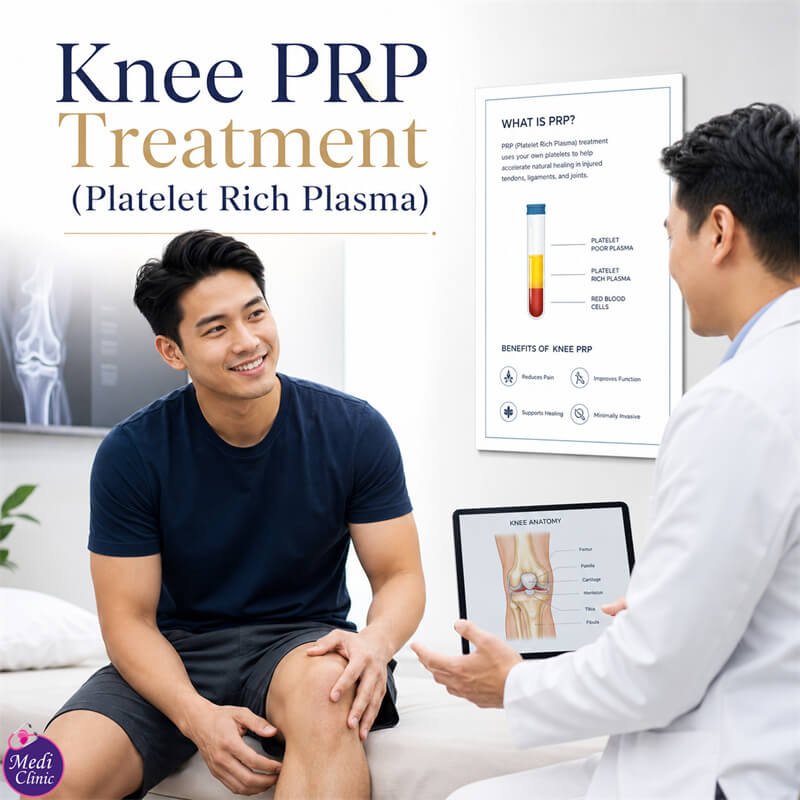
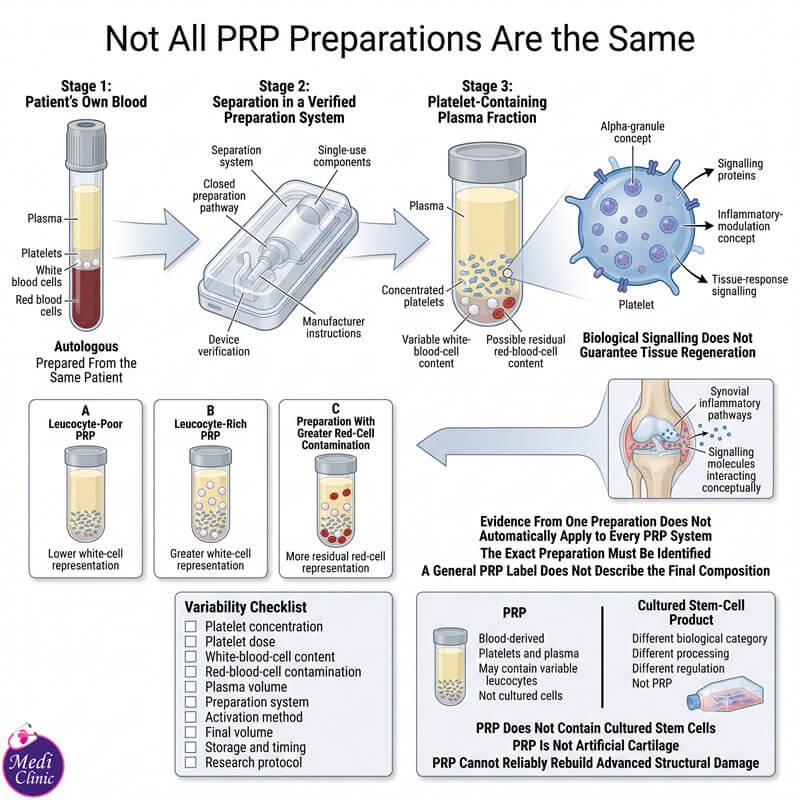
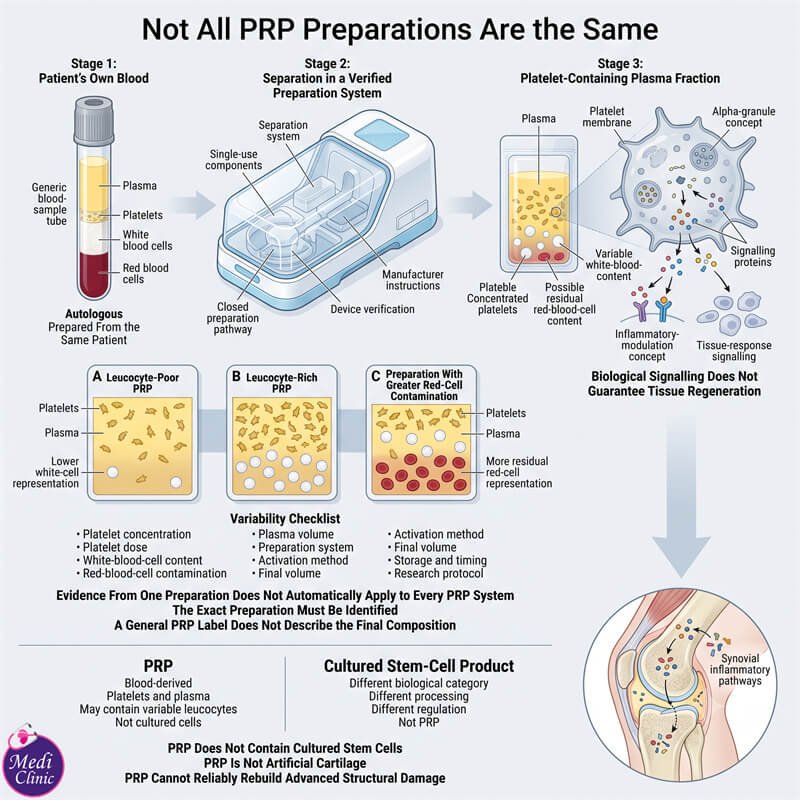
PRP is an autologous blood-derived preparation, meaning that it comes from the same patient. It is generally prepared by collecting a sample of the patient’s blood, placing it into an appropriate preparation system, and separating a plasma fraction containing concentrated platelets. Platelets contain signalling proteins that may influence inflammation, but this does not mean PRP reliably rebuilds damaged cartilage.

Clinical research using one PRP preparation cannot automatically prove that every PRP system produces the same result. Products may differ significantly in platelet concentration, white-blood-cell content (leucocyte-rich or leucocyte-poor PRP), red-blood-cell contamination, and activation method. PRP and stem-cell treatment are different procedures; PRP does not contain cultured stem cells. We comply with Malaysia’s Medical Device Authority guidelines for equipment and are transparent about the fact that PRP cannot reverse advanced structural damage or reliably replace knee replacement surgery.
Platelet-rich plasma preparation for knee treatment JB SG
Knee osteoarthritis consultation near Iskandar Puteri JB SG

Why Knee Assessment Comes First

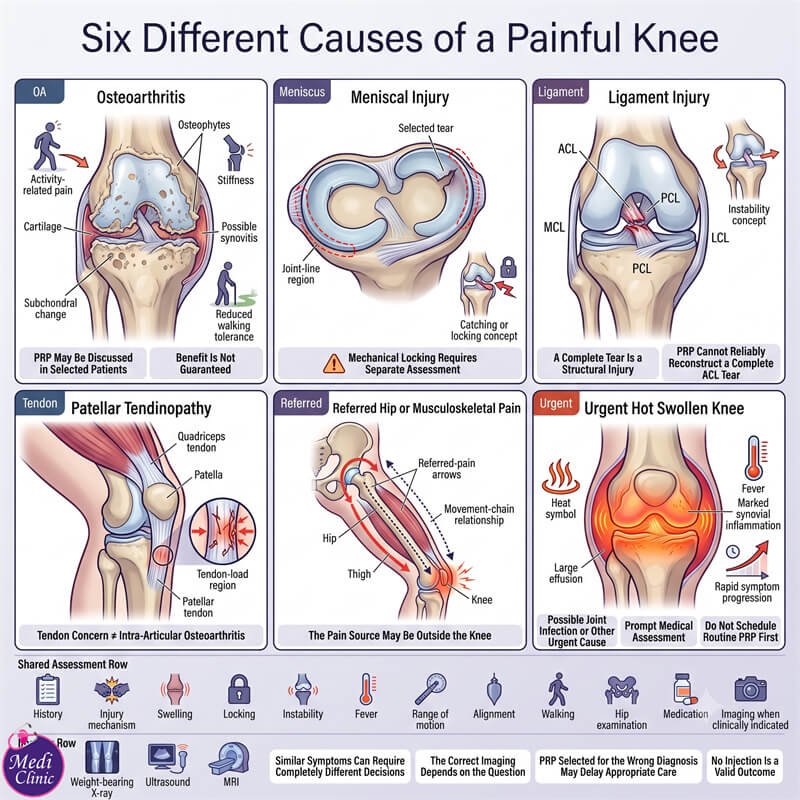
“Knee pain” is not a complete diagnosis. Different joint concerns may feel similar but require completely different decisions. A PRP injection selected for the wrong diagnosis may provide little benefit and delay appropriate treatment.

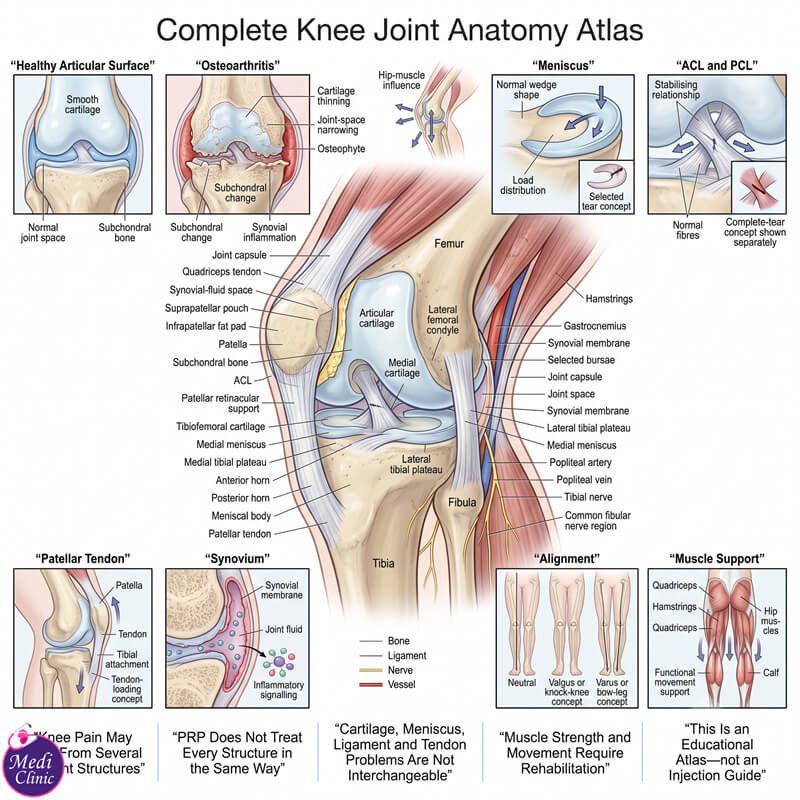
Not All Knee Pain is Osteoarthritis: A doctor must consider meniscal injuries, ligament injuries, patellar tendinopathy, referred hip pain, or urgent conditions like septic arthritis. A rapidly painful, hot, or swollen knee associated with fever requires prompt medical assessment rather than routine PRP scheduling. Imaging such as a weight-bearing X-ray, ultrasound, or MRI should be selected according to the clinical question rather than ordered automatically.

Treatment Safety: A doctor must verify current medication, such as anticoagulants or antiplatelet medicine, and screen for bleeding disorders, active infections, or immune-suppressing medicine. Medicine changes must be discussed with the prescribing doctor. The safest plan may involve modifying the treatment, recommending orthopaedic surgery, or choosing the no-injection option.

Side Effects & Bleeding Risk

The use of the patient’s own blood does not make the procedure risk-free. You may experience temporary effects such as pain or bruising at the blood-draw site, injection-site soreness, temporary swelling, stiffness, or a post-injection symptom flare. Pain after PRP does not prove that cartilage is regenerating; it is simply a tissue response that must be managed. Severe pain is not a required sign of treatment success.

We enforce strict infection-control measures, utilising sterile single-use components to minimise contamination. Less common serious risks include bleeding, significant bruising, joint infection (septic arthritis), or injury to a surrounding structure. Worsening pain with a hot or swollen knee after injection requires urgent medical assessment. Following your treatment, we provide written aftercare instructions advising you to avoid self-manipulation and follow the recommended activity progression.
Ultrasound-guided knee injection assessment in Taman Molek JB SG
Knee rehabilitation planning after PRP treatment JB SG

What Knee PRP Can and Cannot Do

A properly selected PRP injection may help reduce pain, improve walking tolerance, and support daily movement in selected patients. However, symptom improvement does not necessarily mean that structural joint damage has reversed. It does not replace missing cartilage or permanently lubricate the knee.

Important Limitations: PRP is sometimes grouped under orthobiologic treatments, but the expected clinical outcome should be described cautiously. PRP cannot reliably reconstruct a completely torn ACL, unlock a mechanically blocked knee, correct knock-knee alignment, or reverse advanced bone-on-bone osteoarthritis. Surgery may be considered when there is severe structural damage, major functional limitation, or failure of appropriate non-surgical care.

For our patients travelling from Singapore via the Causeway or Tuas Second Link, we advise allowing ample time for a thorough consultation. Please bring previous imaging, disclose all medicines, and consider the possibility of temporary soreness before returning home. We prioritise your overall joint health rather than rushing a procedure.

Frequently Asked Questions About Knee PRP in JB

Here are clear answers to common questions about doctor-led PRP knee injections. This information helps you make an informed decision before your consultation.

What is a knee PRP injection?

PRP is prepared from a sample of the patient’s blood. A platelet-containing plasma fraction is separated and injected into the clinically selected knee target.

Can PRP help knee osteoarthritis?

Some patients may experience reduced pain or improved function, but evidence and professional recommendations remain mixed, and benefit is not guaranteed.

Does PRP regrow knee cartilage?

Reliable restoration of lost human knee cartilage has not been established. Symptom improvement does not prove that structural damage has reversed.

Can PRP prevent knee-replacement surgery?

No guarantee can be made. PRP may help selected symptoms, but advanced damage, deformity or major functional loss may still require surgical assessment.

Is PRP the same as stem-cell treatment?

No. PRP is prepared from blood and contains platelets and plasma. It is not a cultured stem-cell product.

Are all PRP knee injections the same?

No. Preparations differ in platelet concentration, white-blood-cell content, processing system, final volume and treatment protocol.

How many PRP injections are needed?

There is no universal number. Research protocols vary, and the plan should depend on diagnosis, preparation, response and clinical judgement.

What are the possible side effects?

Possible effects include blood-draw bruising, injection pain, temporary swelling, stiffness and symptom flare. Less common serious risks include bleeding and joint infection.

Does PRP replace physiotherapy?

No. PRP does not strengthen muscles or correct movement patterns. Rehabilitation remains important for long-term knee function.
Knee Diagnosis, PRP Preparation & Rehabilitation Education

Treat the Diagnosis – Not Simply the Painful Knee

Knee PRP is an autologous blood-derived injection that may help selected patients with symptomatic knee osteoarthritis, but benefit is not guaranteed and evidence remains mixed. A responsible plan confirms the cause of pain, screens urgent conditions and bleeding or infection risks, verifies the exact PRP preparation, explains realistic structural limits, and combines treatment with appropriate rehabilitation or referral.

Knee PRP guide

Select a knee-management pathway

Then review the four checkpoints: diagnosis and red flags; PRP preparation differences and product-system verification; medicines, bleeding, infection and injection risks; and realistic functional goals, rehabilitation, imaging, surgery referral and the no-injection option.

Knee PRP diagnosis, preparation, safety and rehabilitation review Interactive comparison between diagnosis-led knee PRP planning and injecting an unassessed painful knee. DIAGNOSIS + PRP PREPARATION + SAFETY + FUNCTIONAL RECOVERY OA Meniscus Tendon Urgent Cartilage loss / OA Meniscus / ligament Patellar tendon Hot swollen knee + fever PRP Platelets • leucocytes • RBC contamination • volume Different systems ≠ identical biological product Knee pain ≠ one diagnosis • PRP ≠ stem cells Diagnosis + red flags OA • meniscus • tendon • infection • imaging PRP preparation Platelets • WBC • RBC • activation • system Bleeding + infection safety Medicines • sterility • flare • septic arthritis Function + rehabilitation Pain • walking • rehab • surgery • no injection Diagnosis-led knee plan Right target + verified PRP + rehab + review Generic PRP shot Pain = OA = cartilage repair Run Knee PRP Review

Knee Assessment & Treatment Gallery
Doctor explaining PRP benefits and limitations JB SG
Knee PRP consultation for Singapore patients JB SG
Doctor reviewing knee X-ray before injection JB SG
Sterile PRP preparation and knee-injection planning JB SG

Find Out if Knee PRP is Suitable for You

Our doctor at Medi Clinic Johor Bahru can accurately assess your knee condition, medical history, and required imaging. We will let you know if a knee PRP injection, medical treatment, or specialist referral is a suitable option for you. We provide a thorough consultation, discuss realistic timelines, verify medical devices, and ensure your safety remains the top priority.
Medi Clinic JB — Knee PRP Smart Guide

Knee PRP Injection — Smart Guide

How Well Do You Understand Knee PRP?

Patient Education Quiz

Step 1 / 8
This quiz cannot determine whether knee PRP is suitable. A doctor must assess the diagnosis, imaging, medical history, medicines, bleeding risk, treatment alternatives and rehabilitation needs.
💬 Book Doctor-Led Knee Consultation

Rehabilitation & Treatment Timeline

An injection provides a potential window for function improvement, not a permanent cure that replaces movement. We help patients from Johor Bahru and Singapore understand that rehabilitation is essential. Physiotherapy, range-of-motion work, quadriceps strengthening, and gradual load management remain critical to joint stability. Treatment frequency should follow your joint's response rather than a mandatory sales package.
Weeks
Gradual Symptom Change
3–6 Months
Possible Functional Improvement
Ongoing
Rehabilitation & Exercise
Varies
Individual Joint Response
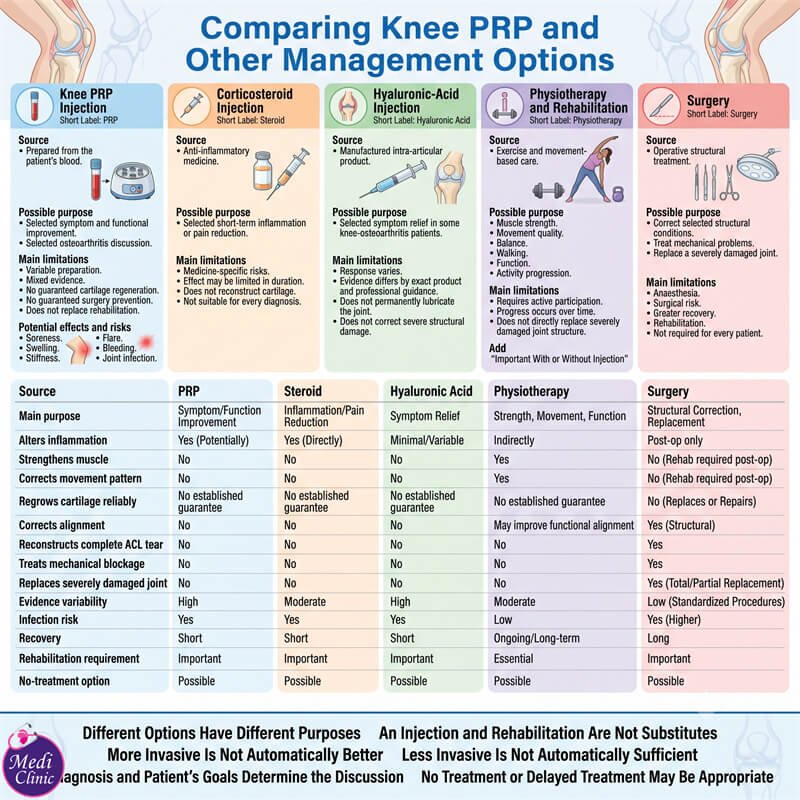
Comparing Knee Injection and Treatment Options
Treatment Option Source & Main Purpose Main Limitations MEDICAL
Knee PRP Injection Prepared from the patient’s blood. Possible symptom and function improvement in selected conditions. Variable preparation and mixed evidence; no guaranteed cartilage regeneration.
Corticosteroid Injection Anti-inflammatory medicine. Possible short-term reduction of inflammation and pain. Medicine-specific risks and limited duration of effect.
Hyaluronic Acid Injection Manufactured intra-articular product. Possible symptom relief in selected knee-osteoarthritis patients. Response varies and evidence differs by specific product and guideline.
Physiotherapy Exercise and movement-based rehabilitation. Improve strength, movement, balance and function. Requires active patient participation and gradual progression over time.
Surgery (e.g. Knee Replacement) Operative treatment. Correct selected structural conditions or replace a severely damaged joint. Greater recovery time and associated surgical risks.
Knee PRP Injection
Source & Main Purpose:
Prepared from the patient’s blood. Possible symptom and function improvement in selected conditions.
Main Limitations:
Variable preparation and mixed evidence; no guaranteed cartilage regeneration.
Corticosteroid Injection
Source & Main Purpose:
Anti-inflammatory medicine. Possible short-term reduction of inflammation and pain.
Main Limitations:
Medicine-specific risks and limited duration of effect.
Hyaluronic Acid Injection
Source & Main Purpose:
Manufactured intra-articular product. Possible symptom relief in selected knee-osteoarthritis patients.
Main Limitations:
Response varies and evidence differs by specific product and guideline.
Physiotherapy
Source & Main Purpose:
Exercise and movement-based rehabilitation. Improve strength, movement, balance and function.
Main Limitations:
Requires active patient participation and gradual progression over time.
Surgery (e.g. Knee Replacement)
Source & Main Purpose:
Operative treatment. Correct selected structural conditions or replace a severely damaged joint.
Main Limitations:
Greater recovery time and associated surgical risks.

Discuss Your Knee Pain with Our Doctor


Booking a consultation is the first step toward clearer answers. Book a doctor-led knee consultation at Medi Clinic in Johor Bahru to identify the cause of your symptoms and discuss whether PRP, rehabilitation, another injection, specialist referral, or no injection is more appropriate. We focus on creating a personalised, safe plan rather than selling generic cosmetic or orthobiologic packages, and we always ensure medical devices and preparation systems are properly verified in Malaysia.

All Services

Explore our other medical and aesthetic services.
Medi Clinic Johor Bahru doctor-led knee PRP consultation

30+

Years of experience

4K+

Happy customers

15K+

Success Story

70+

Services Provided