


Separate skin from lid position.
Excess-looking skin and a low lid edge are different observations. A treatment described as tightening skin cannot be assumed to correct the muscle or structural cause of true drooping.

Eyelid Rejuvenation is a planning term for concerns involving upper- or lower-lid appearance. It should not hide the actual procedure. The discussion may involve skin texture, excess skin or lid position, with a specialist opinion when function or eye health is involved.
Eyelid Rejuvenation is a planning term for concerns involving upper- or lower-lid appearance. It should not hide the actual procedure. The discussion may involve skin texture, excess skin or lid position, with a specialist opinion when function or eye health is involved.
A surface treatment, removal of excess skin and correction of a low eyelid address different structures. Brow position can also influence how much skin appears to rest above the eye. Treating one structure without assessing the others may not meet the person's goal.
Adults troubled by lid folds, fine creasing or a heavy appearance may seek assessment. Difficulty seeing around a fold, dry-eye symptoms or trouble closing the eye should be part of the examination, not treated as incidental cosmetic details.
Blepharoplasty is surgery involving eyelid tissues. Brow lifting addresses the brow, while ptosis assessment concerns a drooping lid. None of those terms should be used interchangeably with a nonsurgical skin-quality treatment.
Further reading: NHS: eyelid problems; ASPS: brow lift; ASPS: eyelid surgery. These sources explain the treatment category or manufacturer identity; the proposed local product, device and individual plan still need confirmation.


Distinguishing eyelid skin, brow descent and true lid drooping
Agree the feature to review and what is unlikely to change.
Discuss history, anatomy, comfort and personal priorities.

Ask the clinician to show whether the concern sits in the brow, the lid skin or the lid margin. Discuss earlier surgery, eye conditions and dryness. If surgery is being considered, ask who is qualified to assess and perform it and whether referral is more appropriate.
Point out whether the concern is a fold of skin, the position of the lashes or the height of the eyebrow. These landmarks can look similar in a cropped photograph while representing different problems. The assessment should include the surrounding forehead and brow.
Describe any change in eye opening, closure or comfort. Tell the clinician about previous eye surgery and longstanding dry-eye symptoms. Do not treat a suddenly drooping lid as an ordinary ageing concern.
Excess skin should be separated from the height of the lid itself.
A low lid edge may need an eye-specialist assessment.
Fine surface creasing is a different target from a lower-lid bag.

Excess-looking skin and a low lid edge are different observations. A treatment described as tightening skin cannot be assumed to correct the muscle or structural cause of true drooping.
A low brow can contribute to an upper-lid fold. Ask which structure is responsible before comparing an eyelid procedure with a brow-focused approach.
This guide explains categories; it does not establish surgical availability at the branch. Where a surgical or eye-specialist opinion is appropriate, ask for a clear referral pathway.
Switch between these matched educational views. A single selected feature changes while the identity, lighting and expression are kept consistent.
Excess skin should be separated from the height of the lid itself. A low lid edge may need an eye-specialist assessment. The first view is an reference view of features to discuss, not a diagnosis.
A skin treatment cannot be assumed to correct true ptosis, remove substantial excess skin or reproduce an eyelid operation.

 BeforeAfter
The divider reveals two versions of the same matched adult. Compare the feature described here rather than treating the second panel as a target face. Neither panel records a treatment at Medi.
Review both appearance and function: how the lids rest, whether they close comfortably and whether the original concern has changed. A photograph alone cannot show tear-film comfort or the quality of the visual field.
A useful real-world review needs comparable camera distance, gaze, lighting and expression. Ask what was treated, when the photographs were taken and whether other procedures or temporary swelling could explain a difference.
Bring a brief history of previous toxin, filler, thread or eyelid procedures, even when the treatment occurred elsewhere. Dates and product names are more useful than a general description such as eye rejuvenation. Earlier procedures may affect the next assessment.
Ask how the proposed change relates to eye comfort and closure. The discussion should include what the procedure will not address, what recovery may involve and how an unexpected symptom would be assessed. A cosmetic preference should not obscure a functional problem.
If surgery is mentioned, ask for the exact operation and the relevant clinician's qualifications and setting. Do not infer that surgery is offered because a general information page describes it. Obtain procedure-specific advice before deciding where or when to proceed.

The lid edge, upper skin fold and eyebrow should not be treated as interchangeable landmarks. A person may raise the forehead to compensate for a heavy-looking upper area; a relaxed assessment gives different information from a deliberately wide-eyed photograph.
Eye closure and the surface of the eye require their own attention. Existing dryness or irritation should be disclosed before any procedure is considered. An image showing a larger eye opening is not proof of healthier or more comfortable eyes.
Sudden drooping, difficulty opening the eye, pain or altered vision requires medical assessment. These findings belong outside a routine cosmetic comparison and should not be delayed while searching for an appointment package.
These guides answer different questions. Select an option to read its purpose, limitations and a question to bring to the consultation. A related page is not a recommendation to combine procedures.
A combination is not automatically better. Ask what each proposed procedure would contribute and whether the same goal could be approached more simply. Taking time to decide remains a useful outcome.
Select an option. See its purpose, possible benefit and the distinction that matters.
Distinguishing eyelid skin, brow descent and true lid droopingA surface treatment, removal of excess skin and correction of a low eyelid address different structures. Brow position can also influence how much skin appears to rest above the eye. Treating one structure without assessing the others may not meet the person's goal.
Distinguishing eyelid skin, brow descent and true lid drooping
A skin treatment cannot be assumed to correct true ptosis, remove substantial excess skin or reproduce an eyelid operation.
Which part of my concern would Eyelid Rejuvenation address?
 Assessing brow position without confusing it with eyelid correction
Brow position reflects tissue support, facial movement and individual anatomy. Different methods act on different parts of that system. Raising the brow does not automatically treat a low lid margin, lower-lid bag or under-eye pigmentation.
Assessing brow position without confusing it with eyelid correction
An eyebrow lift cannot guarantee perfect symmetry, create every requested arch or substitute for correction of an unrelated eyelid problem.
Which part of my concern would Eyebrow Lift address?
 Comparing non-operative options without treating them as interchangeable
An injectable used for contour, a product discussed for skin quality and an energy device act differently. Choosing among them starts with the assessed concern and the boundary of what each method can realistically change.
Comparing non-operative options without treating them as interchangeable
A nonsurgical label cannot promise surgical-level correction, zero downtime or freedom from serious complications.
Which part of my concern would Non-Surgical Eye Rejuvenation address?
 Distinguishing changing puffiness from persistent lower-lid fullness
Age-related tissue changes, fluid-related swelling and the surrounding contour can contribute to the visible area. A treatment that softens a shadow does not necessarily remove the tissue creating the bag. That distinction should be explicit in the consultation.
Distinguishing changing puffiness from persistent lower-lid fullness
No general eye-bag package can guarantee permanent removal, and disguising a neighbouring hollow is not the same as removing a bag.
Which part of my concern would Eye Bag Reduction address?
Use these five points to compare a consultation at Eco Botanic with any other clinic you are considering.
| What matters | Ask Medi Clinic Eco Botanic | Check with any clinic |
|---|---|---|
| 01Practitioner | Ask our team for the treating doctor’s name and credentials. | Check the named doctor’s current registration and relevant LCP scope. |
| 02Individual assessment | Discuss your skin, facial anatomy, history and priorities. | Look for an explanation of suitability, alternatives and what will remain unchanged. |
| 03Product & treatment plan | Confirm the proposed product, treatment scope and traceability. | Compare the actual brand and plan, not a generic treatment label. |
| 04Price & consent | Request an itemised explanation before deciding. | Check what the quote includes, possible risks and whether there is time for questions. |
| 05Review & continuity | Discuss review arrangements, including after returning to Singapore. | Confirm who handles concerns, how to contact them and any review costs. |
Bring your questions, previous treatment details and relevant medical history. Tell the clinic if your return journey has a fixed time.
Discuss the proposed method, intended change, alternatives, consent and full cost before deciding whether to proceed.
Follow the treating clinician’s advice. Keep the treatment record and clinic contact accessible while travelling.
Use the agreed review arrangements. Report unexpected symptoms promptly rather than waiting for another trip to Malaysia.

The risk discussion must match the proposed intervention. For an operation, ask specifically about eye comfort, lid closure, scarring and possible further treatment. New severe eye pain or a vision problem after a procedure needs immediate medical assessment.
Do not plan an eyelid procedure around a same-day drive back to Singapore without asking about transport, temporary visual effects and review visits. Agree when glasses, contact lenses, work and exercise fit into the individual recovery plan.
For Eyelid Rejuvenation enquiries in the Johor Bahru area, confirm the Eco Botanic branch in Iskandar Puteri. It is a different location from Taman Molek. Ask for the appointment time and map location together so the travel plan matches the booking.
Allow flexibility for border conditions and a proper consultation. This guide does not promise a fixed journey time. If you need to return to Singapore by a particular time, explain that before the appointment. An assessment may lead to further advice or a decision to postpone treatment.
Discuss follow-up before crossing the border. Ask when progress should be reviewed, whether a return visit may be needed and how to contact the treating team. A message can help explain a concern, but it cannot replace an examination when one is needed.
Request an itemised quote in the currency being used, including what consultation and review arrangements cover. Keep the clinic contact and written instructions with you. If an urgent problem occurs after returning to Singapore, seek care where you are rather than delaying care for travel.

Confirm the branch, appointment, care plan and review arrangements with our team.
Excess skin should be separated from the height of the lid itself.
A low lid edge may need an eye-specialist assessment.
Fine surface creasing is a different target from a lower-lid bag.
Dryness and incomplete closure matter when discussing any intervention.
Select the concern you want to explore. Read its description here, then find related services at the end of this guide.
Excess skin should be separated from the height of the lid itself.
Five questions to help you understand Eyelid Rejuvenation before your consultation.


No. It is a broad term. The plan should state whether it concerns skin care, an energy device, an injectable or an operation.
Hooding describes overhanging tissue, while ptosis refers to a drooping eyelid. An examination is needed to identify what is actually contributing.
The brow's position can contribute to the fold above the eye. Treating the lid without considering that relationship may miss part of the concern.
Yes. Explain dryness, watering, irritation, contact-lens problems and any eye medicines before choosing a procedure.
No. Photographs can support the discussion but do not replace examination of lid position, closure, eye comfort and relevant function.
A particular crease or eye shape should not be promised from this general guide. Discuss the desired change and any specialist referral needed.
That depends on the actual procedure, medicines and eye symptoms. Arrange transport only after receiving individual instructions.
A new severe eye pain or a vision problem should be assessed immediately rather than waiting for a routine review.

Read the purpose, suitability questions and limitations before choosing a procedure.
View details
Read the purpose, suitability questions and limitations before choosing a procedure.
View details
Read the purpose, suitability questions and limitations before choosing a procedure.
View details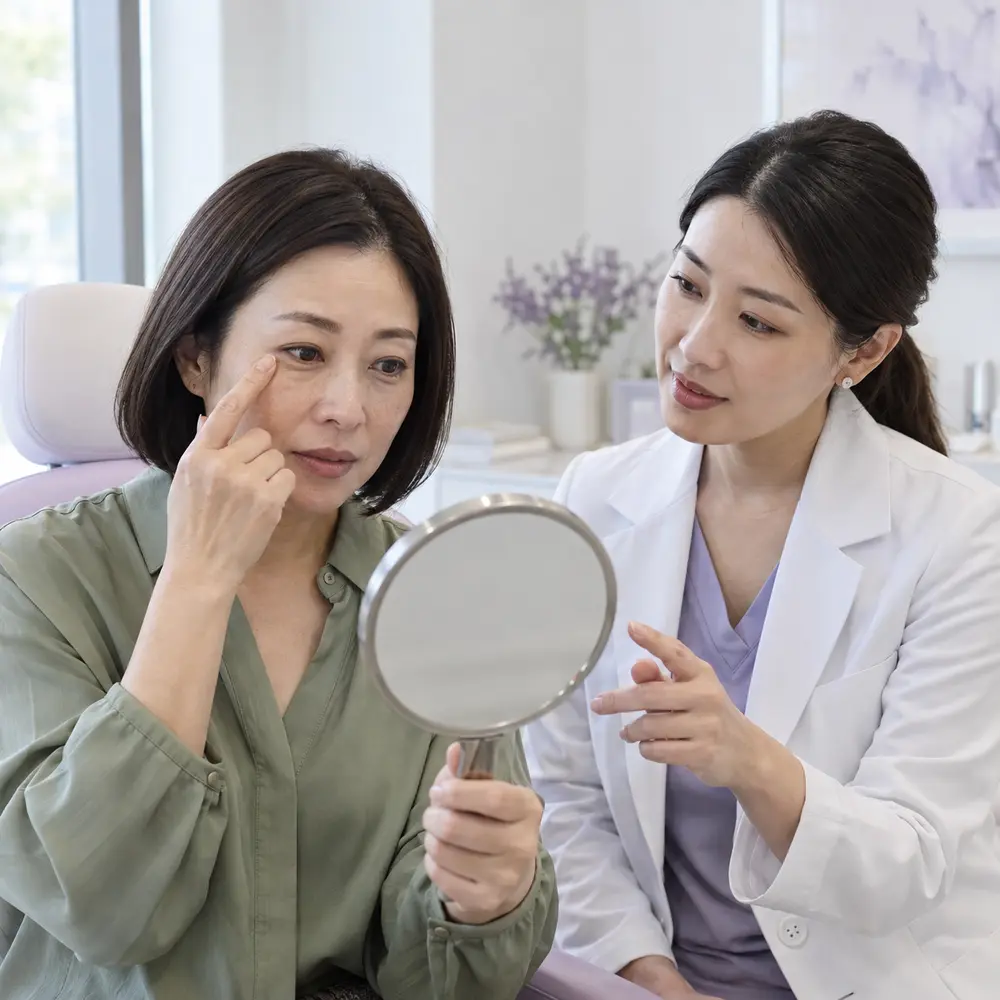
Read the purpose, suitability questions and limitations before choosing a procedure.
View detailsDiscuss Eyelid Rejuvenation in Johor Bahru (JB), your priorities and follow-up arrangements with our team before planning your visit.
Book via WhatsAppAn enquiry starts the conversation. Your appointment is confirmed by the clinic.
Daily 10:00–18:00 · By appointment
2C-27, Jalan Eko Botani, Persiaran Eko Botani 2, 79100 Iskandar Puteri, Johor, Malaysia.
Open directions in Google Maps ↗