


Name the clinical question.
Separating a research-stage cell product from established knee care and verifying exactly what is being proposed.

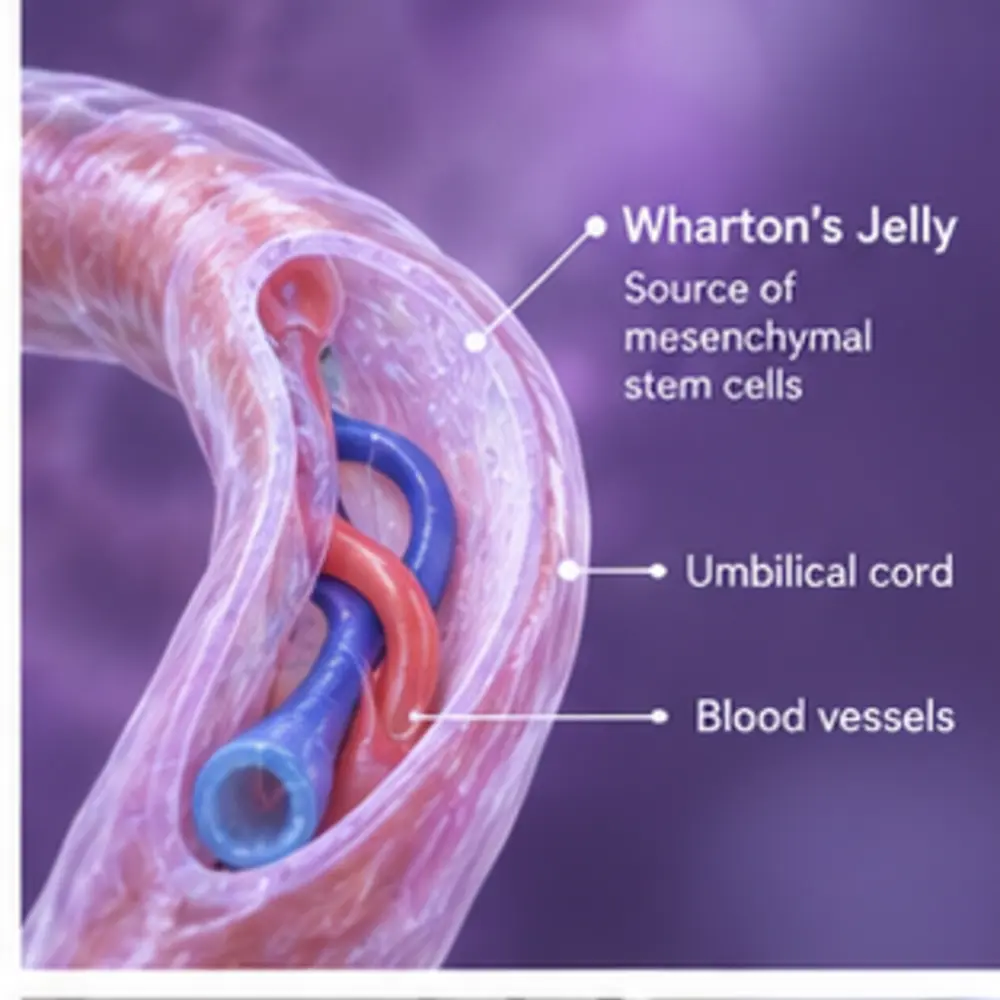
Wharton’s jelly is connective tissue from the umbilical cord. Products described with this name can differ in donor screening, manufacture, cell content, viability, sterility and regulatory status. The clinic must identify the exact product and legal pathway rather than relying on the tissue name.
Wharton’s jelly is connective tissue from the umbilical cord. Products described with this name can differ in donor screening, manufacture, cell content, viability, sterility and regulatory status. The clinic must identify the exact product and legal pathway rather than relying on the tissue name.
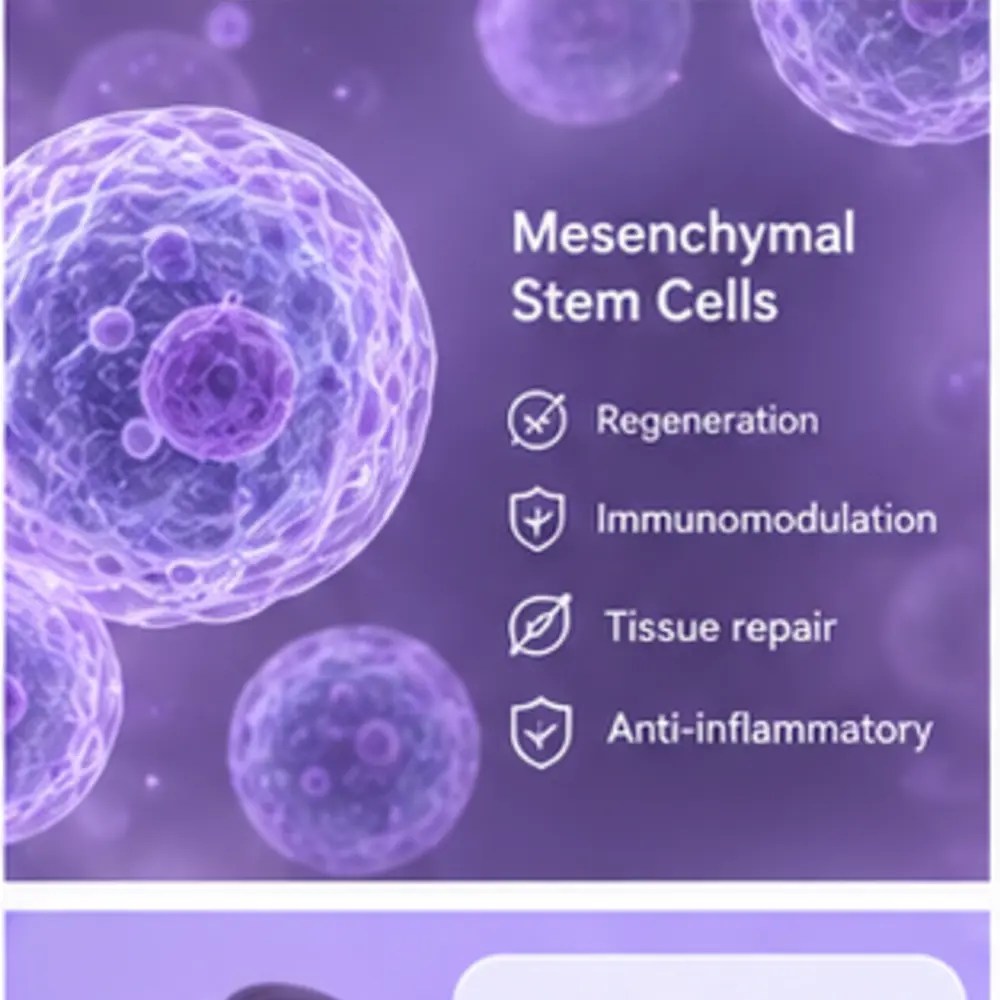
Mesenchymal stromal or stem cells are studied for signalling and tissue-response effects, but laboratory rationale is not the same as proven clinical benefit. The route, dose, processing and diagnosis determine what evidence is relevant.
Only an adult who has had the underlying problem properly diagnosed should discuss an investigational option. Infection, cancer history, immune problems, pregnancy, anticoagulants and previous reactions require individual medical review.
This is not the same as autologous PRP, hyaluronic acid, steroid injection, cord-blood transplantation or a licensed medicine. A donor-derived product also raises questions that do not apply to the patient’s own blood.
Further reading: FDA consumer information on regenerative medicine therapies; ISSCR Guidelines for Stem Cell Research and Clinical Translation. These sources explain the treatment category or manufacturer identity; the proposed local product, device and individual plan still need confirmation.


Separating a research-stage cell product from established knee care and verifying exactly what is being proposed
Agree the feature to review and what is unlikely to change.
Discuss history, anatomy, comfort and personal priorities.
Ask for the exact product name, manufacturer, donor-screening standard, cell or tissue contents, storage, batch traceability, sterility evidence, proposed route and regulatory basis. Review standard-care alternatives and what happens if no benefit occurs.
Describe the exact symptom, area or goal and when it changes. Ask for the exact product name, manufacturer, donor-screening standard, cell or tissue contents, storage, batch traceability, sterility evidence, proposed route and regulatory basis. Review standard-care alternatives and what happens if no benefit occurs.
Bring medicines, previous reports and product records. A useful assessment separates the proposed cell source, processing, evidence and treatment objective from problems requiring a different pathway.
The exact preparation matters more than the tissue buzzword.
Ask how donor screening, manufacture and traceability are documented.
Different causes of pain need different plans.

Separating a research-stage cell product from established knee care and verifying exactly what is being proposed.
Wharton’s jelly is connective tissue from the umbilical cord. Products described with this name can differ in donor screening, manufacture, cell content, viability, sterility and regulatory status. The clinic must identify the exact product and legal pathway rather than relying on the tissue name.
Use diagnosis-specific pain and function measures over a defined interval and record other treatments. A scan or photograph selected after treatment cannot establish cause.
These matched reference views demonstrate consistent observation and consultation priorities. They do not depict treatment results.
The first view identifies the feature to discuss. It is not a diagnosis or a photograph of a Medi patient.
Do not promise cartilage regrowth, reversal of osteoarthritis or avoidance of surgery.

 BeforeAfter
The divider compares matched reference views, not a record of a procedure.
Use diagnosis-specific pain and function measures over a defined interval and record other treatments. A scan or photograph selected after treatment cannot establish cause.
Real follow-up needs the diagnosis, exact product or formulation, timing and comparable observations.
Ask for the exact product name, manufacturer, donor-screening standard, cell or tissue contents, storage, batch traceability, sterility evidence, proposed route and regulatory basis. Review standard-care alternatives and what happens if no benefit occurs.
Discuss infection, contamination, immune reaction, inflammation, abnormal tissue response, procedure injury and uncertain long-term risk. Urgent worsening should be assessed locally, not managed only by messaging.
Singapore visitors need copies of the product and procedure record, written aftercare and a clear emergency plan on both sides of the border. Follow-up should not depend on repeated travel when urgent care is needed.

Mesenchymal stromal or stem cells are studied for signalling and tissue-response effects, but laboratory rationale is not the same as proven clinical benefit. The route, dose, processing and diagnosis determine what evidence is relevant.
This is not the same as autologous PRP, hyaluronic acid, steroid injection, cord-blood transplantation or a licensed medicine. A donor-derived product also raises questions that do not apply to the patient’s own blood.
It is reasonable to compare alternatives or choose no procedure. Do not promise cartilage regrowth, reversal of osteoarthritis or avoidance of surgery.
These guides answer different questions. Select an option to read its purpose, limitations and a question to bring to the consultation. A related page is not a recommendation to combine procedures.
A combination is not automatically better. Ask what each proposed procedure would contribute and whether the same goal could be approached more simply. Taking time to decide remains a useful outcome.
Select an option. See its purpose, possible benefit and the distinction that matters.
Separating a research-stage cell product from established knee care and verifying exactly what is being proposedMesenchymal stromal or stem cells are studied for signalling and tissue-response effects, but laboratory rationale is not the same as proven clinical benefit. The route, dose, processing and diagnosis determine what evidence is relevant.
Separating a research-stage cell product from established knee care and verifying exactly what is being proposed
Do not promise cartilage regrowth, reversal of osteoarthritis or avoidance of surgery.
Which part of my concern would Wharton’s Jelly Mesenchymal Stem Cell Therapy address?
 Clarifying what “stem cell” means before discussing suitability, route or expected benefit
Stem and stromal cells are investigated for repair and signalling functions. Biological plausibility, animal data or a small study does not prove that a commercial treatment rebuilds a joint or reverses ageing.
Clarifying what “stem cell” means before discussing suitability, route or expected benefit
No generic stem-cell label can guarantee rejuvenation, organ repair, cartilage restoration or a cure.
Which part of my concern would Stem Cell Treatment address?
 Choosing a diagnosis-led pathway instead of treating every painful joint with one injection
Steroid, hyaluronic acid, PRP and investigational biologic products act differently and have different evidence. An injection can be part of care, but it does not correct every mechanical, inflammatory or neurological cause of pain.
Choosing a diagnosis-led pathway instead of treating every painful joint with one injection
No joint injection guarantees tissue regeneration, permanent relief or avoidance of surgery.
Which part of my concern would Joint Injection & Regenerative Treatment address?
 Testing regenerative claims against product identity, evidence, regulation and alternatives
Regenerative products are heterogeneous and evidence for knee osteoarthritis remains uncertain. Laboratory language about cells does not establish that an injection rebuilds cartilage or prevents surgery.
Testing regenerative claims against product identity, evidence, regulation and alternatives
No page should promise new cartilage, cure of osteoarthritis, avoidance of knee replacement or regulatory approval without exact evidence.
Which part of my concern would Knee Stem Cell Injection address?
Use these five points to compare a consultation at Eco Botanic with any other clinic you are considering.
| What matters | Ask Medi Clinic Eco Botanic | Check with any clinic |
|---|---|---|
| 01Practitioner | Ask our team for the treating doctor’s name and credentials. | Check the named doctor’s current registration and relevant LCP scope. |
| 02Individual assessment | Discuss your skin, facial anatomy, history and priorities. | Look for an explanation of suitability, alternatives and what will remain unchanged. |
| 03Product & treatment plan | Confirm the proposed product, treatment scope and traceability. | Compare the actual brand and plan, not a generic treatment label. |
| 04Price & consent | Request an itemised explanation before deciding. | Check what the quote includes, possible risks and whether there is time for questions. |
| 05Review & continuity | Discuss review arrangements, including after returning to Singapore. | Confirm who handles concerns, how to contact them and any review costs. |
Bring your questions, previous treatment details and relevant medical history. Tell the clinic if your return journey has a fixed time.
Discuss the proposed method, intended change, alternatives, consent and full cost before deciding whether to proceed.
Follow the treating clinician’s advice. Keep the treatment record and clinic contact accessible while travelling.
Use the agreed review arrangements. Report unexpected symptoms promptly rather than waiting for another trip to Malaysia.
Discuss infection, contamination, immune reaction, inflammation, abnormal tissue response, procedure injury and uncertain long-term risk. Urgent worsening should be assessed locally, not managed only by messaging.
Singapore visitors need copies of the product and procedure record, written aftercare and a clear emergency plan on both sides of the border. Follow-up should not depend on repeated travel when urgent care is needed.
For Wharton’s Jelly Mesenchymal Stem Cell Therapy enquiries in the Johor Bahru area, confirm the Eco Botanic branch in Iskandar Puteri. It is a different location from Taman Molek. Ask for the appointment time and map location together so the travel plan matches the booking.
Allow flexibility for border conditions and a proper consultation. This guide does not promise a fixed journey time. If you need to return to Singapore by a particular time, explain that before the appointment. An assessment may lead to further advice or a decision to postpone treatment.
Discuss follow-up before crossing the border. Ask when progress should be reviewed, whether a return visit may be needed and how to contact the treating team. A message can help explain a concern, but it cannot replace an examination when one is needed.
Request an itemised quote in the currency being used, including what consultation and review arrangements cover. Keep the clinic contact and written instructions with you. If an urgent problem occurs after returning to Singapore, seek care where you are rather than delaying care for travel.

Confirm the branch, appointment, care plan and review arrangements with our team.
The exact preparation matters more than the tissue buzzword.
Ask how donor screening, manufacture and traceability are documented.
Different causes of pain need different plans.
Early research does not guarantee a personal result.
Select the concern you want to explore. Read its description here, then find related services at the end of this guide.
The exact preparation matters more than the tissue buzzword.
Five questions to help you understand Wharton’s Jelly Mesenchymal Stem Cell Therapy before your consultation.


Wharton’s jelly is connective tissue from the umbilical cord. Products described with this name can differ in donor screening, manufacture, cell content, viability, sterility and regulatory status. The clinic must identify the exact product and legal pathway rather than relying on the tissue name.
Mesenchymal stromal or stem cells are studied for signalling and tissue-response effects, but laboratory rationale is not the same as proven clinical benefit. The route, dose, processing and diagnosis determine what evidence is relevant.
Only an adult who has had the underlying problem properly diagnosed should discuss an investigational option. Infection, cancer history, immune problems, pregnancy, anticoagulants and previous reactions require individual medical review.
This is not the same as autologous PRP, hyaluronic acid, steroid injection, cord-blood transplantation or a licensed medicine. A donor-derived product also raises questions that do not apply to the patient’s own blood.
Ask for the exact product name, manufacturer, donor-screening standard, cell or tissue contents, storage, batch traceability, sterility evidence, proposed route and regulatory basis. Review standard-care alternatives and what happens if no benefit occurs.
Discuss infection, contamination, immune reaction, inflammation, abnormal tissue response, procedure injury and uncertain long-term risk. Urgent worsening should be assessed locally, not managed only by messaging.
Singapore visitors need copies of the product and procedure record, written aftercare and a clear emergency plan on both sides of the border. Follow-up should not depend on repeated travel when urgent care is needed.
No. The reference images support a discussion of the proposed cell source, processing, evidence and treatment objective. They are not clinic-patient photographs, proof of stock or a prediction of benefit. Use diagnosis-specific pain and function measures over a defined interval and record other treatments. A scan or photograph selected after treatment cannot establish cause.

Read the purpose, suitability questions and limitations before choosing a procedure.
View details
Read the purpose, suitability questions and limitations before choosing a procedure.
View details
Read the purpose, suitability questions and limitations before choosing a procedure.
View details
Read the purpose, suitability questions and limitations before choosing a procedure.
View detailsDiscuss Wharton’s Jelly Mesenchymal Stem Cell Therapy in Johor Bahru (JB), your priorities and follow-up arrangements with our team before planning your visit.
Book via WhatsAppAn enquiry starts the conversation. Your appointment is confirmed by the clinic.
Daily 10:00–18:00 · By appointment
2C-27, Jalan Eko Botani, Persiaran Eko Botani 2, 79100 Iskandar Puteri, Johor, Malaysia.
Open directions in Google Maps ↗