


Identify the scalp condition.
PRP is one possible intervention, not an explanation of why hair is being lost. The examination may lead to a different treatment or a recommendation to investigate first.

Platelet-rich plasma, or PRP, is prepared from a person's own blood and then used in a clinician-performed procedure. For scalp treatment, this generally involves blood collection, separation and injections into selected areas. It is not a ready-made hair filler, stem-cell transplant or topical hair product.
Platelet-rich plasma, or PRP, is prepared from a person's own blood and then used in a clinician-performed procedure. For scalp treatment, this generally involves blood collection, separation and injections into selected areas. It is not a ready-made hair filler, stem-cell transplant or topical hair product.
PRP is studied for its platelet-associated biological signals in selected hair-loss settings. Preparation methods and treatment schedules differ across studies. An encouraging result from one protocol cannot establish that every preparation, concentration or injection plan has the same effect.
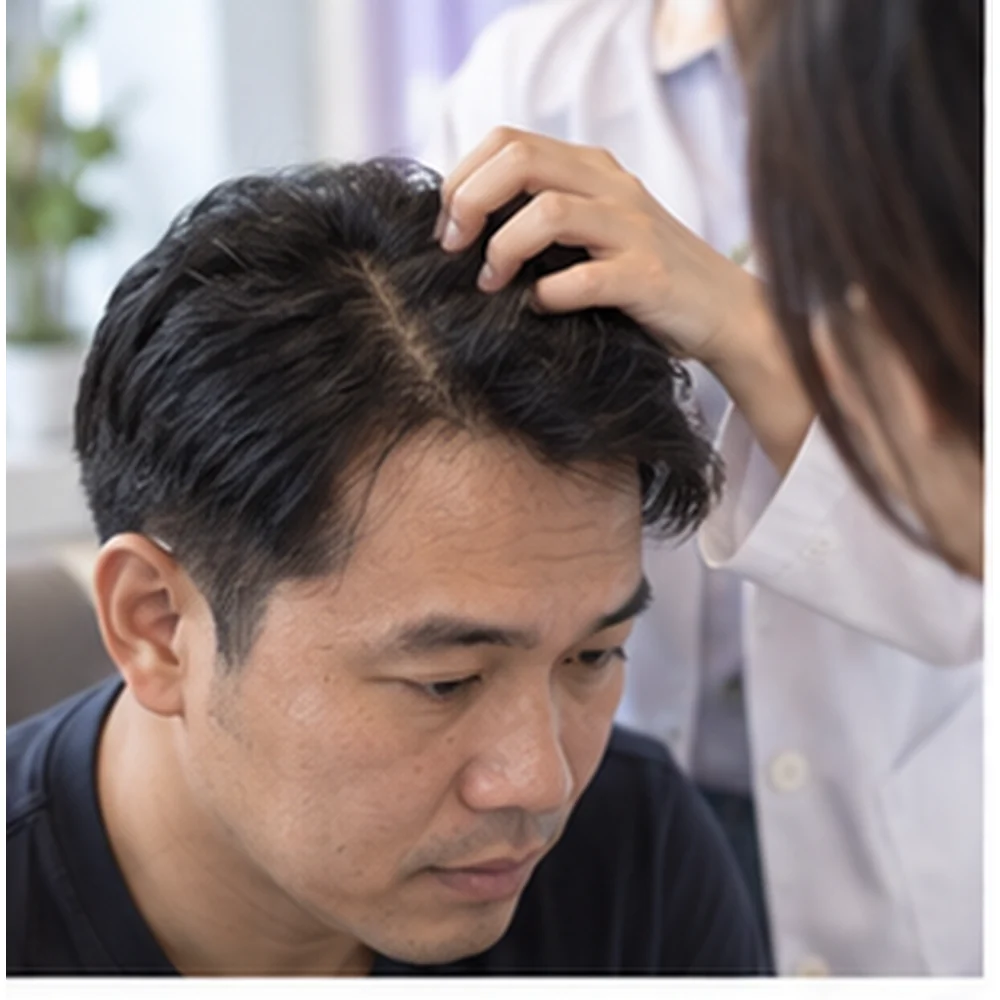
The useful starting point is the cause and pattern of thinning. Pattern hair loss, sudden shedding, patchy loss, broken hairs and scarring conditions need different discussions. The presence of visible scalp does not establish that PRP is the right first treatment or that viable follicles remain in every area.
PRP uses an autologous blood preparation. PDRN and polynucleotide products are different materials, while minoxidil and other medicines have their own indications and precautions. Hair transplantation relocates follicles. These approaches cannot be treated as interchangeable ways of ordering the same result.
Further reading: American Academy of Dermatology: hair loss diagnosis and treatment; Controlled PRP study in male pattern alopecia; Original study of PRP and PDRN in female pattern hair loss. These sources explain the treatment category or manufacturer identity; the proposed local product, device and individual plan still need confirmation.


Considering platelet-rich plasma after identifying the cause of thinning
Agree the feature to review and what is unlikely to change.
Discuss history, anatomy, comfort and personal priorities.
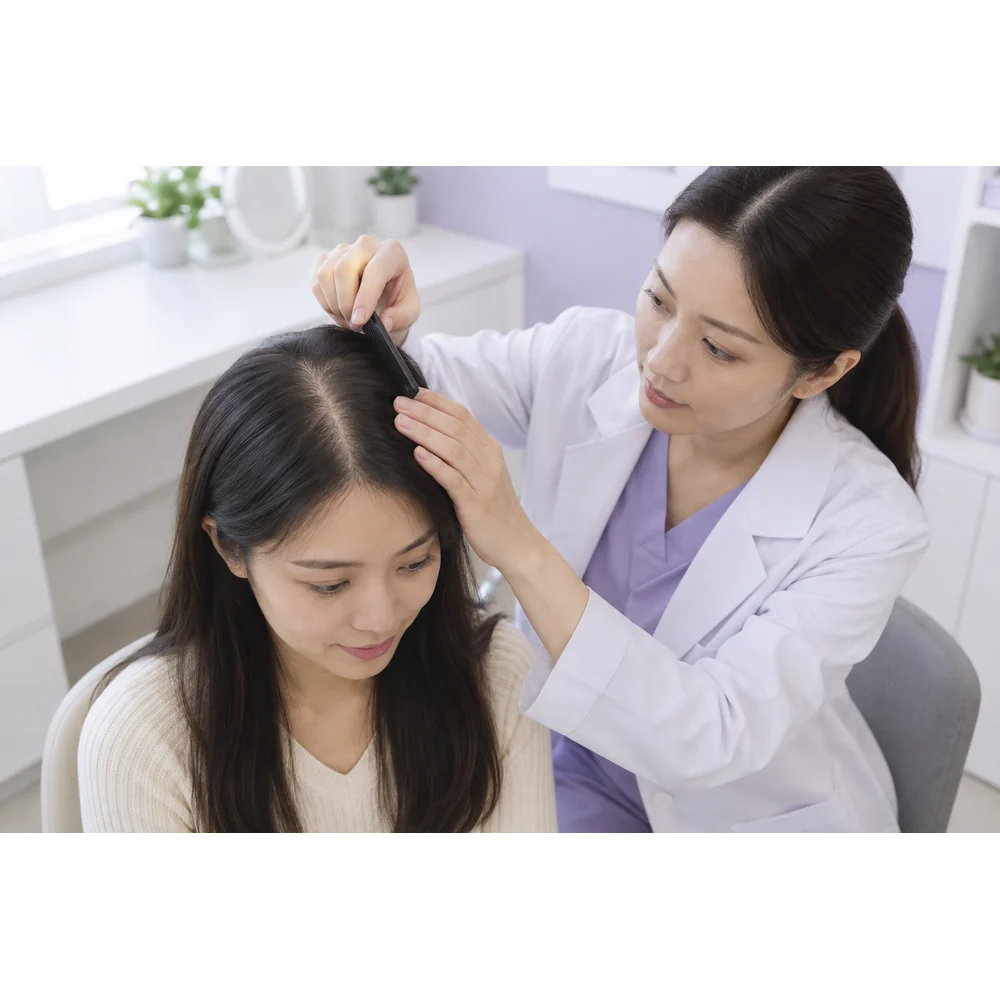
Bring the timeline of shedding, family history, medication changes, illnesses, dietary changes and previous hair treatments. Mention scalp pain, redness, scaling or pustules. Discuss blood disorders, bleeding tendency, infections and medicines that affect clotting; do not stop prescribed medication without advice.
A useful history includes when thinning began and whether the change was gradual or sudden. Describe shedding, breakage and scalp symptoms separately. Mention illnesses, operations, significant weight change and medication changes around the period when the problem started.
If previous treatments were stopped, explain why and whether they caused irritation or another problem. Bring product names where possible. This helps the clinician avoid repeating an unsuitable approach or attributing a change to the wrong intervention.
A consistent parting helps document distribution, not diagnose the cause by itself.
Record the crown in repeatable lighting without concealing fibres.
Hairline change needs an individual pattern and history assessment.

PRP is one possible intervention, not an explanation of why hair is being lost. The examination may lead to a different treatment or a recommendation to investigate first.
Ask how the blood sample is handled, what preparation is proposed and how it will be documented. Different PRP methods should not be treated as identical merely because the name is shared.
A person may notice less shedding without an obvious density change, or vice versa. Agree which observations matter and how they will be recorded over time.
These matched reference views demonstrate consistent observation and consultation priorities. They do not depict treatment results.
The first matched view identifies the feature to discuss. It is not a diagnosis and is not a photograph of a Medi patient.
PRP does not guarantee regrowth, restore every bald area or replace assessment of a potentially inflammatory or scarring scalp condition.
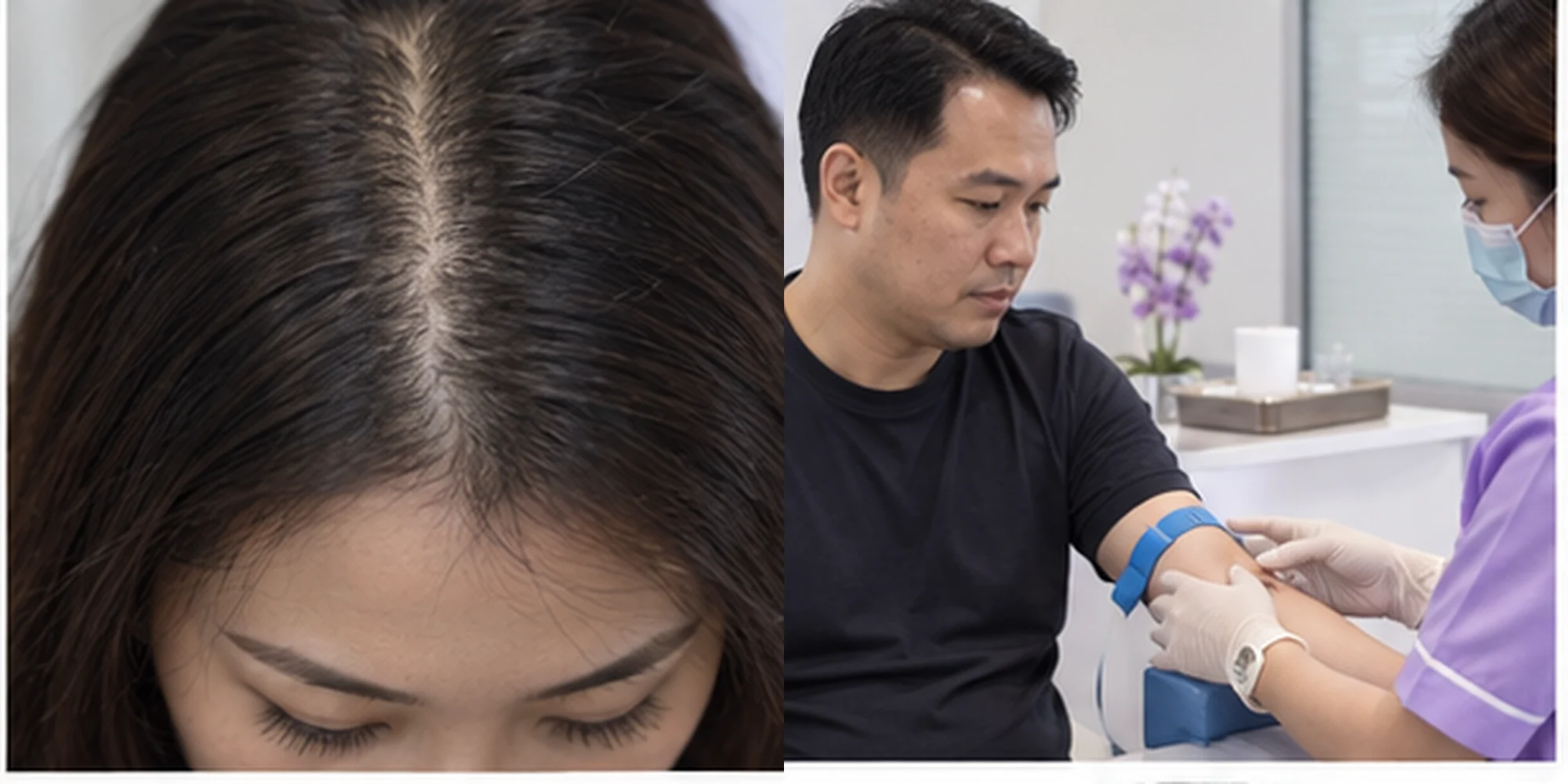
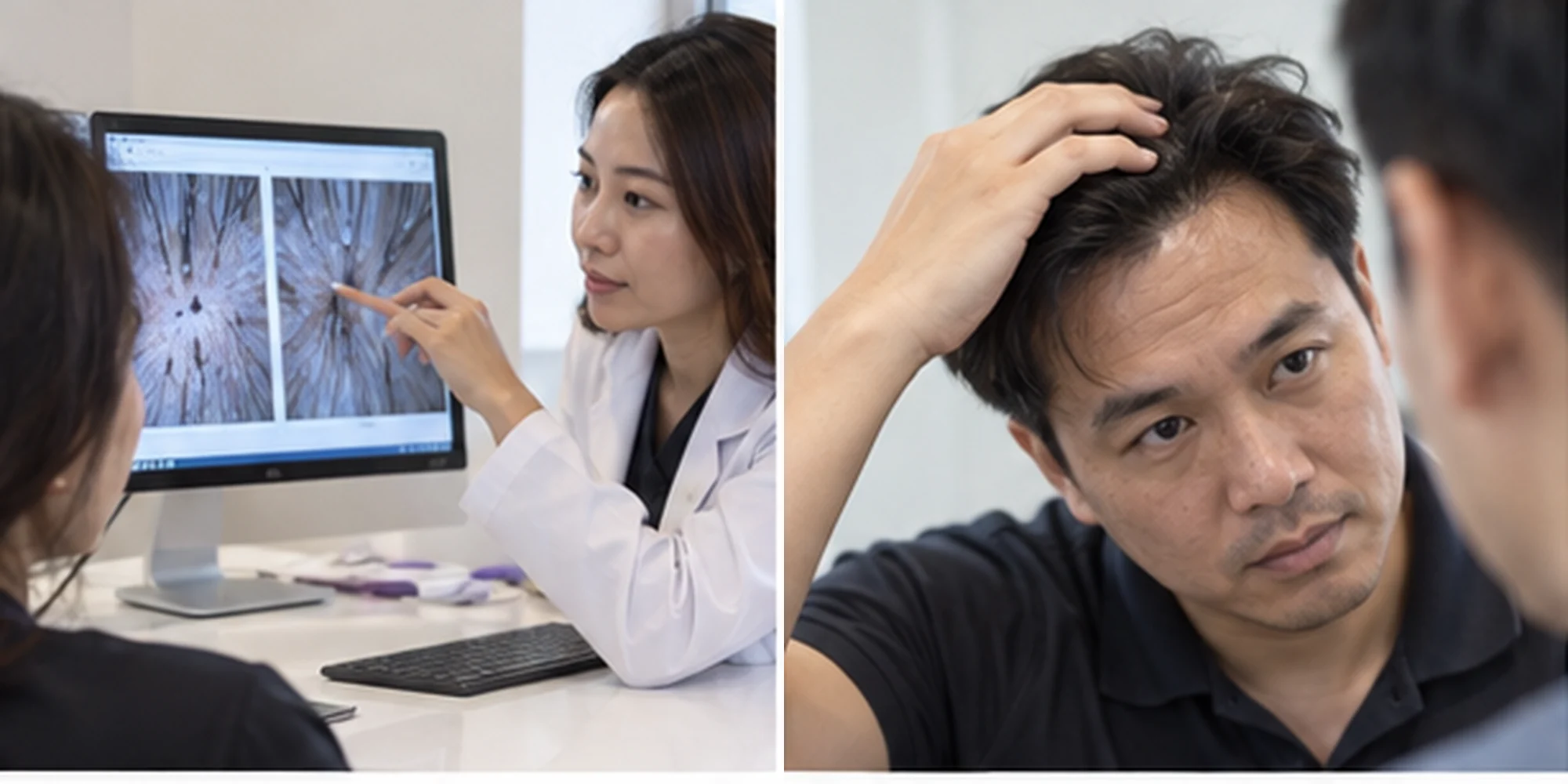 BeforeAfter
The divider compares matched reference views, not a record of a procedure. It should not be read as evidence of a clinical result.
Use a consistent scalp part, hair length, dryness and lighting when recording change. Freshly styled hair or concealing fibres can make density look different. Separate reduced shedding from actual density change, and ask how the clinician will decide whether continuing PRP remains worthwhile.
Real follow-up needs the actual diagnosis, treatment record, timing and comparable observations. A change in pose, styling or lighting can mislead.
Ask what evidence is relevant to your diagnosis and the proposed PRP method. A study in one group does not establish that every pattern of hair loss responds similarly. Discuss alternatives and the option to defer injections while the cause is clarified.
Understand the planned course without treating it as an irreversible commitment. Ask when response and tolerability will be assessed, what would lead to a change and how the costs of follow-up will be explained. This guide does not supply invented prices or schedules.
For an Eco Botanic visit from Singapore, keep the diagnosis and previous treatment records available on your phone or on paper. Confirm how a concerning scalp reaction would be assessed after returning home, rather than waiting for the next scheduled trip.

Hair coverage in photographs depends on the parting and the condition of the hair as well as follicle density. Wet hair, product residue and bright overhead light can expose more scalp. Consistent preparation improves the usefulness of repeat images.
PRP research cannot establish a personal guarantee. The preparation, diagnosis and ongoing care may affect the response, and a treated area with severe loss can have different limits from early thinning. Ask the clinician to explain those limits in ordinary language.
Keep a record of concurrent treatments. If a medicine and PRP begin together, an improvement cannot automatically be assigned to the injections. The goal of review is a useful care decision, not a claim that every element of a package worked.
These guides answer different questions. Select an option to read its purpose, limitations and a question to bring to the consultation. A related page is not a recommendation to combine procedures.
A combination is not automatically better. Ask what each proposed procedure would contribute and whether the same goal could be approached more simply. Taking time to decide remains a useful outcome.
Select an option. See its purpose, possible benefit and the distinction that matters.
Considering platelet-rich plasma after identifying the cause of thinningPRP is studied for its platelet-associated biological signals in selected hair-loss settings. Preparation methods and treatment schedules differ across studies. An encouraging result from one protocol cannot establish that every preparation, concentration or injection plan has the same effect.
Considering platelet-rich plasma after identifying the cause of thinning
PRP does not guarantee regrowth, restore every bald area or replace assessment of a potentially inflammatory or scarring scalp condition.
Which part of my concern would PRP Scalp Hair Treatment address?
 Finding the cause of shedding, thinning or patchy loss before choosing treatment
Hair grows in cycles, and changes in shedding do not always mean permanent follicle loss. Other problems involve gradual miniaturisation, breakage, inflammation or scarring. The examination and history help distinguish these possibilities; a general photograph or online quiz cannot do that reliably.
Finding the cause of shedding, thinning or patchy loss before choosing treatment
An online guide cannot diagnose the cause of hair loss, guarantee regrowth or identify a universally best injection or supplement.
Which part of my concern would Hair Loss address?
 Examining product identity and limited hair-loss evidence before scalp injections
PDRN has been investigated in tissue-repair and selected hair-loss contexts. Biological explanations are not the same as a proven clinical benefit for every scalp condition. Material source, formulation and route matter, so a general repair claim should not be turned into a promise to reactivate all follicles.
Examining product identity and limited hair-loss evidence before scalp injections
The available research does not justify guaranteed regrowth, equivalence across PDRN and PN products, or replacement of established diagnosis-led care.
Which part of my concern would PDRN Scalp Hair Treatment address?
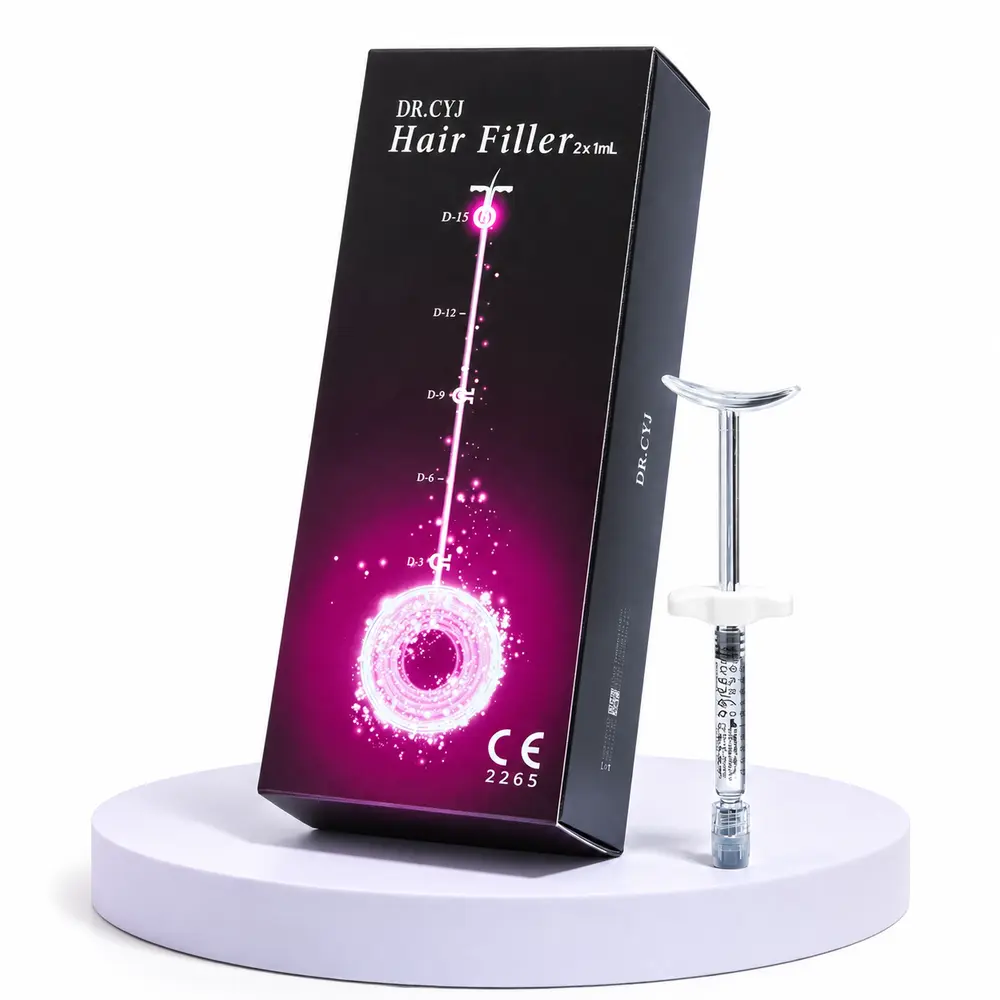 Hair-loss cause and scalp-product identity
A more visible parting can reflect changes in hair density, while a receding temple may raise another pattern question. Scalp redness, flaking or a sudden patch of loss adds information that a product photograph cannot provide. Start by showing the pattern and describing its timeline.
Hair-loss cause and scalp-product identity
DR.CYJ Hair Filler is not a hair transplant and does not guarantee restoration of every thinning area.
Which part of my concern would DR.CYJ Hair Filler address?
Use these five points to compare a consultation at Eco Botanic with any other clinic you are considering.
| What matters | Ask Medi Clinic Eco Botanic | Check with any clinic |
|---|---|---|
| 01Practitioner | Ask our team for the treating doctor’s name and credentials. | Check the named doctor’s current registration and relevant LCP scope. |
| 02Individual assessment | Discuss your skin, facial anatomy, history and priorities. | Look for an explanation of suitability, alternatives and what will remain unchanged. |
| 03Product & treatment plan | Confirm the proposed product, treatment scope and traceability. | Compare the actual brand and plan, not a generic treatment label. |
| 04Price & consent | Request an itemised explanation before deciding. | Check what the quote includes, possible risks and whether there is time for questions. |
| 05Review & continuity | Discuss review arrangements, including after returning to Singapore. | Confirm who handles concerns, how to contact them and any review costs. |
Bring your questions, previous treatment details and relevant medical history. Tell the clinic if your return journey has a fixed time.
Discuss the proposed method, intended change, alternatives, consent and full cost before deciding whether to proceed.
Follow the treating clinician’s advice. Keep the treatment record and clinic contact accessible while travelling.
Use the agreed review arrangements. Report unexpected symptoms promptly rather than waiting for another trip to Malaysia.
Blood collection and scalp injections can cause discomfort, bleeding, bruising and other complications, including infection. Ask about preparation traceability and sterile technique. Obtain personalised washing, exercise and scalp-product advice, and a contact for increasing pain, spreading redness, discharge or fever.
If coming from Singapore, arrange the diagnostic assessment before planning a series of injection visits. Ask which reviews require scalp examination and whether useful photographs can be supplied between visits. A fixed course should not replace checking whether the diagnosis and response still support treatment.
For PRP Scalp Hair Treatment enquiries in the Johor Bahru area, confirm the Eco Botanic branch in Iskandar Puteri. It is a different location from Taman Molek. Ask for the appointment time and map location together so the travel plan matches the booking.
Allow flexibility for border conditions and a proper consultation. This guide does not promise a fixed journey time. If you need to return to Singapore by a particular time, explain that before the appointment. An assessment may lead to further advice or a decision to postpone treatment.
Discuss follow-up before crossing the border. Ask when progress should be reviewed, whether a return visit may be needed and how to contact the treating team. A message can help explain a concern, but it cannot replace an examination when one is needed.
Request an itemised quote in the currency being used, including what consultation and review arrangements cover. Keep the clinic contact and written instructions with you. If an urgent problem occurs after returning to Singapore, seek care where you are rather than delaying care for travel.

Confirm the branch, appointment, care plan and review arrangements with our team.
A consistent parting helps document distribution, not diagnose the cause by itself.
Record the crown in repeatable lighting without concealing fibres.
Hairline change needs an individual pattern and history assessment.
The timing of increased shedding can be as useful as a photograph.
Select the concern you want to explore. Read its description here, then find related services at the end of this guide.
A consistent parting helps document distribution, not diagnose the cause by itself.
Five questions to help you understand PRP Scalp Hair Treatment before your consultation.
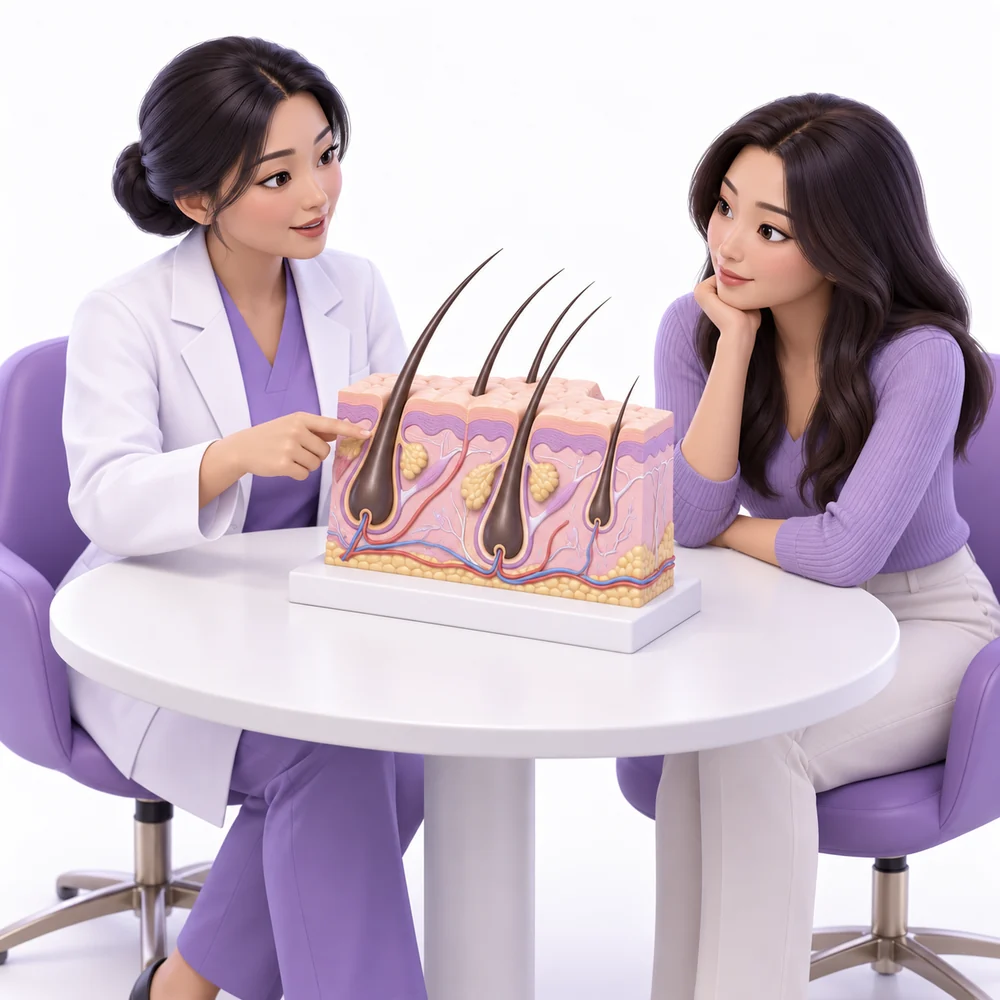

The general process involves collecting a small blood sample, preparing a platelet-rich fraction and injecting selected scalp areas. The actual preparation, suitability and procedure require clinical explanation. This guide does not prescribe a kit, dose or injection pattern.
No. An autologous platelet-rich blood preparation should not be relabelled as stem-cell transplantation or guaranteed follicle regeneration. Ask what is actually being prepared and what evidence applies to the proposed use.
No treatment works for every cause. Pattern thinning, temporary shedding and inflammatory scalp disease have different priorities. A diagnosis and examination should come before deciding whether PRP has a useful role in your plan.
No. Blood handling and injections still require sterile technique, screening and aftercare. Discomfort, bleeding, bruising and infection are relevant discussions. Your medical history can also change whether the procedure is suitable.
There is no universal schedule that this page can prescribe. Ask why a particular course is proposed, how response will be measured and when treatment would be reconsidered. Study schedules are not automatically the right schedule for you.
Bring a complete list of medicines, supplements and scalp products. The clinician should explain how any treatments fit together and which changes, if any, are appropriate. Do not stop prescribed medicines merely to prepare for an injection appointment.
Bring the shedding timeline, previous diagnosis and treatment records, plus comparable scalp photographs if available. Confirm follow-up arrangements at Eco Botanic before committing to repeated travel. An initial assessment may lead to a different treatment plan.
No. Photographic comparisons alone cannot predict a PRP response. Progress is reviewed with repeatable photographs, an appropriate interval and clinical interpretation.

Read the purpose, suitability questions and limitations before choosing a procedure.
View details
Read the purpose, suitability questions and limitations before choosing a procedure.
View detailsRead the purpose, suitability questions and limitations before choosing a procedure.
View details
Read the purpose, suitability questions and limitations before choosing a procedure.
View detailsDiscuss PRP Scalp Hair Treatment in Johor Bahru (JB), your priorities and follow-up arrangements with our team before planning your visit.
Book via WhatsAppAn enquiry starts the conversation. Your appointment is confirmed by the clinic.
Daily 10:00–18:00 · By appointment
2C-27, Jalan Eko Botani, Persiaran Eko Botani 2, 79100 Iskandar Puteri, Johor, Malaysia.
Open directions in Google Maps ↗