


Request a component list.
The same service label can be used differently. A written list makes it possible to compare like with like rather than assuming that every 7D offer means the same treatment.

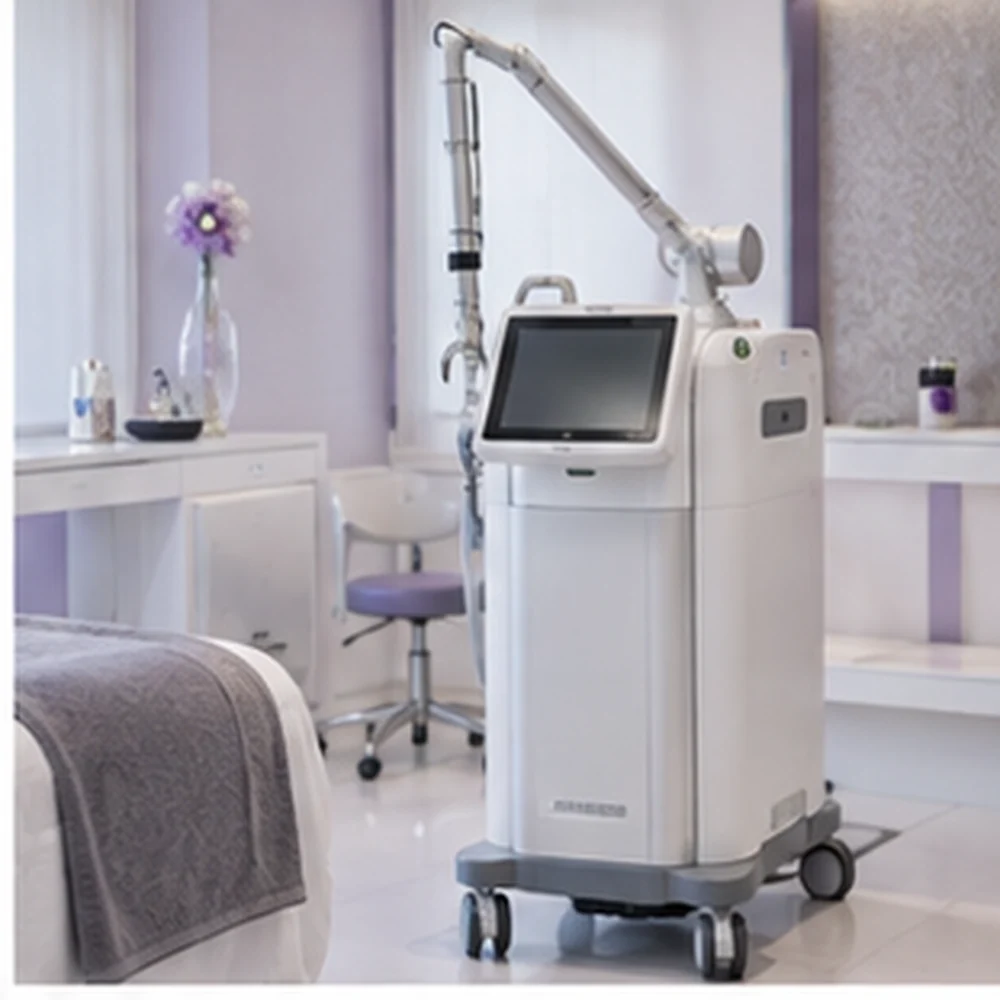
Fotona 7D Treatment is retained as the existing service title. The official references reviewed identify named Fotona treatments, but do not establish one universal seven-step protocol.
Fotona 7D Treatment is retained as the existing service title. The official references reviewed identify named Fotona treatments, but do not establish one universal seven-step protocol. Ask the clinic to write down what its proposed 7D plan includes rather than assuming the number has the same meaning everywhere.
A Fotona-based plan can involve different laser modes with different tissue effects. Whether a proposed stage warms tissue, treats a selected surface feature or resurfaces skin matters more than the package label. Wavelengths and settings must come from the treating professional, not an inferred seven-stage list.
A person describing several facial concerns may benefit from separating them at assessment. Texture, pigment, facial folds, eyelid skin and lip appearance do not automatically need treatment on the same day. One focused intervention or no intervention may be more appropriate than a larger package.
The manufacturer's identifiable Fotona4D approach is not evidence that every locally named 7D plan is a standard extension. Additional steps do not establish greater efficacy, suitability or safety. Ask which component is essential to your priority and which is optional.
Further reading: Fotona4D official treatment information; Fotona aesthetic treatment overview; Mayo Clinic laser resurfacing. These sources explain the treatment category or manufacturer identity; the proposed local product, device and individual plan still need confirmation.

Understanding a proposed multi-area laser plan before agreeing to seven stages
Agree the feature to review and what is unlikely to change.
Discuss history, anatomy, comfort and personal priorities.
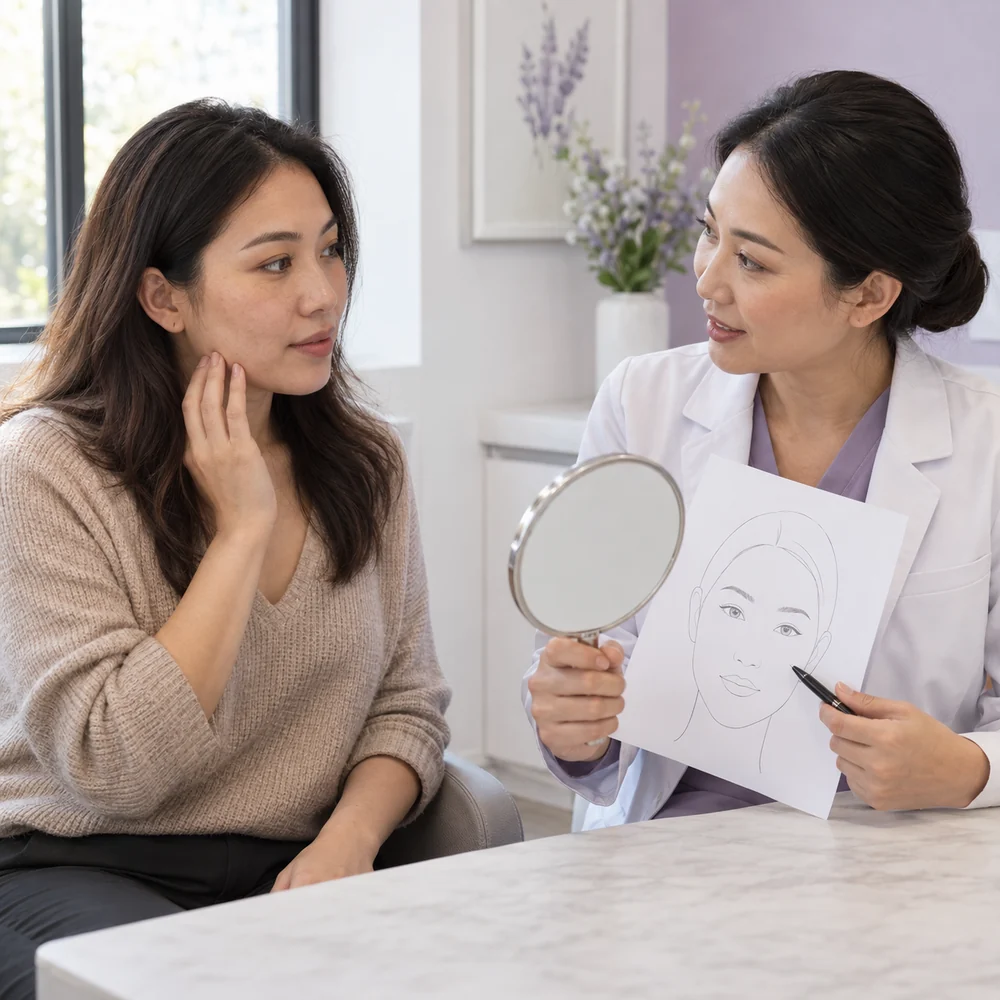
Bring previous laser and injectable records, your normal skincare and a description of the feature you want reviewed. Ask whether proposed stages involve the eye region, mouth or surface peeling. Each area adds specific assessment and protection questions that a generic facial consultation may not answer.
Write down the two concerns that matter most before discussing a multi-area offer. Ask the clinician to connect each suggested stage to an observed feature. If the explanation relies only on the number seven, request a more specific account of the purpose and alternatives.
A combined plan should explain whether all components are proposed for the same visit and whether they share the same recovery requirements. Ask how the plan changes if the skin examination suggests irritation, a recent procedure or another reason to omit an area.
Ask whether the proposed surface step matches the actual texture concern.
Record fine lines separately from deep folds and volume-related shadows.
Skin quality and tissue descent set different expectations.

The same service label can be used differently. A written list makes it possible to compare like with like rather than assuming that every 7D offer means the same treatment.
Ask which component addresses the concern you named first and whether the remaining steps add a meaningful benefit. More extensive treatment is not automatically better personalisation.
If the plan changes on the day, the record and aftercare should reflect what happened. Review should not rely on a package name that includes steps you did not receive.
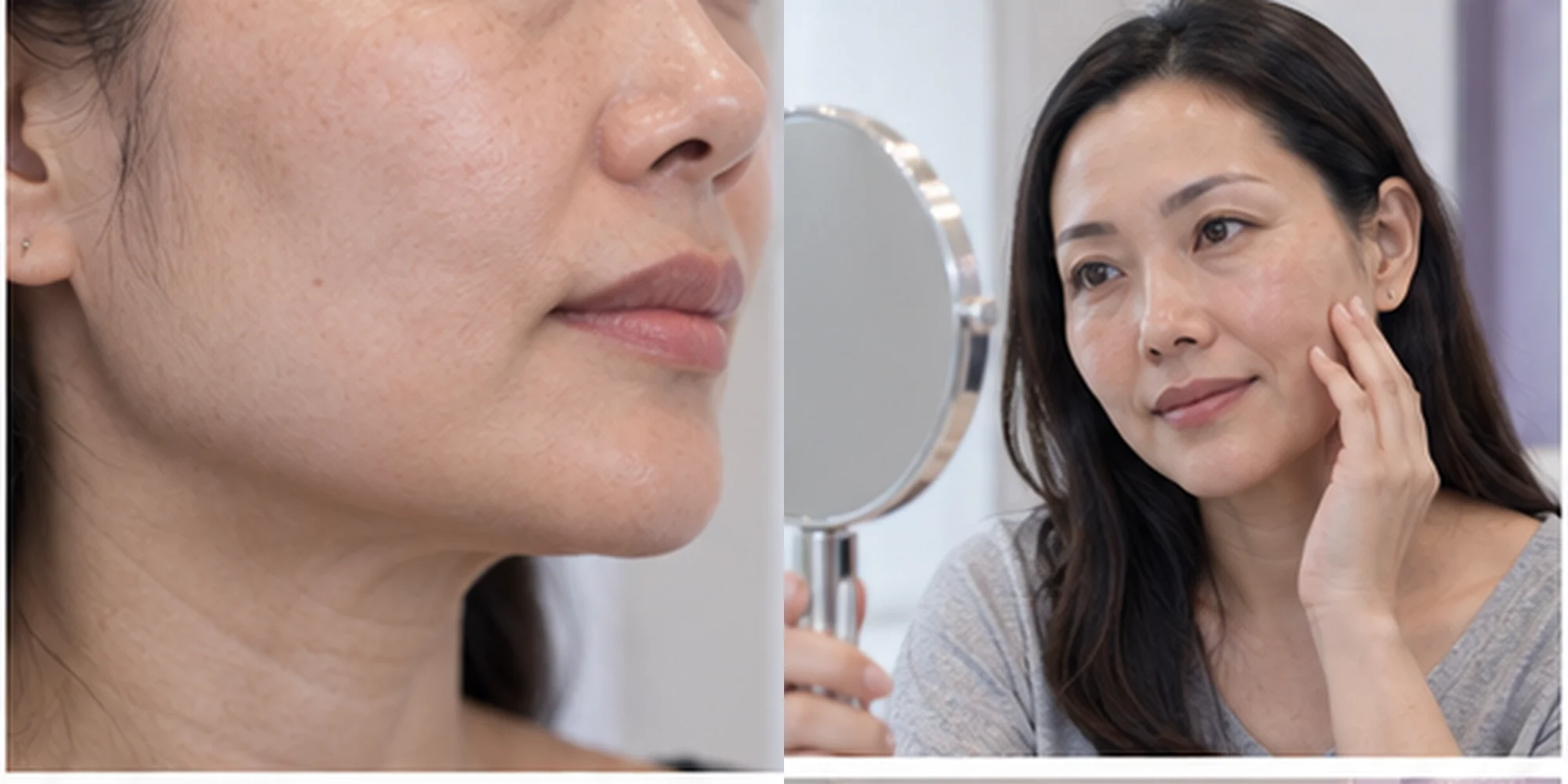
These matched reference views demonstrate consistent observation and consultation priorities. They do not depict treatment results.
The first matched view identifies the feature to discuss. It is not a diagnosis and is not a photograph of a Medi patient.
A seven-stage label does not establish seven benefits, superiority to Fotona4D or an individually appropriate protocol.
 BeforeAfter
The divider compares matched reference views, not a record of a procedure. It should not be read as evidence of a clinical result.
Agree separate observations for each treated area and record which components actually happened. Without that record, a later photograph cannot show which stage helped or caused irritation. Review should allow the plan to be simplified, delayed or stopped rather than automatically repeated.
Real follow-up needs the actual diagnosis, treatment record, timing and comparable observations. A change in pose, styling or lighting can mislead.
Ask what evidence supports each component for the intended area. Evidence for an identifiable manufacturer treatment cannot automatically validate an added step or a different combination. Uncertainty should be explained, not hidden behind a higher-dimensional label.
If an eye, lip or intraoral component is proposed, discuss that area's particular preparation and safeguards. Do not infer that approval of one facial component means consent to every other area. You should understand what can be declined or postponed.
For an Eco Botanic consultation, share your Singapore travel plans and any important commitments after the appointment. The treatment plan should remain flexible if assessment changes it; a booked journey is not a clinical reason to proceed with every stage.
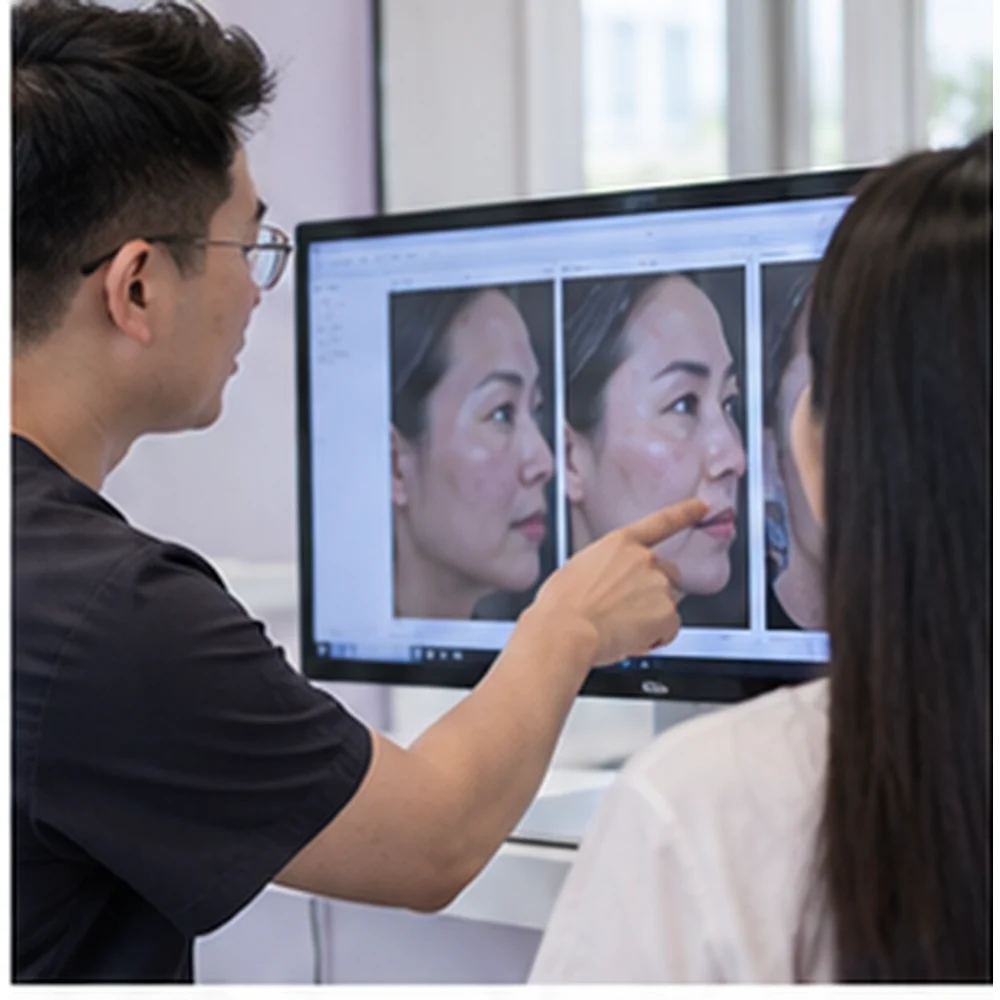
A combined approach makes attribution harder. If several methods are performed together, later photographs cannot necessarily show which step caused a change or a reaction. Ask how the clinician will review both benefit and tolerability.
Avoid comparing package numbers as though they were a clinical scale. Seven does not specify wavelength, energy, depth or treatment area, and it does not establish superiority over four or six. Compare named components instead.
A useful decision includes what would lead to stopping. If the first review does not support a worthwhile benefit, ask whether the plan should be simplified or changed rather than automatically repeating an identical package.
These guides answer different questions. Select an option to read its purpose, limitations and a question to bring to the consultation. A related page is not a recommendation to combine procedures.
A combination is not automatically better. Ask what each proposed procedure would contribute and whether the same goal could be approached more simply. Taking time to decide remains a useful outcome.
Select an option. See its purpose, possible benefit and the distinction that matters.
Understanding a proposed multi-area laser plan before agreeing to seven stagesA Fotona-based plan can involve different laser modes with different tissue effects. Whether a proposed stage warms tissue, treats a selected surface feature or resurfaces skin matters more than the package label. Wavelengths and settings must come from the treating professional, not an inferred seven-stage list.
Understanding a proposed multi-area laser plan before agreeing to seven stages
A seven-stage label does not establish seven benefits, superiority to Fotona4D or an individually appropriate protocol.
Which part of my concern would Fotona 7D Treatment address?
 Understanding four laser modes before deciding on a facial treatment
Its four modes are SMOOTH, FRAC3, PIANO and SupErficial. They combine intraoral thermal treatment, selected deeper effects, broader tissue warming and a light surface peel. These steps do different jobs; the peel means the complete sequence should not automatically be described as entirely nonablative.
Understanding four laser modes before deciding on a facial treatment
Fotona4D cannot guarantee a facelift result, permanent tightening, a fixed increase in volume or no recovery effects.
Which part of my concern would Fotona 4D Treatment address?
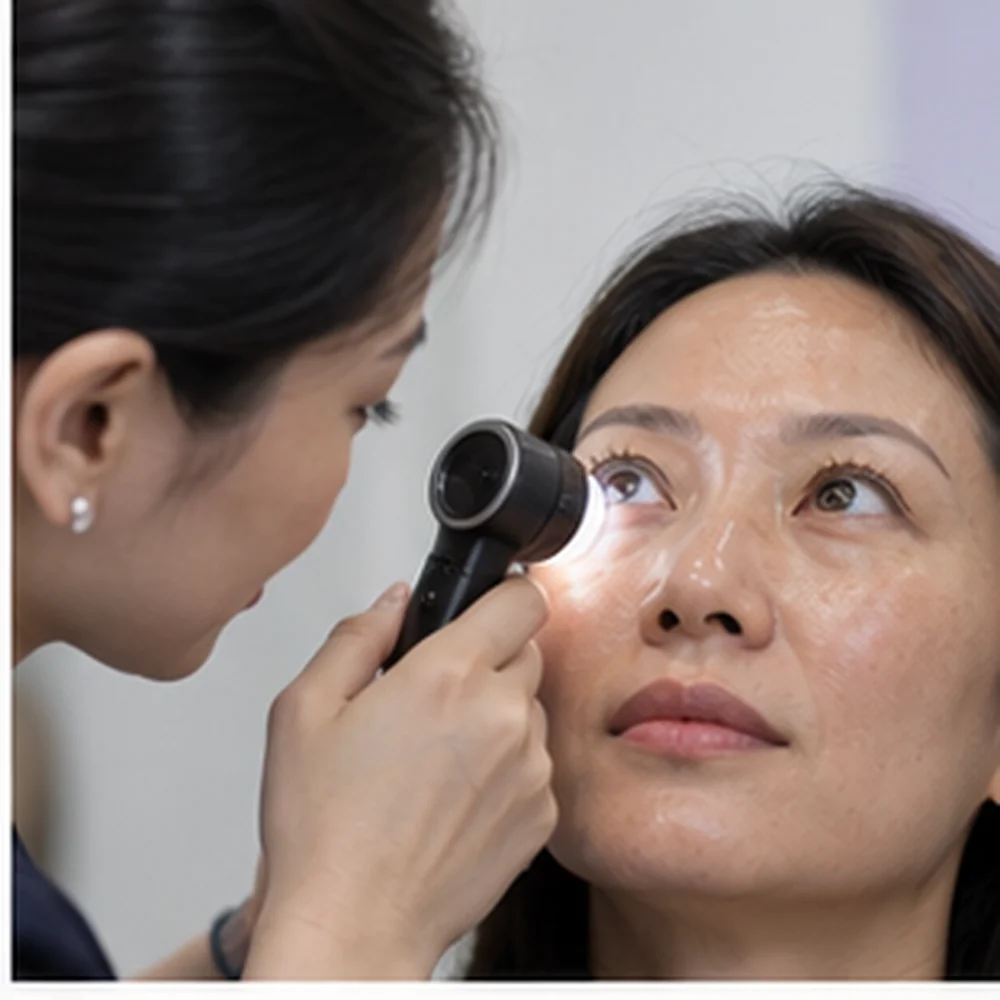 Separating eyelid skin texture from bags, pigment and eyelid position
The manufacturer describes controlled laser heating of periocular skin rather than removal of excess eyelid tissue. This is different from surgery, injectable volume replacement and treatment directed at muscle movement. The visible concern determines which discussion is relevant.
Separating eyelid skin texture from bags, pigment and eyelid position
No laser name guarantees removal of bags, correction of ptosis, permanent tightening or a surgery-equivalent result.
Which part of my concern would Fotona Eye Treatment address?
 Exploring LipLase without confusing nonablative laser treatment with filler
Controlled thermal exposure is used to stimulate changes within the lip tissue over time. Manufacturer material also describes an Nd:YAG PIANO component in some LipLase descriptions. That is different from depositing a measured volume of hyaluronic-acid filler or surgically changing the lip shape.
Exploring LipLase without confusing nonablative laser treatment with filler
LipLase cannot guarantee filler-equivalent volume, a chosen syringe-sized increase, permanent enlargement or correction of every asymmetry and perioral line.
Which part of my concern would Fotona Lip Treatment address?
Use these five points to compare a consultation at Eco Botanic with any other clinic you are considering.
| What matters | Ask Medi Clinic Eco Botanic | Check with any clinic |
|---|---|---|
| 01Practitioner | Ask our team for the treating doctor’s name and credentials. | Check the named doctor’s current registration and relevant LCP scope. |
| 02Individual assessment | Discuss your skin, facial anatomy, history and priorities. | Look for an explanation of suitability, alternatives and what will remain unchanged. |
| 03Product & treatment plan | Confirm the proposed product, treatment scope and traceability. | Compare the actual brand and plan, not a generic treatment label. |
| 04Price & consent | Request an itemised explanation before deciding. | Check what the quote includes, possible risks and whether there is time for questions. |
| 05Review & continuity | Discuss review arrangements, including after returning to Singapore. | Confirm who handles concerns, how to contact them and any review costs. |
Bring your questions, previous treatment details and relevant medical history. Tell the clinic if your return journey has a fixed time.
Discuss the proposed method, intended change, alternatives, consent and full cost before deciding whether to proceed.
Follow the treating clinician’s advice. Keep the treatment record and clinic contact accessible while travelling.
Use the agreed review arrangements. Report unexpected symptoms promptly rather than waiting for another trip to Malaysia.
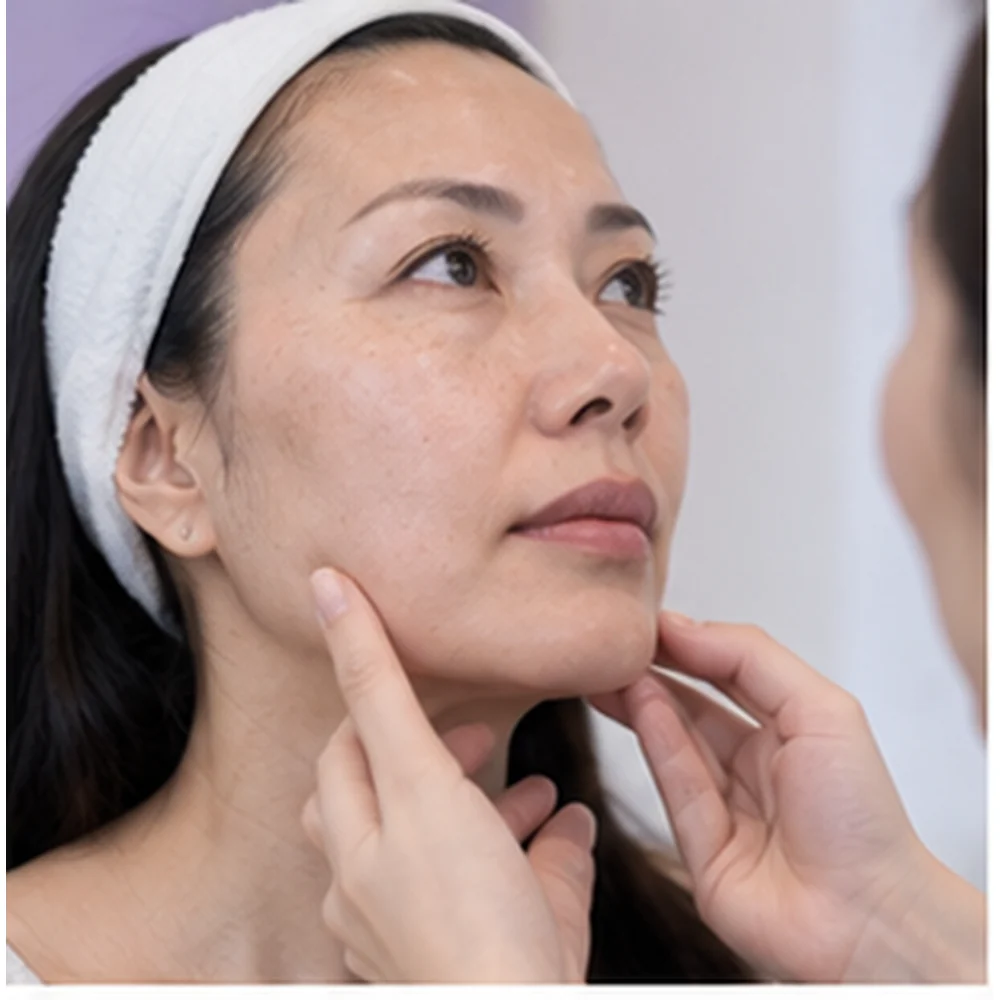
Recovery is determined by the most relevant tissue exposure, not the number in the title. Discuss thermal injury, changes in pigmentation, irritation and infection, together with area-specific risks. If several methods are proposed, ask for one coordinated aftercare plan and a clear contact for problems.
Before a Singapore visit to Eco Botanic, request the proposed components and appointment purpose. A long travel day is not a reason to add optional procedures. Leave room to postpone a component after examination or to stage treatment if the clinician considers that preferable.
For Fotona 7D Treatment enquiries in the Johor Bahru area, confirm the Eco Botanic branch in Iskandar Puteri. It is a different location from Taman Molek. Ask for the appointment time and map location together so the travel plan matches the booking.
Allow flexibility for border conditions and a proper consultation. This guide does not promise a fixed journey time. If you need to return to Singapore by a particular time, explain that before the appointment. An assessment may lead to further advice or a decision to postpone treatment.
Discuss follow-up before crossing the border. Ask when progress should be reviewed, whether a return visit may be needed and how to contact the treating team. A message can help explain a concern, but it cannot replace an examination when one is needed.
Request an itemised quote in the currency being used, including what consultation and review arrangements cover. Keep the clinic contact and written instructions with you. If an urgent problem occurs after returning to Singapore, seek care where you are rather than delaying care for travel.
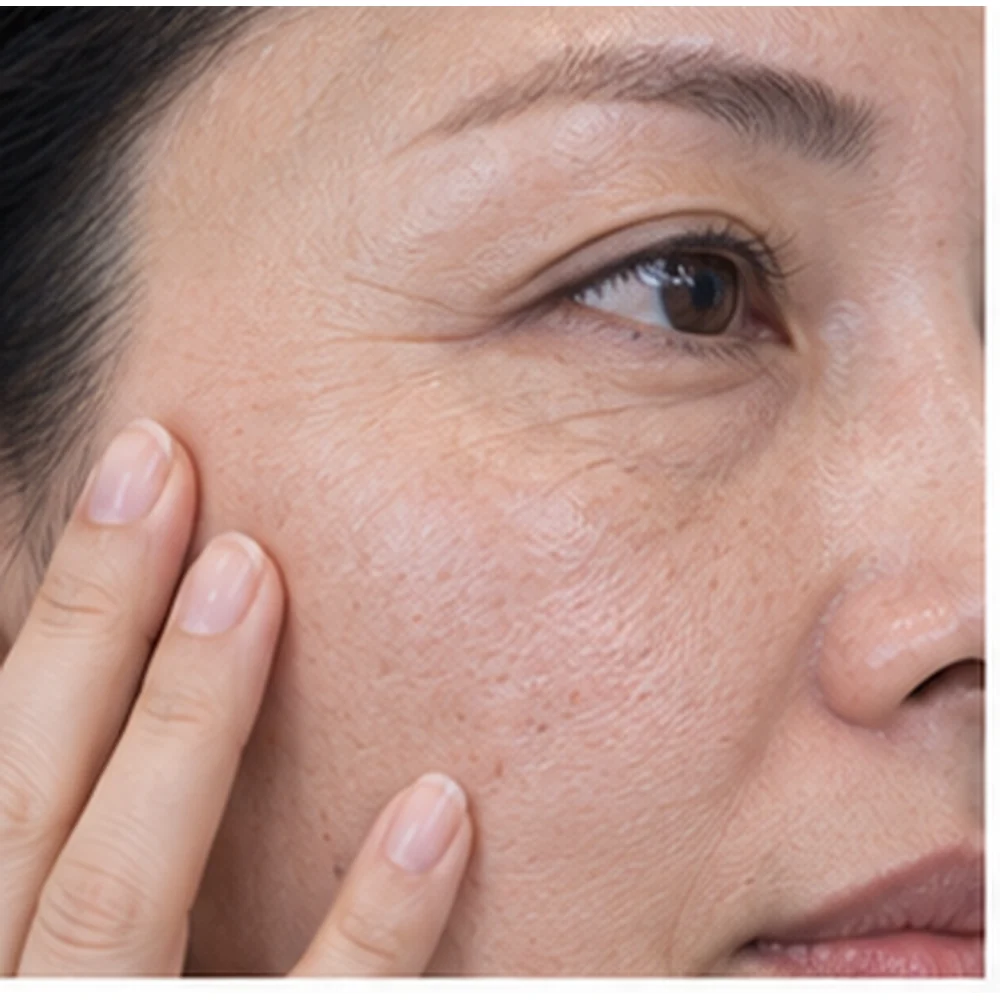
Confirm the branch, appointment, care plan and review arrangements with our team.
Ask whether the proposed surface step matches the actual texture concern.
Record fine lines separately from deep folds and volume-related shadows.
Skin quality and tissue descent set different expectations.
An eye-area component needs its own protection discussion.
Select the concern you want to explore. Read its description here, then find related services at the end of this guide.
Ask whether the proposed surface step matches the actual texture concern.
Five questions to help you understand Fotona 7D Treatment before your consultation.


These references explain the topic, product identity or safety context discussed in this guide. Original document titles are retained so you can identify the source.
fotona4d.com — Fotona4D official treatment information
Source jurisdiction or regional edition: International.
How to use this source: The manufacturer or named supplier describes its product. Product identity and general features do not prove a treatment result, local availability or approval for every use.
Fotona — Fotona aesthetic treatment overview
Source jurisdiction or regional edition: International.
How to use this source: The manufacturer or named supplier describes its product. Product identity and general features do not prove a treatment result, local availability or approval for every use.
Mayo Clinic — Mayo Clinic laser resurfacing
Source jurisdiction or regional edition: International.
How to use this source: Patient education about the condition, options or questions to discuss; it does not establish a diagnosis or individual suitability.
Research source check: . This date records a source and link check, not a clinical review of this page. Sources do not confirm the clinic’s current stock, equipment, staff or an individual treatment plan. Overseas information does not establish Malaysian registration or approved use.
A universal seven-step sequence was not established by the official material reviewed for this guide. Keep the service name, but ask for the clinic's written definition. Do not infer seven device modes or guaranteed effects from the number.
Fotona4D has identifiable manufacturer information. The difference for a proposed 7D plan depends on its actual additional components. Ask what is added, why it is relevant and whether it changes recovery or risk.
That should not be assumed. Suitability, skin condition and the proposed combination need assessment. Ask whether a stage can be omitted, delayed or delivered separately, and how that changes the agreed plan.
The number of stages does not demonstrate surgical-equivalent lifting. Surface texture, modest skin laxity and substantial tissue descent are different concerns. A consultation should state the limits before discussing a package.
Ask for the device identity, treatment areas, named components, intended purpose, important exclusions and aftercare. You should know which clinician is responsible and how to obtain advice if symptoms arise after leaving JB.
Not necessarily. A resurfacing component can need different care from a nonablative component. Ask about the actual planned exposures rather than using a package-level promise to arrange work, travel or an event.
Clarify this when arranging the Eco Botanic visit. An enquiry or appointment does not have to mean agreement to every proposed stage. Bring your questions and leave time for a decision after assessment.
Review the priority features and the components actually received. Keep lighting and expression comparable and record any other treatments. Improvement in one feature does not establish that every stage was necessary or effective.

Read the purpose, suitability questions and limitations before choosing a procedure.
View details
Read the purpose, suitability questions and limitations before choosing a procedure.
View details
Read the purpose, suitability questions and limitations before choosing a procedure.
View details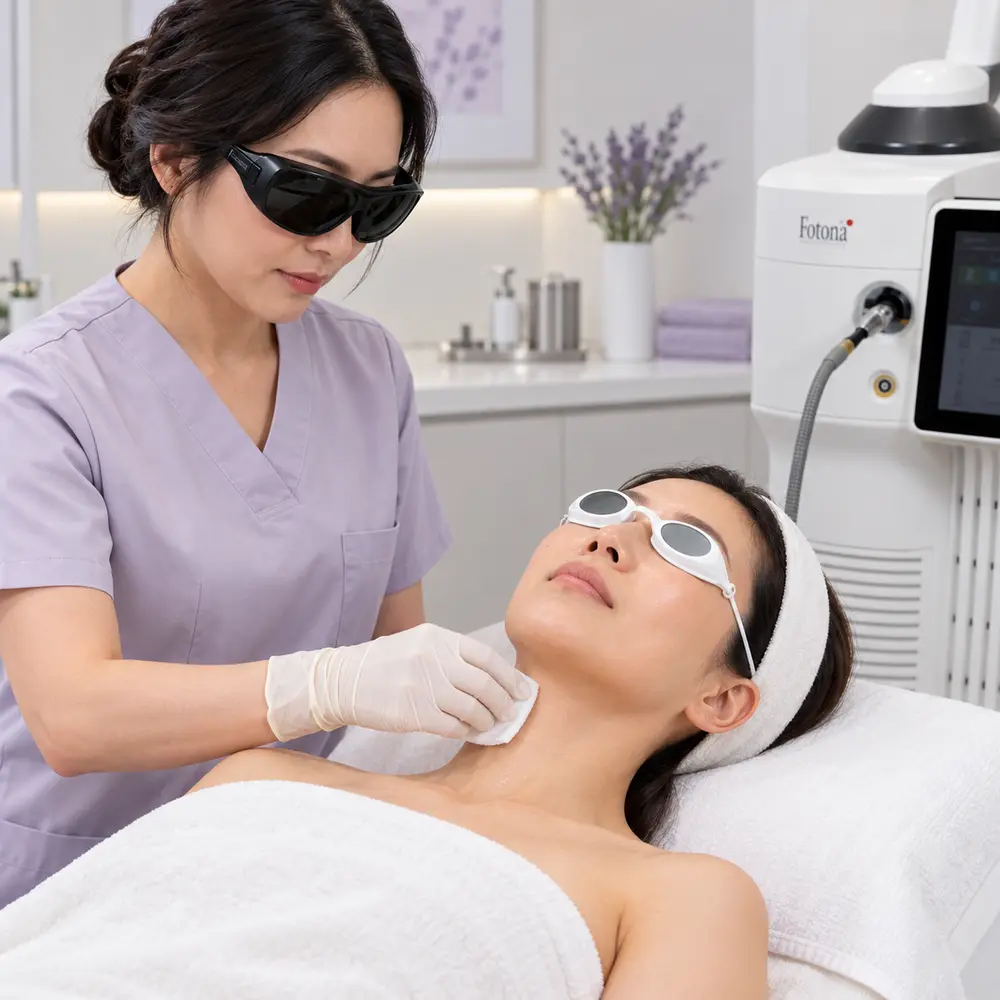
Read the purpose, suitability questions and limitations before choosing a procedure.
View detailsDiscuss Fotona 7D Treatment in Johor Bahru (JB), your priorities and follow-up arrangements with our team before planning your visit.
Book via WhatsAppAn enquiry starts the conversation. Your appointment is confirmed by the clinic.
Daily 10:00–18:00 · By appointment
2C-27, Jalan Eko Botani, Persiaran Eko Botani 2, 79100 Iskandar Puteri, Johor, Malaysia.
Open directions in Google Maps ↗