


Technology guide. Verify the tool before trusting the promise.
This route replaces a hospital-calendar demo with useful technology education. It does not claim a specific machine is owned or available.
A broad category is not an exact device.
Laser, radiofrequency, ultrasound, cryotherapy and light-based care describe technology families. Devices within a family can differ in energy, wavelength, delivery, cooling, accessories and intended use. Ask for the exact name and model proposed rather than assuming every device in the category produces the same experience or result.
A website photograph cannot prove ownership, maintenance, configuration or current availability. Ask for the exact machine identity and current operating arrangements when they matter to your decision.
Product and device identities should remain separate. A topical product used around a procedure, a disposable tip and the main platform may each have their own records and risks. If a quotation uses only a marketing package name, ask what physical items and steps that name contains.
The machine does not diagnose the concern.
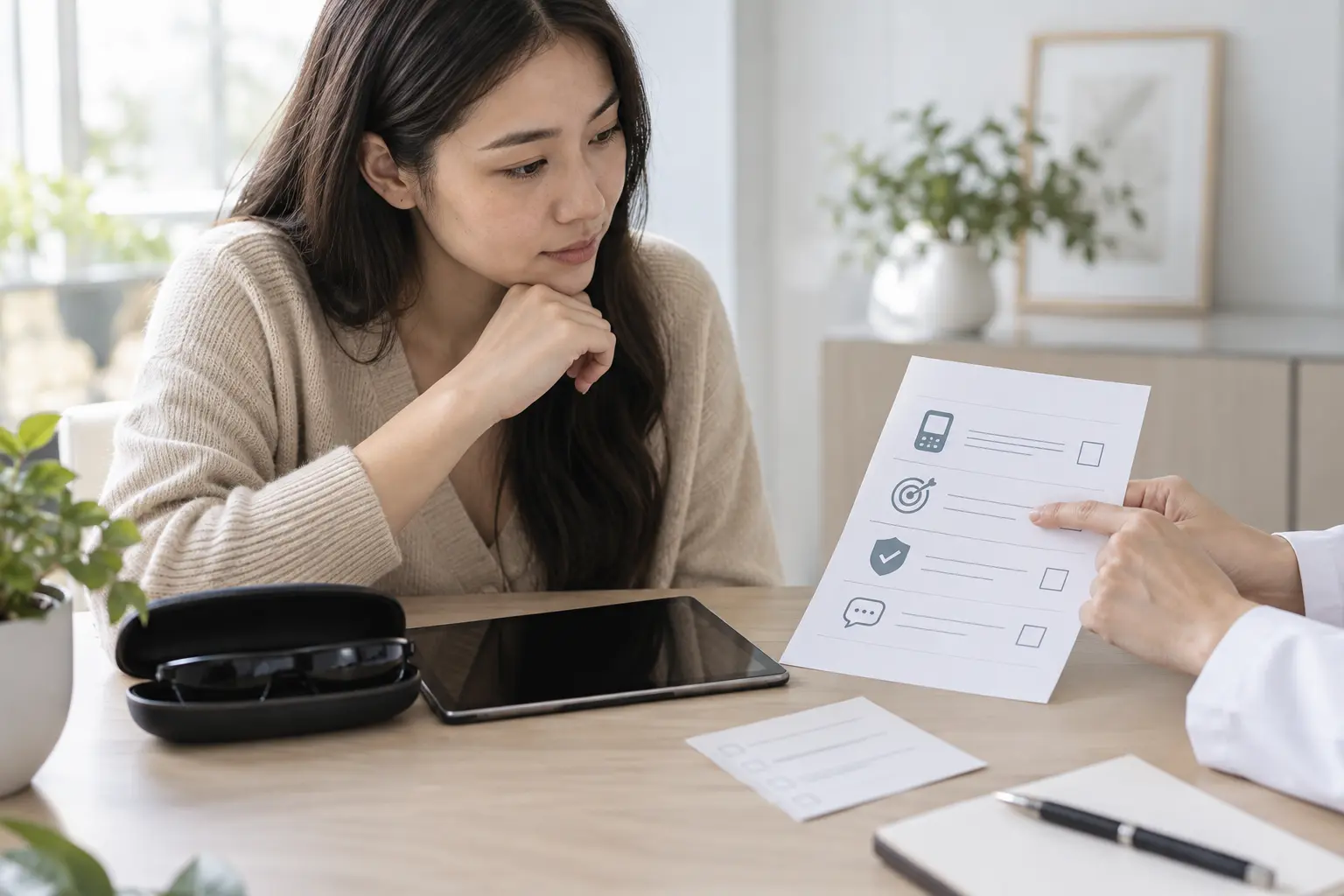

Suitability begins with the feature being assessed, relevant history, skin or body condition, medicines, previous procedures and the outcome that matters to you. A popular platform cannot decide whether the problem is pigment, redness, laxity, volume, movement, hair, pain or another cause.
Settings and technique matter. The same device name does not reveal energy, depth, passes, treatment area, cooling or operator judgment. Patients do not need to choose settings, but they should understand why the proposed protocol fits the assessment and what limitations remain.
Ask about alternatives, including less intensive care, staged treatment, referral or no procedure. A newer technology may offer different capabilities without being better for every person. The relevant comparison includes benefit, burden, uncertainty, downtime, risk and follow-up.
Protection, maintenance and consumables matter.
For energy devices, ask about eye protection, skin preparation, cooling, treatment-area restrictions and the response plan for burns, blistering, pigment change or unexpected pain. A non-invasive label does not remove the need for screening, safeguards and competent use.
Ask how the clinic verifies maintenance, calibration where relevant and the identity of disposable tips or cartridges. You do not need confidential technical logs, but the team should be able to explain how it ensures that equipment and consumables are appropriate for use.
If a product or accessory is substituted, ask whether the purpose, risk, expected course or cost changes. A familiar device body with an unknown consumable does not answer the full identity question. Consent should match what will actually be used.

Keep the technology connected to follow-up.
If treatment proceeds, keep the device or product name, date, area and written aftercare. Ask when the early response can be assessed and what changes need review. Recovery ranges should be discussed as ranges, not guaranteed deadlines tied to an event or flight.
For Singapore visitors, clarify which questions can be handled remotely and when an in-person examination is required. If urgent symptoms develop after returning home, seek appropriate local care and provide the record. Do not wait for another trip solely because the procedure occurred in Johor.
A responsible technology conversation ends with understanding, not fascination. You should know what the tool is intended to address, why it may fit, what it cannot promise, how risk is managed and what happens if the expected course changes.
Turn reading into a safer conversation.
Begin by writing the concern in ordinary language. “Uneven brown patches”, “redness that flushes”, “skin that feels lax” or “hair growth I want to reduce” creates a clearer starting point than asking for a machine seen online. The clinician can then explain whether a technology family is relevant at all.
Ask the team to distinguish the manufacturer name, platform, handpiece and treatment label. Marketing names can combine several steps, while one platform may support more than one function. Knowing which component is being discussed prevents accidental transfer of evidence from one configuration to another.
For comparison, avoid ranking devices solely by power, number of modes or novelty. More energy is not automatically better, and a long feature list does not show whether the protocol suits your skin, anatomy or medical history. Operator judgment and conservative selection can matter as much as specifications.
Photographs should be read cautiously. A matched visual can explain a concept, but it is not a clinical result. Real before-and-after records need consistent lighting, expression, distance, angle and timing. Even then, they describe one person rather than predicting yours.
Ask what happens if the response is weaker, stronger or different from expected. The answer may include observation, review, supportive care, referral or a change in plan. A technology page that discusses only the intended result leaves out an important part of informed choice.
This route is an educational technology hub, not an inventory page. Current devices, operators, consumables and appointment availability must be confirmed directly. That distinction protects patients from mistaking website design or generic imagery for operational evidence.
If the device name changes between enquiry and consultation, ask whether the underlying technology, indication and expected course also change. A substitute should not be treated as equivalent because both machines appear in the same category. The explanation and consent need to match the item actually proposed.
For repeat treatment, ask whether the previous settings and response are documented and how they influence the new plan. Repeating a familiar procedure does not remove the need to review medicines, skin condition, recent exposure, symptoms and any change in the treatment area.
Be cautious with claims that one platform replaces every earlier option. Different tools may overlap in marketing while differing in tissue target, evidence, discomfort and recovery. A useful comparison states why this tool is being considered for this concern now, rather than relying on a general claim of superiority.
Bring the treatment name and your concern, then ask which exact platform or tool is proposed. Ask the clinician to distinguish a manufacturer specification from a proven result in a person with your condition. The conversation should include the target tissue, meaningful benefit, skin or health factors, protective measures and possible adverse effects. Written aftercare and a review route matter as much as the name printed on a machine. Ask who handles a delayed reaction and whether the records can be shared with a clinician in Singapore if needed.
Check current clinician identity, stock, device inventory, price and appointment availability directly before the intended visit. Individual suitability requires an assessment. Seek appropriate local medical care for urgent symptoms rather than waiting for a routine clinic message or cross-border journey.
Your questions, explained.
Does this page list every device at Eco Botanic?
No. It teaches verification questions and does not claim current ownership, model, configuration or availability.
Why does the exact model matter?
Devices within one technology family can differ in energy delivery, accessories, intended use and supporting information.
Can I choose device settings myself?
No. Settings require clinical assessment and operator judgment; patients should understand the rationale rather than self-select parameters.
Does non-invasive mean risk-free?
No. Energy and light treatments can still cause pain, burns, pigment change and other complications.
What should I ask about consumables?
Ask whether tips, cartridges or accessories are appropriate, traceable and included in the proposed plan.
How can I verify the device currently proposed?
Ask the clinic to confirm the exact device currently proposed, its purpose and the plan; a website image does not prove inventory.
What record should I keep?
Keep the date, treatment area, exact device or product when relevant, aftercare and review contact.
What should Singapore visitors clarify?
Clarify downtime, travel, remote questions, required return visits and when to seek local care.
Useful patient information.
Book a consultation.
Bring your questions.
Discuss a technology or device question, your priorities and follow-up arrangements with our team before planning your visit.
Book via WhatsAppAn enquiry starts the conversation. Your appointment is confirmed by the clinic.
Add a question to your enquiry
Daily 10:00–18:00 · By appointment
Find us in Iskandar Puteri
2C-27, Jalan Eko Botani, Persiaran Eko Botani 2, 79100 Iskandar Puteri, Johor, Malaysia.
Open directions in Google Maps ↗