


01 · Aesthetic treatments
What to understand
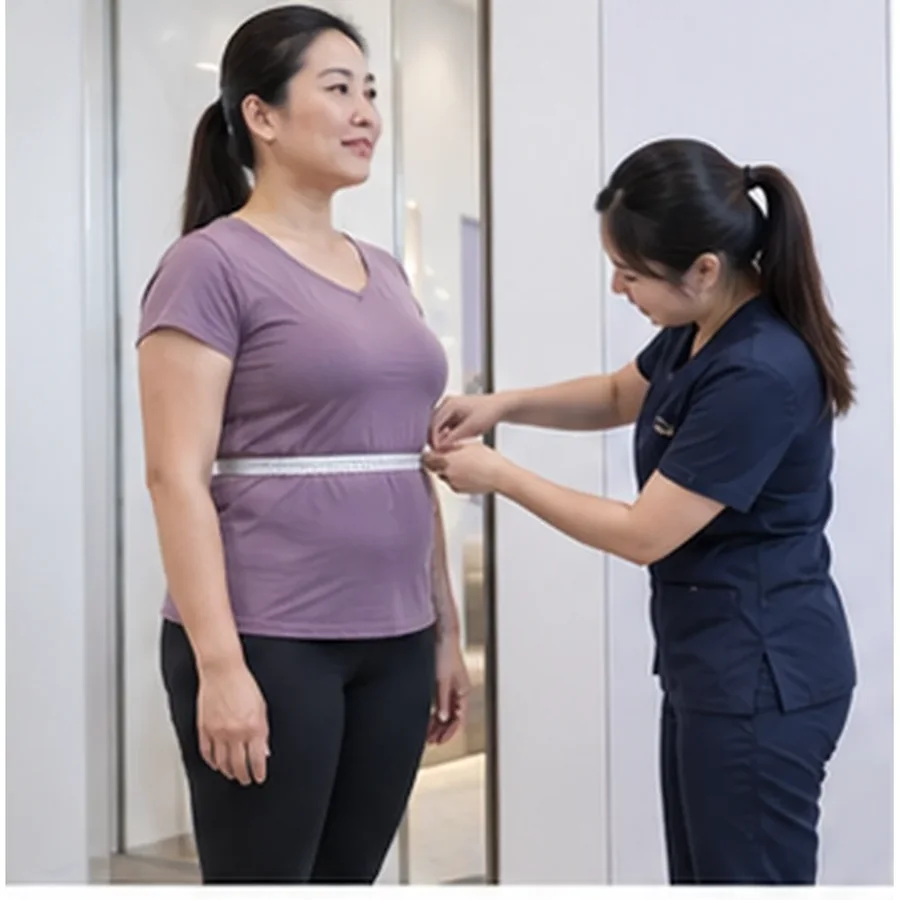
Describe the specific area and whether your concern involves fat distribution, skin laxity or stretch marks. Ask what the proposed device or procedure can address and what it cannot change. A body-contouring plan should not be assumed to provide the same health benefits as a medical weight-management programme.
Body contouring and weight management answer different questions. A wish to change the appearance of one area is not the same as a need to address weight-related health, while loose skin, local fullness and muscle definition also describe different features. Non-invasive devices are designed for particular uses and body areas, not for a general promise of weight loss. Ask which feature the proposed treatment targets and which it will not change.
Start by explaining the location and your goal in ordinary terms, such as how an area looks or how clothing fits. Do not let a device name determine the problem before it has been assessed. If you also want to discuss weight, health or a recent change in body size, bring that into the consultation explicitly. The plan should distinguish a local cosmetic goal from the wider health discussion and make clear whether either requires further assessment.

02 · Aesthetic treatments
Plan the next step
Compare realistic change, discomfort, recovery and possible adverse effects. Ask how the area will be measured or photographed consistently and when it will be reviewed. If you also want support with weight-related health, discuss that as a separate clinical goal rather than expecting one local treatment to cover both.
A useful preparation record includes medical conditions, relevant medicines, prior procedures, changes in weight and any symptoms in the area. Mention implants, previous surgery, a scar or a history of unusual reactions when discussing devices; the relevance depends on the proposed technology. Tell the clinician if pregnancy or another change in health may affect eligibility. Ask how the device's intended area and use have been considered.
Information about cooling, heat or other energy-based methods should not be treated as interchangeable. Risks and recovery vary by technology, so a generic phrase such as no downtime is not enough. Discuss practical limitations such as outdoor work, travel or difficulty returning for review. The assessment may identify a different explanation for the appearance or suggest that waiting is more appropriate. Knowing why an option fits is more useful than choosing the largest number of sessions in a package.

03 · Aesthetic treatments
Which feature is this treatment intended to address?
Explain the specific area and whether the concern is contour, skin quality or overall weight. Ask which aim the proposed procedure addresses.
Ask for a precise description of the target area and intended change. For example, a discussion about local fullness should not silently become a promise to reduce total body weight. A concern about skin laxity may also need a different explanation from a concern about fat. Clarify which outcomes can sensibly be evaluated and what may remain unchanged. The FDA's patient information explains that non-invasive contouring does not treat obesity or replace the health benefits of weight loss; it also outlines device-specific limitations and risks.
Its regulatory details concern the United States, so ask about local device information separately. Understanding these distinctions helps you decide whether the proposed goal is worthwhile. You can choose to leave an area untreated or postpone while a wider health question is assessed. A procedure should be connected to your stated priority rather than to an assumption that every visible body feature needs correction.
04 · Aesthetic treatments
How will change be assessed consistently?
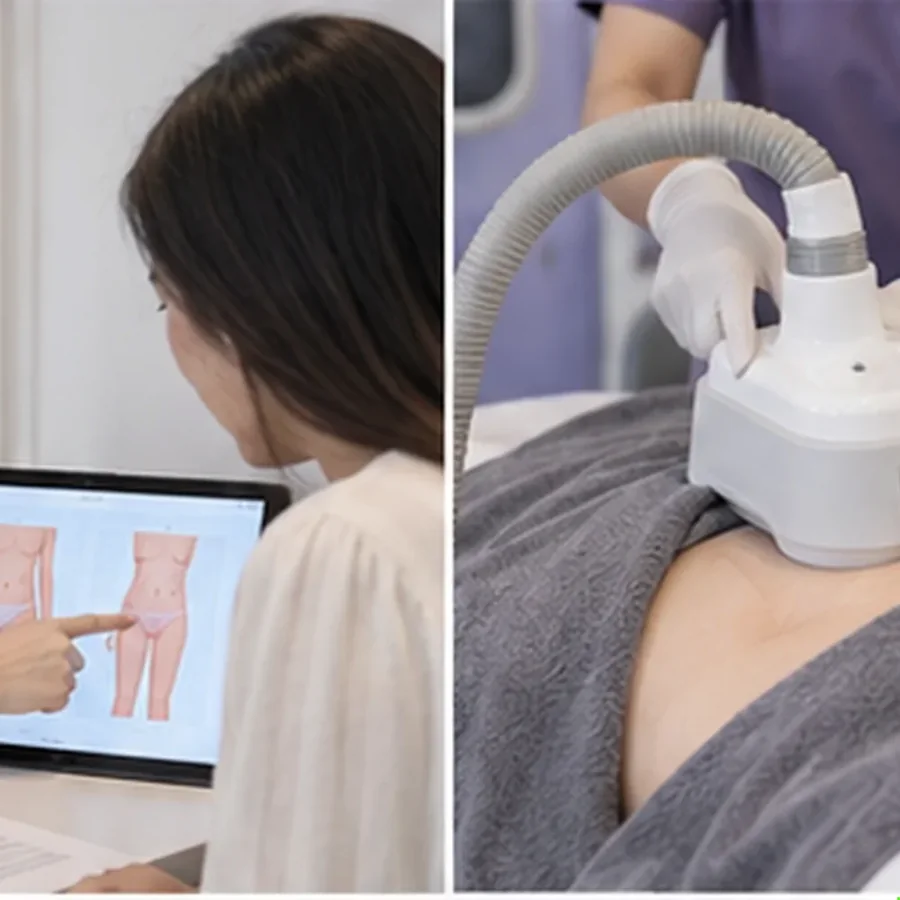
Agree on similar lighting, position and measurement methods for reviews. Discuss what counts as a meaningful change in your own assessment.
Decide how progress will be compared before treatment. If photographs or measurements are used, agree on position, lighting, clothing and the measurement method. Body appearance changes with posture and camera angle, while a tape measure placed at different levels can create an inaccurate comparison. Include changes in weight or routine when interpreting the result instead of assigning every change to the device. Ask when review is appropriate and whether an early photograph could reflect a temporary response rather than the final appearance.
Keep notes about discomfort or other unwanted changes as well as the cosmetic goal. Before another session, discuss the observed benefit, costs and practical recovery. A fixed package is not a reason to ignore a response that differs from expectations. You should understand what would lead the clinician to continue, wait, adjust the plan or recommend a different assessment.
05 · Aesthetic treatments
Do I also need a weight-management discussion?
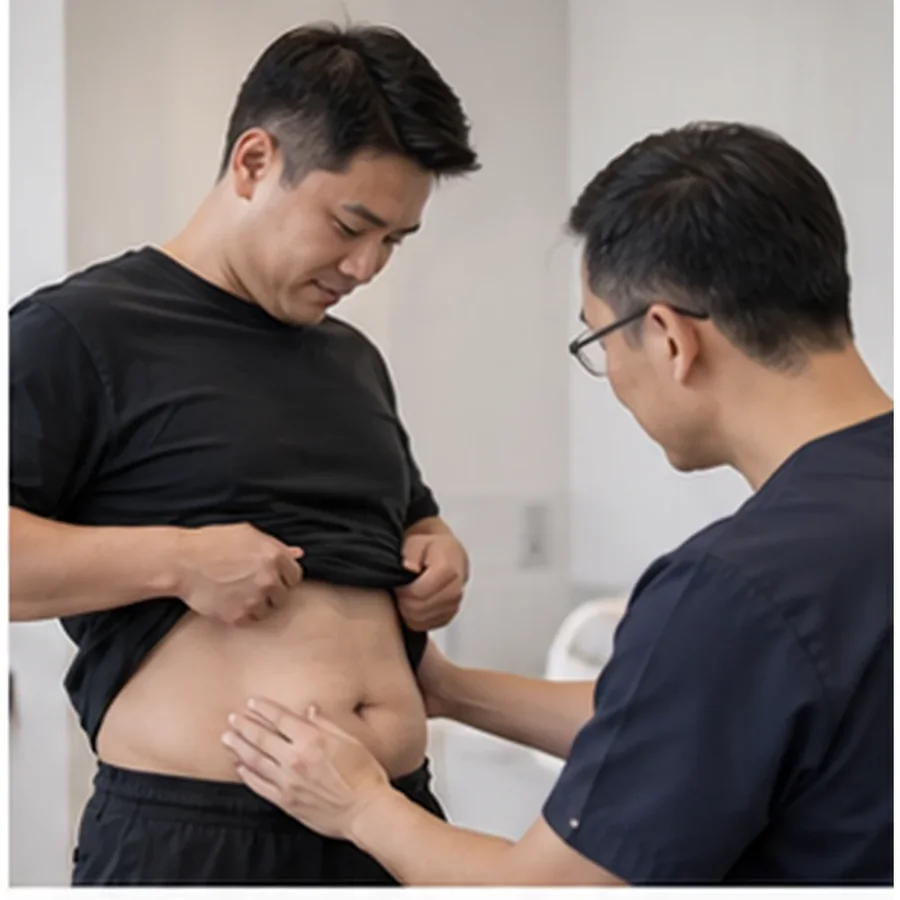
Share broader health and weight goals during the visit. Ask whether a separate weight-management assessment would be useful before choosing a contouring procedure.
If a weight-management question is also present, give it its own time in the conversation. Discuss weight history, health concerns, eating patterns, activity and previous attempts without assuming that a contouring procedure answers those needs. A BMI calculation can be one screening item but cannot explain body composition or overall health by itself. Ask whether medical assessment or ongoing support is appropriate. Likewise, do not assume that a medicine considered for weight management will answer every local contour concern.
These goals may coexist, but their evaluation and follow-up should be clear. Before choosing any procedure, confirm device-specific aftercare, expected changes and whom to contact about an unexpected problem. The guide provides a framework for an informed decision rather than a prediction of centimetres lost or a claim that a treatment is available at a particular visit. Your assessment should establish those details.
A practical comparison
Illustrative scenario, not a patient record.
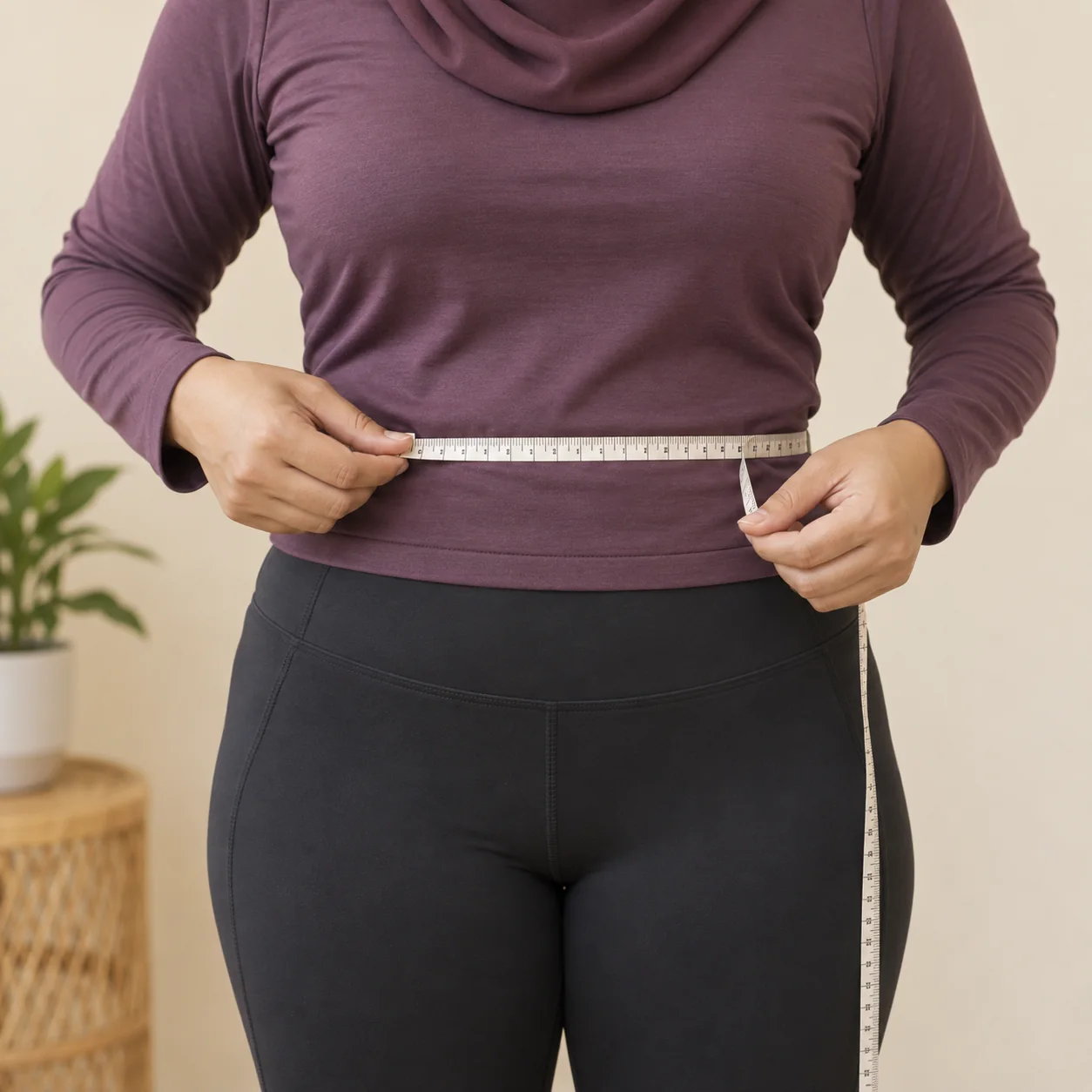
Imagine an illustrative consultation with two goals: a person wants a local area to look different in clothing and also wants to improve weight-related health. Those goals can coexist, but they need separate explanations. A contouring device aimed at a specific area is not a general weight-management prescription. A medical weight plan also does not automatically identify the best approach to a local cosmetic feature. The useful step is to name each goal and ask which assessment and follow-up belong to it.
This is an educational comparison, not a claim about a clinic result. For your own note, separate local appearance, wider health concerns and practical constraints. Under local appearance, record the area and what you hope changes. Under health concerns, include weight history, symptoms and care already tried. Under practical constraints, note the ability to follow aftercare and return for review. Ask the clinician to connect each proposed intervention to one of those goals and explain what it will not address.
Measurements and photographs should also match the purpose: a posture change should not be presented as proof of fat reduction, and a local photograph cannot establish a health benefit. At review, discuss observed changes with their context, including routine or weight changes that happened between visits. The framework gives you a clearer way to compare proposals while preserving the option to wait or pursue a different assessment.
It does not promise a reduction in centimetres, diagnose the tissue involved or set the device parameters for any body area.
When comparing options, put the purpose, limitations, number of proposed visits and follow-up arrangements side by side. Ask what is included in the quoted plan and which decisions remain subject to assessment. A short explanation that matches the body area and your goal is more useful than a long list of technology names. Keep the original aim in the review so that a change in the plan remains understandable.
Your own notes
List local appearance and wider weight or health goals separately. Ask which tissue or feature each proposal targets and what it will leave unchanged. Agree on consistent measurements and include other changes when interpreting progress.
Explore the topic
Explore the related guide →Further reading
Open the supporting patient information ↗Sources for this topic
United States patient information. Regulatory details apply to that jurisdiction; local availability and individual suitability require separate confirmation.