


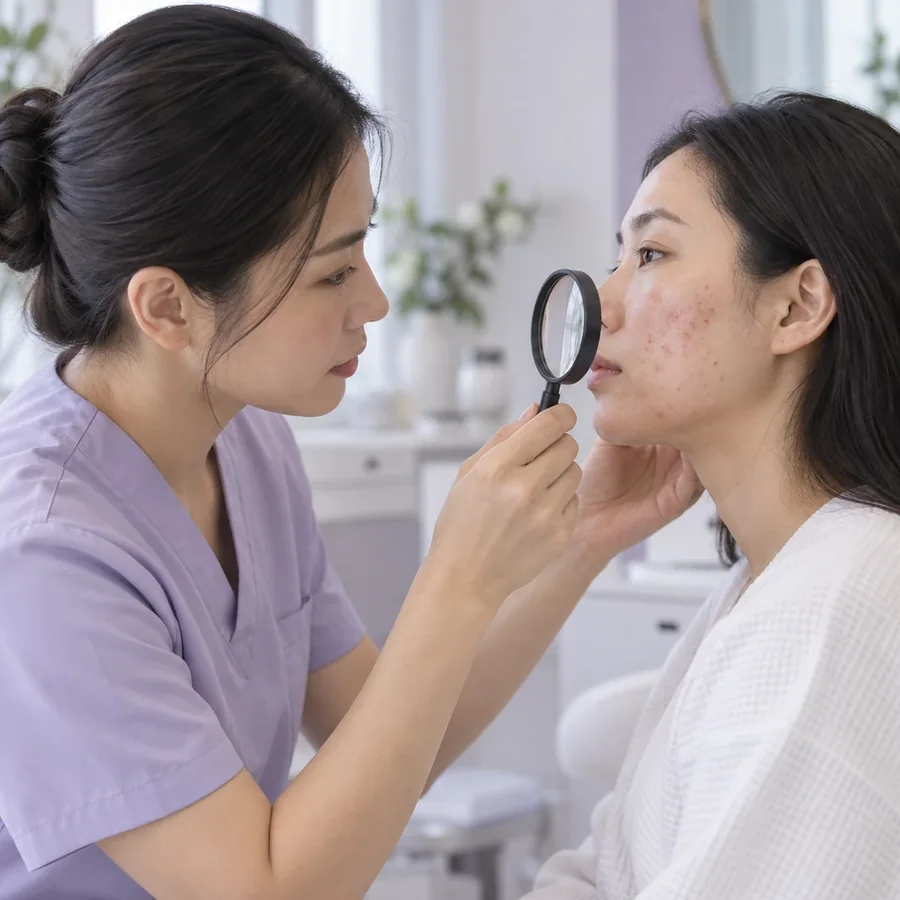
01 · Skin & skincare
What to understand
Record where breakouts occur, whether they are painful and how long the pattern has lasted. Include the treatments you have tried and whether they caused irritation. Explain changes in medicines, skincare or daily habits without assuming any one change caused the acne.
Acne is easier to discuss when you separate what is happening now from what remains after an earlier breakout. A raised, tender spot, a flat patch of colour and a depression in the skin describe different findings. They can exist together, but they do not necessarily need the same treatment or the same order of treatment. Start with the area that troubles you most and explain why: pain, repeated outbreaks, visible marks or difficulty with daily skincare.
Include when the pattern first appeared and whether it has changed recently. You do not need to decide the diagnosis or name a procedure before coming in. The purpose of an assessment is to connect the examination with your history and agree which problem is the priority. For example, a conversation about remaining marks may also reveal continuing inflammatory breakouts that deserve attention before a scar procedure is planned.
That sequence should be explained rather than assumed.

02 · Skin & skincare
Plan the next step
Active acne, coloured marks and depressed scars are different concerns and may need different plans. Ask which issue needs attention first and when progress should be reviewed. Avoid squeezing lesions or changing several products together; both can make it harder to understand what is happening to your skin.
Bring a concise record of previous care, including prescribed medicines, products bought without a prescription and procedures performed elsewhere. Record how long you used each item, how consistently you used it, what changed and why you stopped. A product tried only briefly is a different history from one used regularly for months, while an uncomfortable reaction deserves its own description. Include supplements and relevant changes in health or medicines without deciding which caused the acne.
If breakouts fluctuate, a few dated photographs without filters can help explain the pattern; they cannot replace an examination. Avoid squeezing lesions to make the skin look clearer for the appointment. Ask what the proposed first step is meant to achieve and how that differs from later care for marks or texture. A useful plan states what you will do at home, what requires a prescription and what will be reviewed before any next procedure.

03 · Skin & skincare
Is active acne or a remaining mark the priority?
Point out new breakouts, flat marks and any changes in texture separately. Ask which concern the proposed plan addresses first.
Choosing a priority makes progress easier to judge. If painful new lesions are the main concern, a plan focused only on colour changes may not answer the problem. If active acne is already controlled but marks remain, discuss whether the remaining change is colour, depth or both. Be specific about locations and symptoms instead of treating every facial irregularity as acne. The clinician may explain that another condition needs to be considered.
Tell them if the problem involves the chest, back or scalp, or if it has a substantial effect on sleep, work or confidence. These details can affect the discussion even when the face looks relatively calm that day. Ask why a particular approach fits the findings, what alternatives exist and whether waiting is reasonable. A treatment name on a website is an invitation to learn about an option, not a determination that you need it.

04 · Skin & skincare
How will we assess progress?
Agree on a review date and what will be recorded. Consistent photographs can support discussion without becoming a promise of results.
Agree on what will be compared at follow-up before you start changing the routine. Relevant observations might include the frequency of new breakouts, discomfort, areas affected and how well the daily plan can be followed. Photos are more useful when lighting, camera distance and make-up conditions are similar. A bright image on one day and a harshly lit image on another can create a misleading impression of improvement or worsening.
Keep a brief record rather than examining the skin repeatedly through the day. Write down missed applications and reactions honestly; that information helps interpret the response. Ask when the planned review should happen and what to do if you cannot tolerate a step. Do not increase frequency, combine more active products or stop a prescribed medicine solely because an online comparison looks different. Clarify changes with the clinician who knows the treatment plan.

05 · Skin & skincare
What should prompt an earlier review?
Request clear instructions about changes that should be reported and how to contact the team. Do not wait for a routine appointment when you are concerned.
Before leaving, ask which changes should lead to an earlier contact rather than waiting for the routine review. Discuss the difference between expected adjustment, persistent irritation and a problem needing examination; the answer depends on the care prescribed. Have the product or medicine name, start date and a description of the change available when contacting the clinic. If you have severe symptoms or a rapidly worsening reaction, obtain appropriate medical care rather than relying on a future cosmetic appointment.
Also ask how the plan will address new scarring or persistent painful breakouts if they continue. Good acne care is not simply buying a series of procedures. It is an assessment, a practical daily plan, an explanation of its limits and a way to review the response. At Eco Botanic, bring those questions to the consultation so that the next step reflects your skin and priorities rather than a generic package.
A practical comparison
Illustrative scenario, not a patient record.

Consider an illustrative situation: someone books an appointment because a cheek looks marked, but also reports a new painful breakout each week. The useful distinction is between ongoing inflammation and what remains after it. A question about the appearance of older marks should not hide the continuing symptoms. During the visit, the person can show the affected area, explain the timing and describe what daily care has already been tried.
The clinician can then explain whether the immediate priority is active acne, another assessed condition or the remaining marks. This is an example of how to organise a discussion, not a patient story or a recommendation for a particular medicine. A second person may have no current breakouts and be interested mainly in a flat colour change. That history creates a different question, even if an online photograph looks similar.
Comparing those situations shows why a treatment list should follow the assessment. Neither person needs to know a device name before seeking advice. The next useful step is to ask what finding the plan targets and how its response will be reviewed. To prepare your own notes, use three headings: what appears now, what remains from earlier outbreaks, and what daily care is difficult. Put dates beside new products and describe symptoms without filtering them into a diagnosis.
At review, return to those same headings to check whether the agreed priority has changed. Keep any prescribed instructions separate from this educational example. The example demonstrates a decision framework; it does not set the treatment or timing for your skin.
Your own notes
Record new breakouts, remaining marks and discomfort separately. Include the actual duration of previous care and which steps were difficult to follow. Ask how those observations affect the priority and what will be compared at review.
Explore the topic
Explore the related guide →Further reading
Open the supporting patient information ↗Sources for this topic
United States patient information. Regulatory details apply to that jurisdiction; local availability and individual suitability require separate confirmation.