


01 · Aesthetic treatments
What to understand
Fine lines, dark-looking areas and puffiness may involve different features. Note whether the appearance changes during the day and whether your concern is colour, a hollow, skin texture or eyelid heaviness. Tell the clinician about eye symptoms, contact lenses and previous eye or facial procedures.
A tired-looking eye area can reflect several different features, and the phrase dark circles does not identify a single cause. Colour, shadows from a hollow, puffiness, skin texture and changes with expression may overlap. The first useful step is to describe what you notice, when it changes and whether symptoms are present. A cosmetic concern about appearance is different from pain, a sudden change or a problem with vision.
Those symptoms need appropriate medical assessment rather than an assumption that an aesthetic procedure is the next step. An examination should help distinguish the findings before options are compared. Tell the clinician which feature matters most to you and what you hope to preserve. A procedure designed for one part of the appearance may leave another unchanged. That distinction should be explained before a product or technique is selected.

02 · Aesthetic treatments
Plan the next step
Ask what an aesthetic treatment could reasonably address and what needs another assessment. Discuss how normal eyelid and brow function will be considered. New visual symptoms or a sudden change around an eye should not be treated as an ordinary cosmetic concern.
Bring a history of eye-area care, including skincare, prescribed products, injections, surgery and other procedures. Record dates and exact names when known, along with any persistent swelling, irritation or result you found disappointing. Say if the appearance varies by time of day or if symptoms occur intermittently. A few unfiltered photographs can help document that pattern, but they do not replace an examination. Include relevant health conditions and medicines.
Do not assume that a cream, filler or light-based procedure is appropriate because a similar-looking image appeared online. Ask whether another clinical assessment is needed before cosmetic options are considered. Discuss your ability to follow recovery instructions and return for review. The conversation should make the purpose and limits of any proposed intervention clear, especially in an anatomically sensitive area. You can seek information without agreeing to treatment on the same day.

03 · Aesthetic treatments
Which feature contributes most to the appearance?
Describe colour, puffiness, lines and changes in contour separately. Let the clinician explain what is contributing before choosing a treatment.
Ask which finding contributes most to the appearance. A brown-toned change, a shadow beneath a hollow and a puffy area may look similar in a photograph yet call for different explanations. Camera angle and directional light can exaggerate a shadow, while make-up can conceal colour. Let the examination and history guide the distinction. Request a description of what the proposed approach would target and what it would not address.
If several findings coexist, ask how the sequence of care is decided. A plan should not treat every under-eye concern as a request for added volume. Discuss the option of daily care, further assessment or waiting if those better match the findings. A useful explanation is specific to the area and your priorities, not simply an assurance that a treatment will make you look less tired.
Understanding limits helps avoid choosing a procedure for the wrong component.

04 · Aesthetic treatments
What are the limits of the proposed approach?
Ask what the proposed approach can address and what it will leave unchanged. Include recovery and alternatives in the comparison.
The limits and risks of eye-area procedures deserve a direct discussion. If an injectable is proposed, ask about the exact product, intended location, important risks and alternatives. FDA guidance lists the periorbital area among unapproved dermal-filler uses in the United States; that jurisdiction-specific information should not be mistaken for a statement about Malaysian authorization. The treating clinician should clarify the local product information and the rationale for any proposed use.
A non-surgical description does not mean an intervention is risk-free or that it can reproduce surgery. Understand recovery, possible unwanted changes and what arrangements exist for review. Do not use another person's result as a personal prediction. You should have enough information to decide whether the potential change matters to you given the uncertainties, including the option to avoid a procedure in an area you are uncomfortable treating.

05 · Aesthetic treatments
Is another medical assessment needed?
Mention new symptoms and previous eye or facial procedures. Ask whether the concern belongs in an aesthetic consultation or another assessment.
Ask whether the history or examination indicates a need for another medical assessment. New pain, sudden swelling, visual symptoms or a rapid change should not be reduced to a cosmetic label. Follow the appropriate medical advice and seek prompt care for concerning symptoms. If you proceed with an aesthetic plan, keep the procedure details and written instructions available. Clarify which expected changes can be monitored and which need contact or examination.
Review photographs under similar light, position and expression after the interval appropriate to the procedure. Discuss skin comfort and unwanted effects alongside appearance. A further treatment should respond to the observed findings, not just to an unfinished package. This guide helps you describe eye-area concerns and evaluate a proposal; it does not diagnose dark circles, recommend an injection or guarantee the removal of shadows, puffiness or every fine line.
A practical comparison
Illustrative scenario, not a patient record.
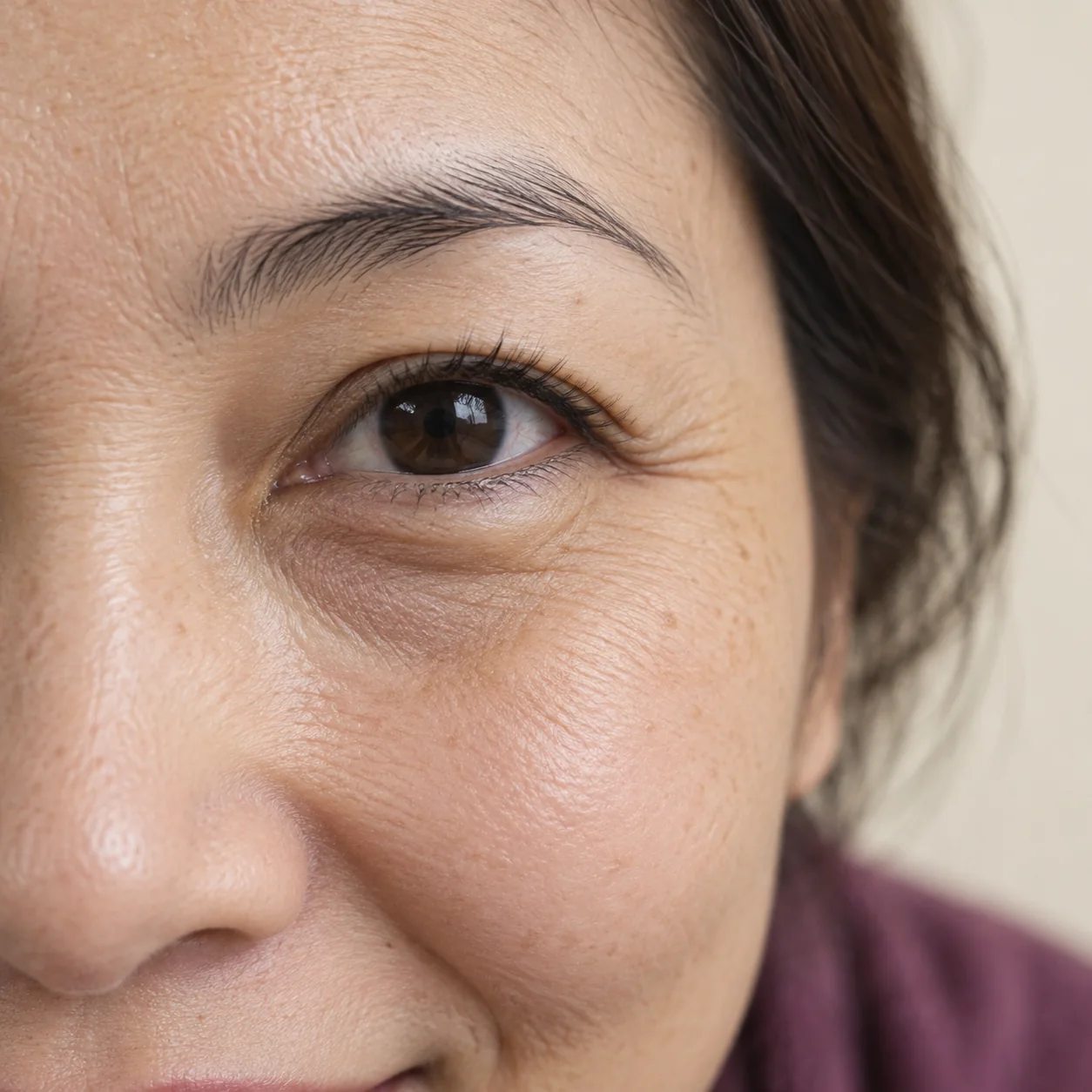
Consider an illustrative person who notices an under-eye shadow only in overhead light and another who has a persistent colour change. The photographs may look similar, yet the observations raise different assessment questions. A hollow, pigment, puffiness and texture can overlap, so neither person should choose a procedure from the image alone. Ask the clinician which component contributes most and what a proposed approach is intended to change.
This example is a way to organise appearance concerns, not a diagnosis. It also does not apply to sudden pain, vision changes or another symptom needing medical care. For your own note, describe the time of day, lighting and any symptoms, then record previous products or procedures in the area. Explain what you want to preserve and how much change you would consider worthwhile. Ask about limits and relevant risks before deciding, especially if an injectable is proposed.
A product category is not a substitute for consent about the exact area and use. At review, compare similar light and expression after the appropriate interval, and discuss comfort or unwanted changes alongside appearance. If one component improves while another remains, ask whether the remaining finding needs a different explanation rather than automatically repeating the same procedure. The framework helps avoid treating every tired-looking eye area as the same problem.
It does not recommend filling a hollow, prescribe a cream or promise removal of dark circles. Keep any clinical instructions and urgent-care advice separate from this educational comparison.
Your own notes
Record whether the concern is colour, shadow, puffiness, texture or a symptom. Include timing and previous eye-area care. Ask which component the proposal addresses, which limits remain and whether another medical assessment is appropriate before cosmetic decisions.
Explore the topic
Explore the related guide →Further reading
Open the supporting patient information ↗Sources for this topic
United States patient information. Regulatory details apply to that jurisdiction; local availability and individual suitability require separate confirmation.